
Quick answer
La Parguera is the bioluminescent bay in the fishing village of La Parguera, in Lajas on Puerto Rico’s southwest coast, and it is the one of the island’s three bio bays where you can usually get in the water.
- Swimming: Discover Puerto Rico says it is generally permitted here on most nights. It is not guaranteed, and each operator sets its own safety rules, including flotation gear.
- Without a tour? Not in practice. The bay is reached by boat or kayak from the village waterfront, so book a licensed operator.
- Tours: about 1–2 hours by boat or 2–2½ hours with kayaks; most start around $45–$95 a person.
- Closed: three full-moon days in every lunar cycle, under a June 2023 DRNA order.
- Darkest nights: near the new moon, on Nov 9 and Dec 8, 2026, and Jan 7, 2027.
- Roughly 2 to 2½ hours’ drive from San Juan; Aguadilla and Rincón are each about an hour away, without traffic.
La Parguera is one of three bio bays in Puerto Rico.
In this article, I will go over everything you need to know about La Parguera:
– What is bioluminescence?
– What is La Parguera Bioluminescent Bay?
– Where is La Parguera Bio Bay located?
– How to get to La Parguera Bio Bay from San Juan?
– Can you swim in La Parguera Bioluminescent Bay?
– Which is better: kayaking or boat tour?
– Can you go to La Parguera without a tour?
What is bioluminescence?
Bioluminescence is when living organisms emit light due to a chemical reaction.
Fireflies are a common example of bioluminescence.
It happens often in marine animals, fungi, bacteria, and land arthropods.
This chemical reaction varies in color, but blues and greens are some of the most common in the animal kingdom. Some species can even glow red!
The purpose of bioluminescence can be for camouflage, mating, repelling predators or attracting prey.
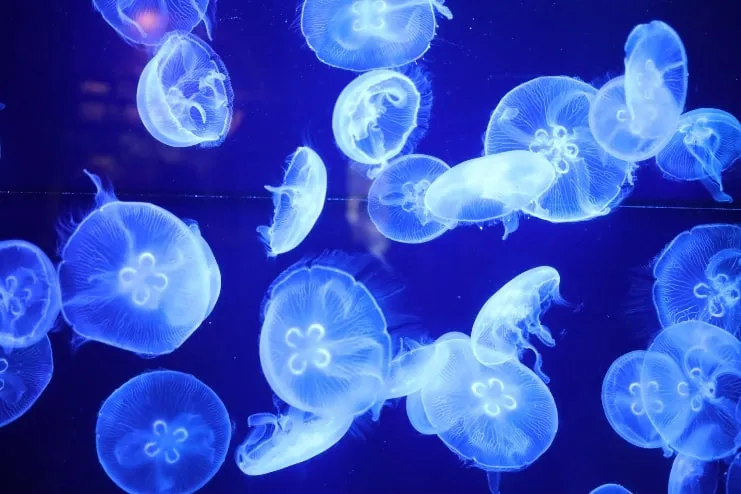
The glow in the water of a bioluminescent bay is produced by millions of single-celled plankton called dinoflagellates.
They emit light when stimulated as a defense mechanism.
Dinoflagellates can be found throughout the ocean. But, only when they concentrate in large quantities and the environmental conditions are ideal, the glow will be visible to the human eye.
Below is a video that shows bioluminescent water and ocean animals:
Puerto Rico has three different bioluminescent bays. Learn more about them in our guide to Puerto Rico’s bioluminescent bays.
What is La Parguera Bioluminescent Bay?
La Parguera is a bio bay located on the south coast of Puerto Rico, in the town of Lajas.
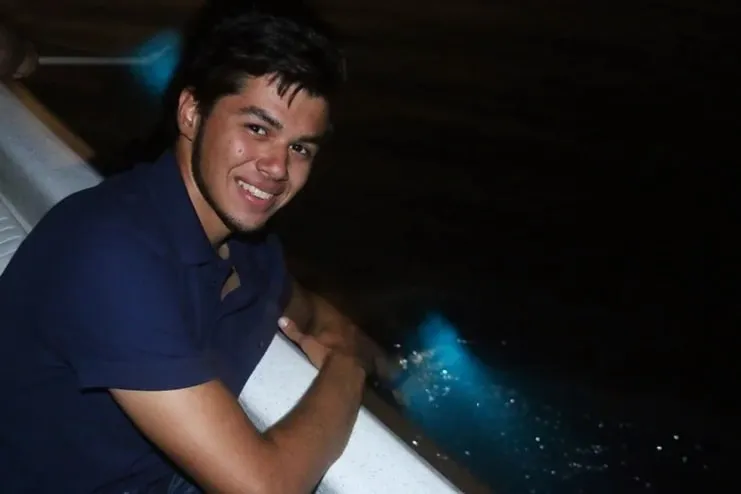
The small entrance to the La Parguera bio bay traps millions of dinoflagellate plankton inside it. These plankton then start to multiply since they can’t escape the bay. The high concentration of plankton in the bay is what allows humans to see the bioluminescent light when moving the water.
The calm current, water temperature, mangroves, shallowness of the bay and narrow entrance make it possible for the bioluminescence to occur year-long.
I recommend that you read our article about when is the best time to see the bioluminescence in Puerto Rico as the visibility of the bioluminescence is better during certain months.
Below is a video that shows La Parguera Bio Bay:
The bay is managed by Puerto Rico’s Department of Natural and Environmental Resources (DRNA). To cut illegal motorboat traffic and protect the glow, a June 2023 DRNA administrative order closes the bay for three full-moon days in every lunar cycle.
Where is La Parguera Bio Bay located?
La Parguera Bio Bay is located on the coast of Lajas, a southern town in Puerto Rico.
See La Parguera Bioluminescent Bay’s location on Google Maps below:
How to get to La Parguera bio bay from San Juan
Drive. La Parguera is about 2½ hours from San Juan without traffic (about 2 hours 35 minutes from Old San Juan using OpenStreetMap routing), and about an hour from Aguadilla. Tours run after dark, so consider staying in the southwest rather than driving back to San Juan the same night — browse places to stay in Lajas.
See Cabo Rojo and Mayagüez for places to base yourself.
Can you swim in La Parguera bioluminescent bay?
Usually, yes. Discover Puerto Rico, the island’s official tourism organization, describes La Parguera as the only one of the three bays where swimming is generally allowed, and on most nights. You go in from the tour boat, wearing whatever flotation gear the crew hands out, and only when they say so. Mosquito Bay bans swimming, and Laguna Grande tours don’t include it.
Before you book, check three things. Ask whether the swim is on for your night, because it isn’t promised. Read the fine print: Paradise Scuba’s sunset cruise, for one, says every participant must know how to swim. And be honest about the dark water; staying on board is fine, and you never go in on your own.
Which is better: kayaking or boat tour?
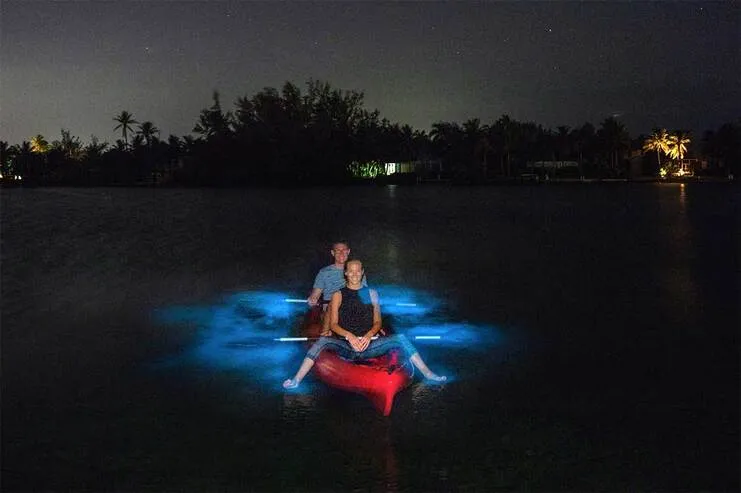
The best way to see the bioluminescence is by kayak.
Kayaking is more interactive.
Some tours allow swimming with an authorized operator; ask about jellyfish and follow the guide’s rules. Do not enter the water on your own.
Can you go to La Parguera without a tour?
Not in any practical way. The glowing water is reached by boat or kayak from the La Parguera waterfront, and Discover Puerto Rico tells visitors to meet their operator at its departure point instead of trying to get to the bay on their own. The DRNA manages the bay, and its 2023 order was aimed squarely at people arriving in motorboats without permits. The patrols haven’t stopped: in February 2026 the agency fined 16 boats in the La Parguera area for alleged navigation violations after a single day of inspections.
Booking takes a few minutes. Compare the licensed bio-bay tours in Lajas, or see what each one includes in our La Parguera bio bay tours guide.
What a La Parguera bio bay tour is like
Tours leave from the village itself after sunset; your booking tells you which dock or shop to check in at, usually on Calle Ángel Luis López or Road 304. Discover Puerto Rico puts boat trips at about one to two hours and kayak trips at two to two and a half, and sunset tours that stop at a cay first run longer. These are the main formats:
- Glass-bottom boat. Fondo de Cristal says it brought La Parguera its first glass-bottom boat in 1950. It still sails a glass-bottom catamaran to the bay and also runs a swim tour, a boat-and-kayak tour and a see-through kayak tour.
- Swim trip. Parguera Eco Tours gives a short talk on why the water glows, then lets you swim; it lists the trip at $45 a person.
- Sunset cruise and swim. Paradise Scuba & Snorkeling stops at the Cayo Caracoles sandbar on the way, then gives you about 30 minutes in the bay. It lasts 2 to 2½ hours and costs $85 for adults and $50 for children 5 and under.
- Kayak. Outfitters such as Parguera Water Sports tow the kayaks out behind a boat and have you paddle in a shallow part of the bay. In the village you will also find Kayaking Parguera and Parguera Kayak.
The prices above come from the operators’ own websites on October 27, 2026, and they change. Pack swimwear under quick-dry clothes, a towel and drinking water. Leave the spray-on bug repellent and sunscreen behind, because Discover Puerto Rico asks bay visitors not to use them; if you need repellent, rub on a cream at least half an hour before. Phones rarely capture the glow, so plan to watch rather than film.
La Parguera beyond the bay: where to eat, stay and book
The bay takes an hour or two, and the village fills the rest of the evening. Tours start after dark, so most people eat in La Parguera first, and plenty sleep there instead of facing the drive back to San Juan.
Where to eat
Most of the village’s restaurants sit along Avenida Los Pescadores and Road 304. Moorings Beach Club & Restaurant does seafood with outdoor tables and live music on some nights. Marina 214, in the El Muelle shopping strip, is open from breakfast through dinner. Club Náutico de La Parguera is the village marina and club, with its own bar. Parador Villa Parguera’s Aquamarina restaurant mixes international and Puerto Rican cooking with a view of the bay, but check the day first: it lists Tuesdays and Wednesdays as closed. See every restaurant in Lajas.
Where to stay
Parador Villa Parguera, at PR-304 km 3.3, started as a small family guesthouse in the 1960s. Today it has a pool, a dock and ocean-view rooms, and its standard rooms are listed from $160 a night before taxes. La Jamaca Hotel & Restaurant, also on Road 304, has a heated pool, massages and a bar that opens daily at 3 p.m. Media Luna Guesthouse, close to the center of the village, rents one- and two-bedroom units with their own kitchens. For a view of the water, Parguera Beach Club & Hotel is a beachfront hotel with 11 rooms, one of them a suite with a private pool. Compare all places to stay in Lajas.
What to book
All the village’s bio-bay, boat and kayak operators that we list are in the Lajas tours directory. Come back in daylight if you dive: Paradise Scuba also runs trips to La Parguera’s wall, a drop-off roughly 5 miles offshore that Discover Puerto Rico says plunges from about 60 to 130 feet.
Frequently asked questions
Can you swim in La Parguera bio bay?
Usually. Discover Puerto Rico says swimming is generally allowed at La Parguera on most nights, from a licensed tour boat. It is not guaranteed every night, so confirm when you book.
Can you go to La Parguera bio bay without a tour?
Not in practice. The bay is reached by boat or kayak from the village waterfront, so book a licensed operator.
How much does a La Parguera bio bay tour cost?
Most tours start around $45 to $95 a person, according to Discover Puerto Rico. Private boats cost more.
How long is a La Parguera bio bay tour?
About 1 to 2 hours by boat and 2 to 2½ hours with kayaks. Sunset tours that stop at a cay first take longer.
Is La Parguera bio bay closed during the full moon?
Yes. A June 2023 DRNA order closes the bay for three full-moon days each lunar cycle.
How far is La Parguera from San Juan?
About 2½ hours without traffic. It is about an hour from Aguadilla.
Is La Parguera the brightest bio bay?
No. Guinness World Records lists Mosquito Bay on Vieques as the world’s brightest.
When is the next new moon?
October 10, November 9 and December 8, 2026, then January 7, 2027 (US Naval Observatory).
Final thoughts
La Parguera is the bio bay to choose if you are staying in the southwest or want a tour that may include a swim. Go on a dark night near the new moon and avoid the full-moon closure.
The glow is easiest to see when the sky is dark. Around the new moon the moon is down for the whole evening. In the days after the full moon, the moon rises later each night, so early-evening tours can still be dark; around the full moon itself, the moon is up all night and the glow is much harder to see. Since June 2023, a DRNA order closes La Parguera’s bay for three full-moon days every lunar cycle.
| New moon (darkest skies) | Full moon |
|---|---|
| Oct 10, 2026 | Oct 26, 2026 |
| Nov 9, 2026 | Nov 24, 2026 |
| Dec 8, 2026 | Dec 23, 2026 |
| Jan 7, 2027 | Jan 22, 2027 |
| Feb 6, 2027 | Feb 20, 2027 |
| Mar 8, 2027 | Mar 22, 2027 |
| Apr 6, 2027 | Apr 20, 2027 |
| May 6, 2027 | May 20, 2027 |
| Jun 4, 2027 | Jun 18, 2027 |
| Jul 3, 2027 | Jul 18, 2027 |
Compare all three in our guide to Puerto Rico’s bioluminescent bays.
Sources we checked
Checked in October 2026. Where a fact could not be confirmed against a primary source, we removed it or said so.
- Metro Puerto Rico (June 8, 2023): DRNA Administrative Order 2023-02 closes La Parguera’s bio bay for three full-moon days every lunar cycle
- Para la Naturaleza: Puerto Mosquito, Vieques — protected reserve under the DRNA, co-managed by the Vieques Conservation and Historical Trust; licensed operators only; no swimming, jet skis or motorboats; Puerto Rico’s three bio bays
- Guinness World Records: brightest bioluminescent bay — Mosquito Bay, Vieques (2006; up to 700,000 Pyrodinium bahamense per gallon)
- US Naval Observatory: dates and times of the primary moon phases (UT; converted to Atlantic Standard Time)
- PuertoRico.com drive times (OSRM on OpenStreetMap, October 2026, free-flow, no traffic)
- Discover Puerto Rico: La Parguera Bioluminescent Bay (swimming on most nights, access by boat or kayak from the waterfront, tour lengths and prices, 2026)
- El Nuevo Día (Feb 7, 2026): DRNA patrol in La Parguera ends in 16 fines to boats
- Parador Villa Parguera: about the parador, rooms and Aquamarina restaurant hours
- La Jamaca Hotel & Restaurant: amenities and restaurant hours
- Operator sites checked Oct 27, 2026: Paradise Scuba & Snorkeling (Sunset Biobay Cruise), Parguera Eco Tours, Fondo de Cristal
Originally published on PuertoRico.com (2022-10-09). Reviewed and updated October 2026: facts were checked against the sources above.