
Guánica is a small town in Puerto Rico that is big on history and biodiversity.
Did you know that when the United States Army invaded Puerto Rico as part of the Spanish American War, they disembarked on Guánica’s coast? Or that Guánica’s Dry Forest has hundreds of species of plants, animals and marine life?
As a history enthusiast and nature lover, Guánica is one of my favorite towns on the island. I have been visiting Guánica and taking tourists there for over 30 years.
In this article, I will cover everything that you need to know about Guánica, and will answer the following questions:
– What is Guánica?
– Where in Puerto Rico is Guánica Located?
– What is Guánica Known For?
– What are some things to do in Guánica?
– Is Guánica Safe For Tourists?
What is Guanica?
Guanica is a historical town in Puerto Rico.
It has spectacular views of the Caribbean Sea, excellent seafood, natural resources, and small mangrove islands — compare places to stay in Guánica.
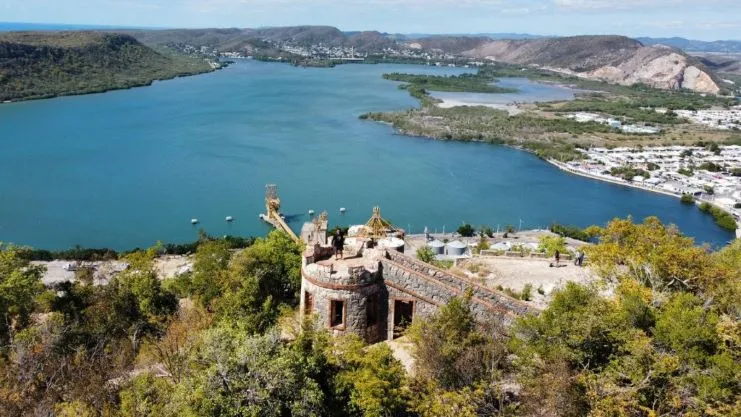
If you are interested in history or love to be in contact with nature, you should visit Guanica.
Check out this video showing the town:
Where in Puerto Rico is Guanica Located?
Short answer: Guánica is a small coastal town on Puerto Rico’s southwest coast, facing the Caribbean. Lajas borders it on the west, Sabana Grande on the north and Yauco on the east. From Old San Juan it is about 157 km (98 miles) by road, roughly 2 hours 15 minutes without traffic: the PR-52 expressway south to Ponce, then PR-2 west and PR-116 into town. From Ponce it is about 41 km (25 miles), under 40 minutes.
Below is a map depicting where Guanica is in Puerto Rico: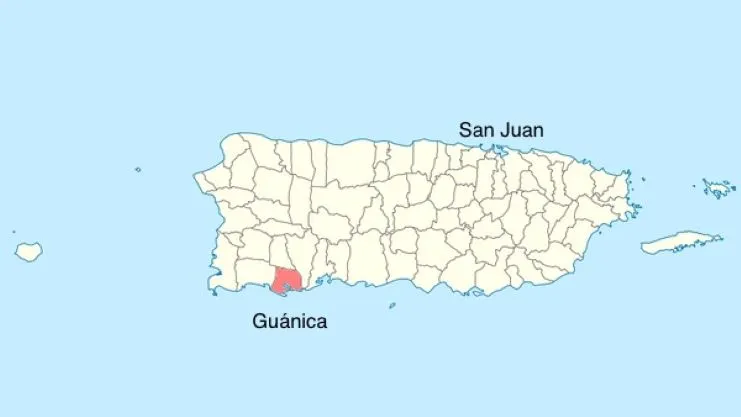
Find Guanica on the Google Map below:
What is Guanica Known For?
They call Guanica the town of the eternal summer.
Winds from the Caribbean Sea and the Cordillera Central Mountain Range provide dry, warm weather year-round.
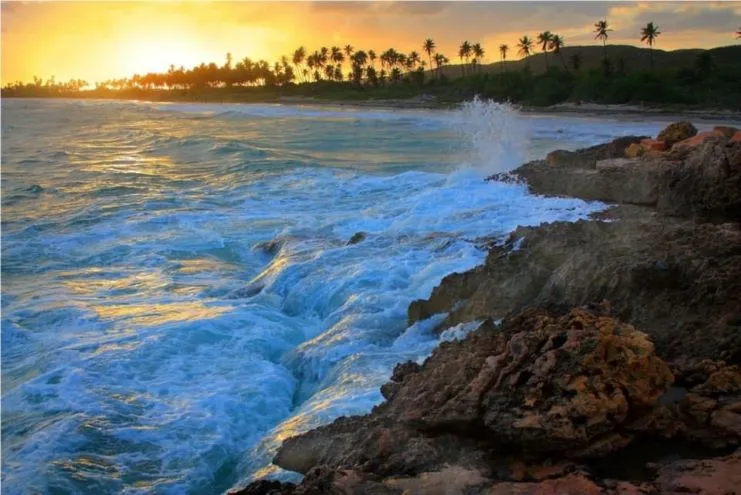
Guanica is famous for its history.
In the Taino era, Guanica was part of the Guaynia Territory ruled by Puerto Rico’s most famous Cacique (Taino Chief) Agueybana.
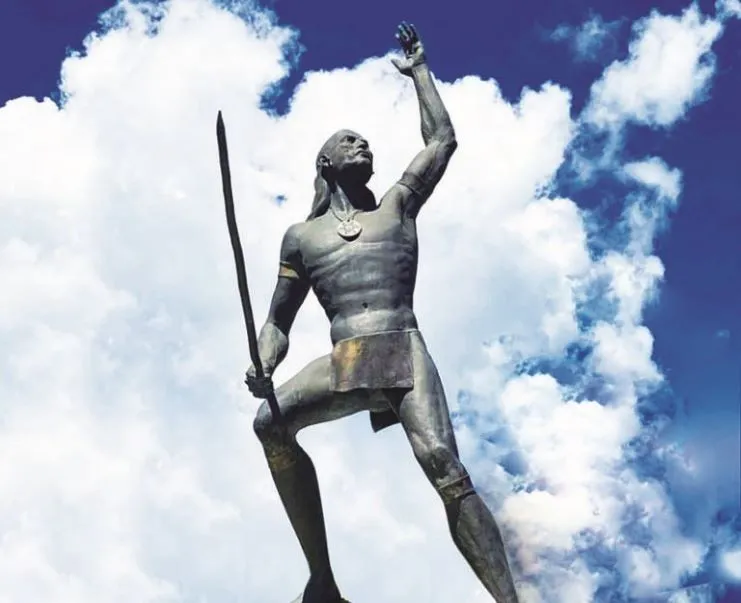
In 1508 Juan Ponce de Leon (who later became the Island’s first Governor) arrived in Puerto Rico through Guanica Bay.
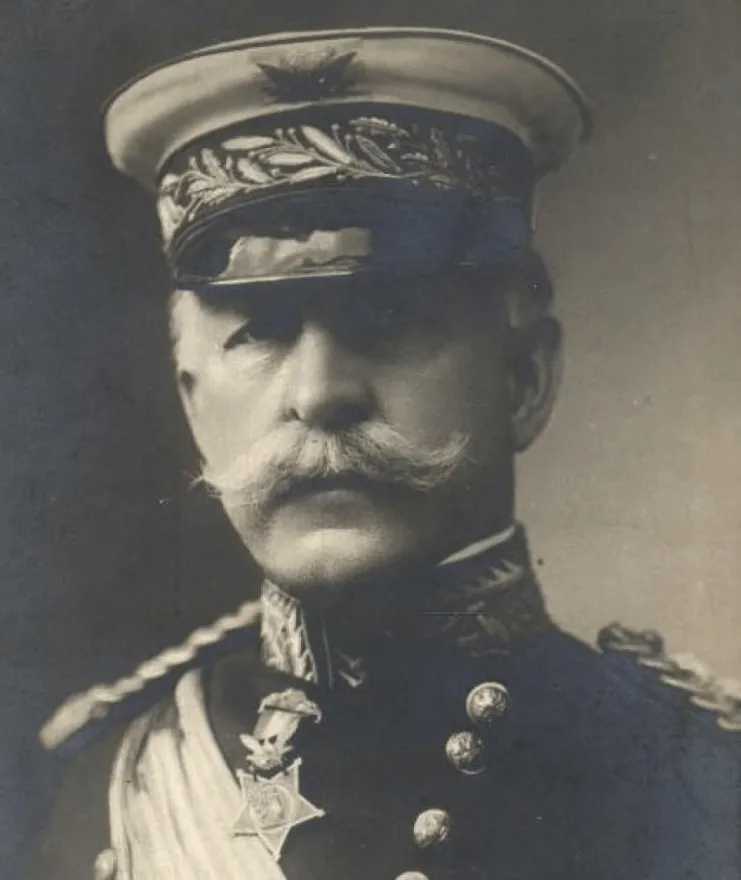
General Nelson A. Miles commanded 3,300 US Troops that, on July 25, 1898, arrived at Guanica Bay during The Spanish American War.
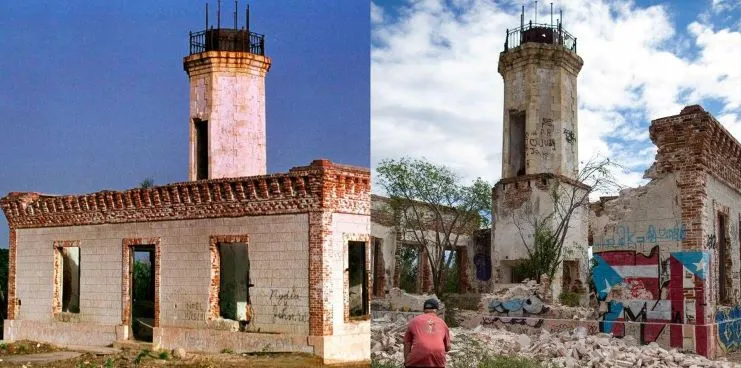
Guanica is also famous for its Spanish Lighthouse ruins.
Unfortunately, on January 6, 2020, an earthquake took a toll on the structure.
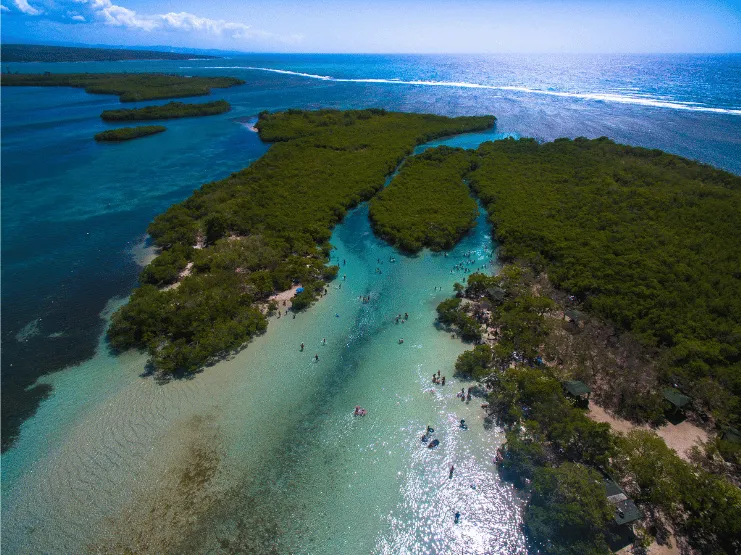
Parador Guanica 1929 is a famous small inn operating since 1929 in Guanica Bay. Guanica is also famous for its mangrove minor island keys, especially the one named after the 60’s sitcom Gilligan’s Island.
Nature lovers know Guanica for The Guanica State Forest.
We call it Bosque Seco de Guanica (Guanica’s Dry Forest) because of the small amount of precipitation it gets.
At close to 10,000 acres (about 4,000 hectares), it is the biggest of Puerto Rico’s state forests and one of the largest stretches of tropical dry coastal forest left anywhere.
UNESCO added it to its world network of Biosphere Reserves in 1981.
Guanica also has famous beaches like Ballena and Tamarindo.
What are some things to do in Guanica?
Short answer: hike the dry forest (the Ballena trail down to the beaches, or the climb to Fuerte Caprón), swim and snorkel at Playa Tamarindo and Punta Ballena, see the 1898 landing rock on the bay and the old lighthouse ruins off PR-333, dive La Pared, and take a slow drive along the coast road. Gilligan’s Island was closed to visitors after the 2020 earthquakes and we could not confirm that it has reopened, so read the note below before you plan around it.
In Guanica, you can see where history unfolded.
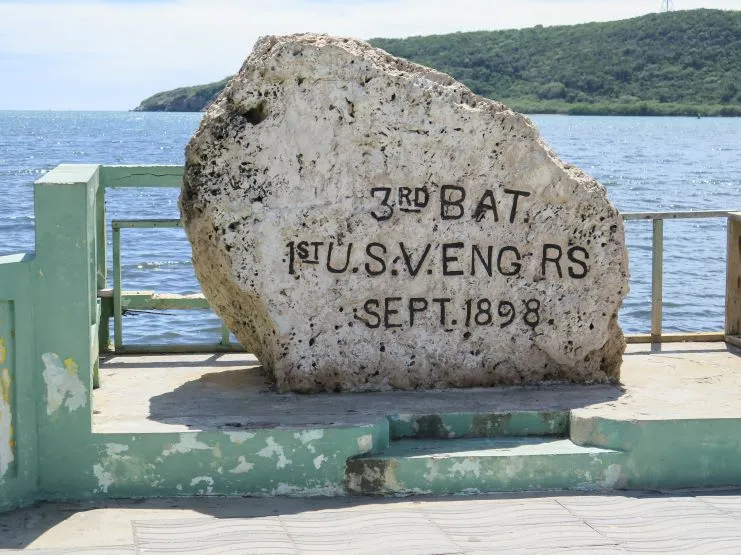
Visit Guanica Bay, and at the end of Calle 25 de julio (July 25 street), you will see a boardwalk and a giant boulder that US Troops engraved when they disembarked there on July 25, 1898.
The place where the US Troops disembarked is significant in Puerto Rican history.
On Road PR 333, on a cliff overlooking Guanica Bay, you will find the remains of a Spanish lighthouse that was first lit in 1893 and switched off in 1950.
On January 6, 2020, an earthquake devastated the remains of the lighthouse. However, it is still an exciting place to visit to see a panoramic view of the bay.
Do you remember the sitcom Gilligan’s Island and its theme song?
Cayo Aurora, the cay everyone calls Gilligan’s Island, is one of the mangrove keys just off Guánica’s coast. Its shallow channels were long a favorite for swimming, snorkeling and kayaking, and when you drift into the channel that cuts it in two, you feel very far from anywhere.
Bring plenty of water and snacks, and remember to use sunscreen.
Please be aware that this will be a little more than “a three-hour tour.”
Before you go (October 2026): Cayo Aurora was closed to visitors after the January 2020 earthquakes. The quakes lowered the sea floor around the cay by several inches, and its gazebos and grills were later torn down for safety. In 2021 Primera Hora reported that access was shut even to the boat operators licensed by the DRNA; private boats and kayaks could come close but had to stay outside the buoys. We found no newer official notice, either of a reopening or of the closure, so check with the DRNA’s Guánica State Forest office before you go, and treat any “ferry to Gilligan’s” offer with caution.
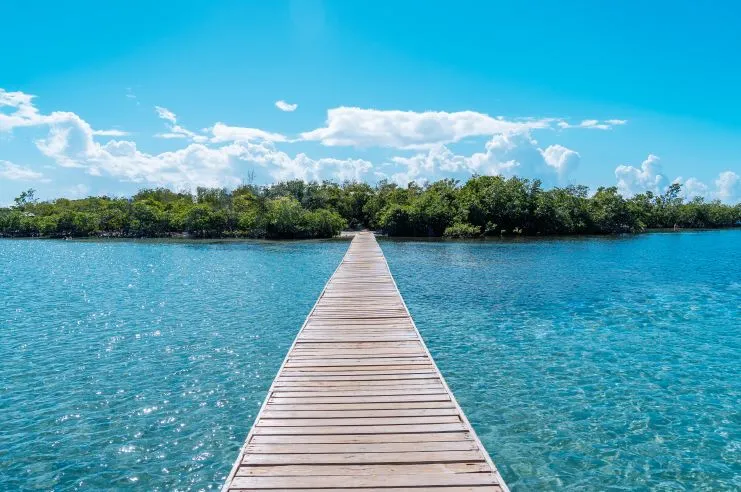
If you are into kayaking, you can rent one near the Copamarina pier and paddle out to see the cays from the water; just keep outside the buoys and respect any posted closure.
Hike the trails of Bosque Seco De Guanica (Guanica’s State Forest).
The southwest of Puerto Rico only gets a little rain. But, in that arid land, you will find a thriving ecosystem adapted to the harsh conditions. They have identified over 550 species of plants in the forest,180 of those are trees, and 45 are endangered.
Over 166 species of birds call the forest home, and 15 are considered either rare or endangered.
The Department Of Natural Resources of Puerto Rico estimates that there are close to 1,200 species of marine organisms in the biosphere reserve, including fish, algae, coral reefs, and crustaceans.
You can hike or mountain bike the trails, but stay hydrated and wear sunscreen.
Inside the forest stands Fuerte Caprón. Despite the name, it is not a Spanish fort: the small stone lookout tower you see today was built by the Civilian Conservation Corps during the New Deal years of the 1930s, and it is now the emblem at the center of Guánica’s flag.
The view from the fort is worth hiking to get there.
Below is a video of hiking in the Guanica forest:
Follow the signs to El Guayacan Centenario (centuries-old Guayacan tree). This tree has struggled to survive in the dry environment, and its roots are all over the place.
The Ballena trail will take you close to Punta Ballena Beach and Tamarindo Beach.
You can swim, kayak, snorkel, or sunbathe on these remote beaches.
You will find restaurants near the beaches serving freshly caught seafood.
La Cueva (The Cave) Trail will take you to caves where they mined limestone.
The cave system sustained damage during the 2020 earthquake; now, it is harder to get into the caves, and some parts collapsed.
Please, exercise caution if you enter the caves.
In the early 1900s, Guanica’s economy mainly depended on sugar cane. They had a sugar mill that employed most of the town’s population.
That mill, Central Guánica, was among the largest in the Caribbean; it shut down in 1982, and today only its ruins remain.
But for history enthusiasts, the sugar mill ruins are a place to visit.
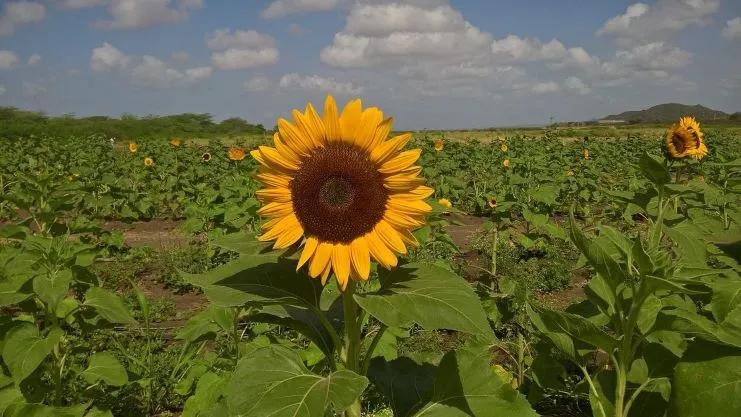
Finca El Girasol is a sunflower farm where you can visit and buy sunflowers and other small plants. Remember to call before you go to make sure they’re open.
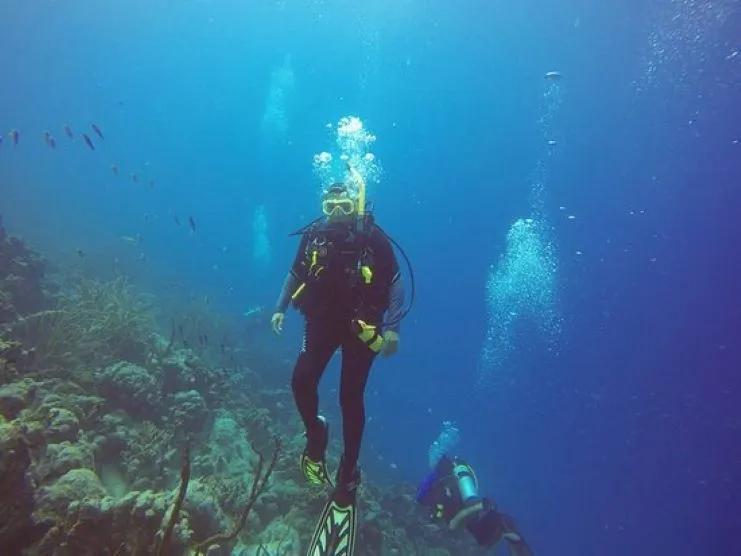
If you like to scuba dive, you can book a trip to Playa Santa so you can Scuba dive at La Pared (The Wall), a hundred feet dive filled with marine diversity.
I have visited Puente Colgante de Fuig (Fuig suspension bridge) many times, but I have never crossed it.
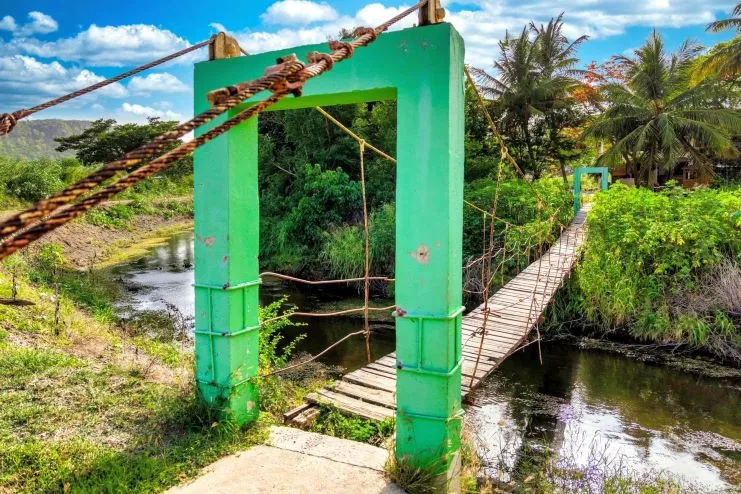
The people I’ve taken there say it is fun and scary at the same time.
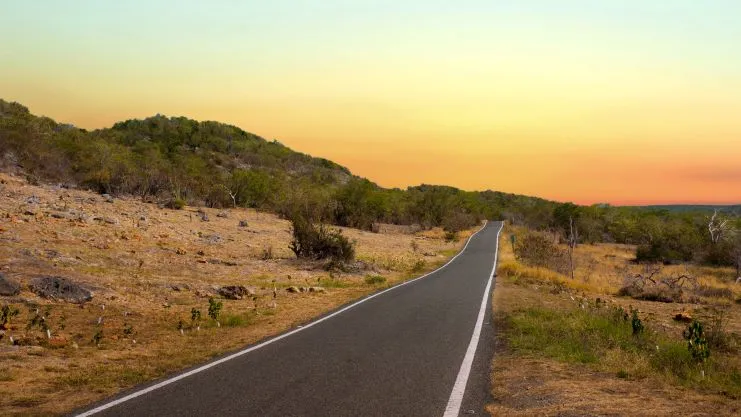
One of my favorite things to do in Guanica is drive.
Driving on Route 333 with the car windows down and the music up while enjoying the scenery is something you must experience.
Even though it is not in Guanica, you can go to La Parguera Bioluminescent Bay.
A short 20 minutes drive will get you there.
Is Guanica Safe For Tourists?
Yes, Guanica is safe for tourists.
Guánica is a small town: the 2020 Census counted 13,787 residents, which ranks it 71st of Puerto Rico’s 78 municipios.
Other than petty theft, there is nothing to worry about.
Keep your belongings secured, lock your car, and you will be fine.
While you are visiting the southwest of the Island, you can check out the famous Cabo Rojo Lighthouse, just a short drive from Guanica.
Planning your visit? Guánica works as a long day trip from Ponce, but it is better with a night or two on the coast. Our directory has places to eat in Guánica, from a grill kiosk across from the old sugar mill to pizzerias and an artisan bread spot, plus listings for stays such as Copamarina Beach Resort and the historic Parador Guánica 1929. For the rest of the south coast, see our guide to things to do in Ponce.
Run a guesthouse, restaurant, kayak rental or dive shop in Guánica? Add your business to our directory so visitors planning a trip to the dry forest and the south coast can find you. If it is already listed, you can claim it with a free account. There is no password: you sign in with your email and a one-time code, then check your details and keep the page current from your account.
FAQ section
Is Guánica worth visiting?
Yes, Guanica is an excellent town, full of history, nature, and outstanding cuisine. This small, low-paced town will be one of your favorites in Puerto Rico.
How far is the drive from San Juan to Guánica?
Guánica is about 98 miles (157 km) by road from Old San Juan. Without traffic the drive takes roughly 2 hours 15 minutes, mostly on the PR-52 expressway across the island and then west along PR-2 from Ponce.
Final thoughts
If you like nature, history, beaches and seafood, then Guánica is a town you should visit.
Guánica is a getaway from the fast-paced San Juan area, and you will enjoy your time there.
For more information about places to visit in Puerto Rico, please check our article 45 Places To Visit In Puerto Rico.
You may also enjoy our article Where To Stay In Puerto Rico – 13 Best Places & Areas.
Originally published on PuertoRico.com (2023-02-11); last updated 2026-10-24.