
Quick answer
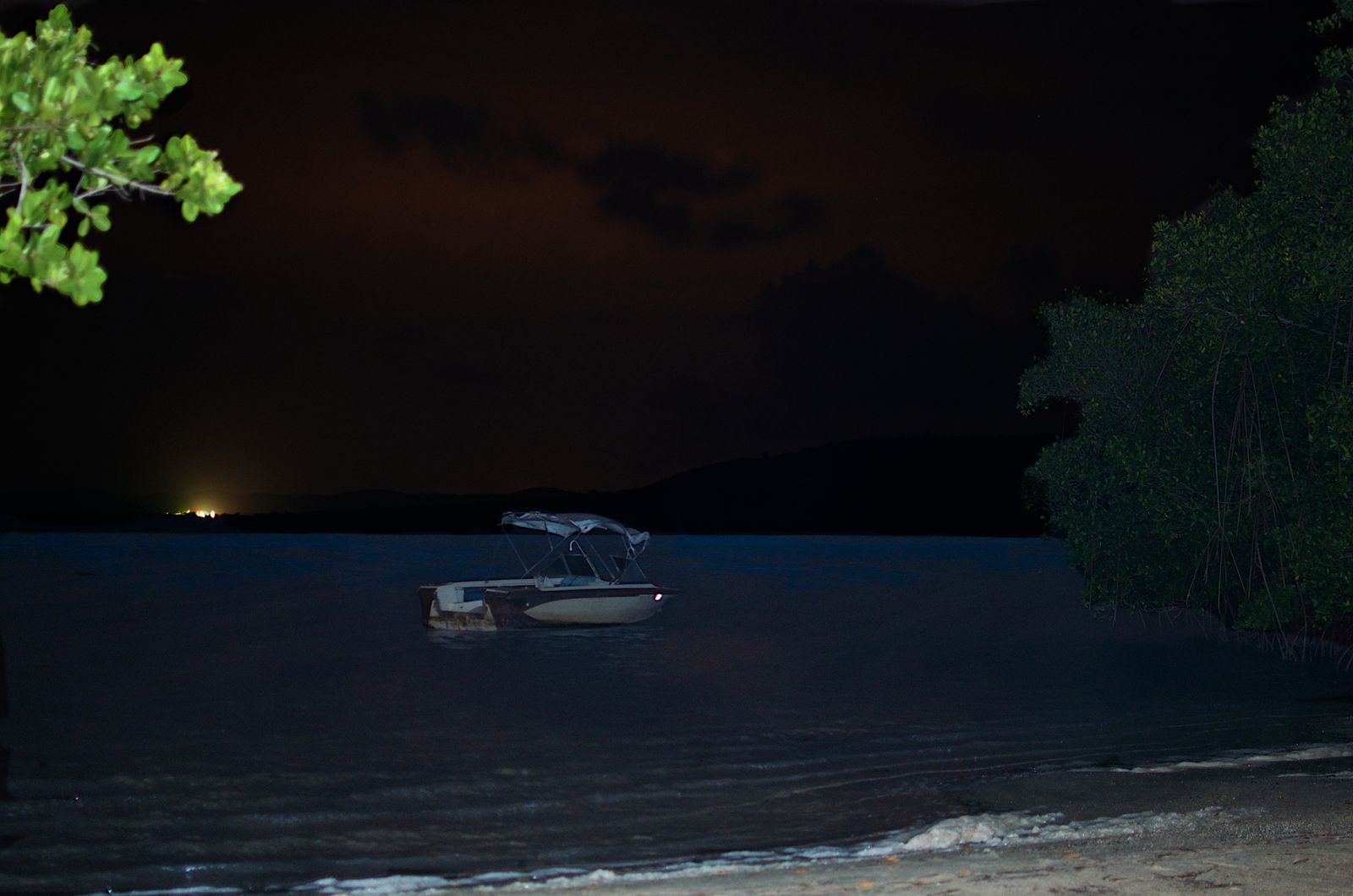
Mosquito Bay (Puerto Mosquito) on the south coast of Vieques is listed by Guinness World Records as the world’s brightest bioluminescent bay, with up to 700,000 dinoflagellates (Pyrodinium bahamense) per gallon of water.
- It’s a protected natural reserve under the DRNA, co-managed by the Vieques Conservation and Historical Trust.
- You must go with a licensed operator; no swimming, jet skis or motorboats.
- Getting there: ferry from Ceiba ($2.00 adult one way) or a flight, then a night on Vieques.
- Go near the new moon: Nov 9 and Dec 8, 2026, and Jan 7, 2027.
Mosquito Bay is one of three bio bays found in Puerto Rico.
Located on the remote island of Vieques, off the east-coast of mainland Puerto Rico, getting to the island is an adventure in itself.
In this article, I will cover:
– What is bioluminescence?
– What is Mosquito Bay?
– Where is Mosquito Bay located?
– How to get to Mosquito Bay from San Juan
– Is Mosquito Bay the best bio bay in Puerto Rico?
– What makes Mosquito Bay special?
– Can you go to Mosquito Bay without a tour?
– Other frequently asked questions
What is bioluminescence?
Bioluminescence means “light emitted by a living thing.”
An example of bioluminescence you might be familiar with would be the glow emitted by fireflies, some species of jellyfish, and glow worms.
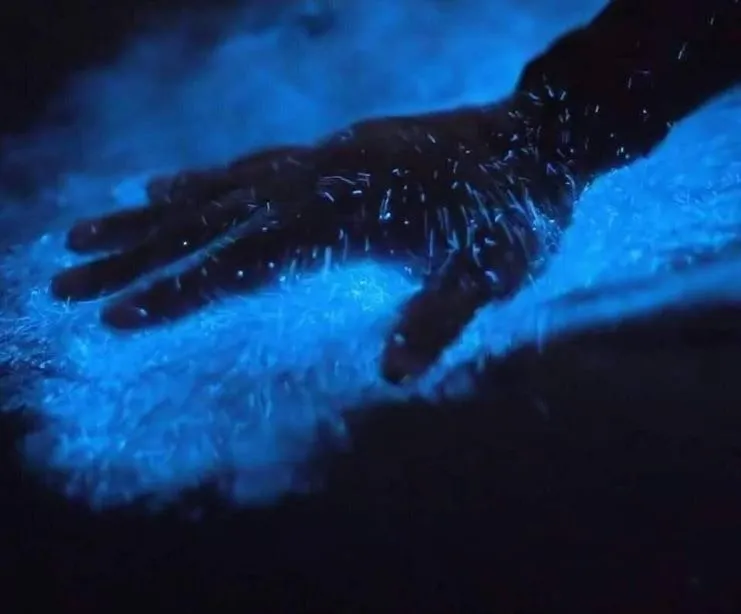
Dinoflagellates are a type of plankton that produce bioluminescence in the water at night; this is what makes the bioluminescent bay glow.
Dinoflagellates are small, single-celled organisms that are half animal half plant, and it is believed by scientists that their glow is a defense against predators. It is also suspected that bioluminescent organisms of the same species use light to communicate with each other.
The scientific name for dinoflagellates is Pyrodinium Bahamense, which translates to “whirling fire”.
To learn more about this naturally occurring phenomenon, read our article Bioluminescent Bays Puerto Rico.
What is Mosquito Bay?
Mosquito Bay is one of three bioluminescent bays located in Puerto Rico.
Below is a video showing a tour through Mosquito Bay:
To learn more about the best times to visit the bio bay, read our article When Is The Best Time To See Bioluminescence In Puerto Rico?
Guinness World Records lists Mosquito Bay as the brightest bioluminescent bay in the world: up to 700,000 dinoflagellates per gallon (4.5 liters), each flashing blue-green for about a tenth of a second when disturbed. The glow is visible all year, but it is easiest to see on dark nights.
The glow is easiest to see when the sky is dark. Around the new moon the moon is down for the whole evening. In the days after the full moon, the moon rises later each night, so early-evening tours can still be dark; around the full moon itself, the moon is up all night and the glow is much harder to see. Since June 2023, a DRNA order closes La Parguera’s bay for three full-moon days every lunar cycle.
| New moon (darkest skies) | Full moon |
|---|---|
| Oct 10, 2026 | Oct 26, 2026 |
| Nov 9, 2026 | Nov 24, 2026 |
| Dec 8, 2026 | Dec 23, 2026 |
| Jan 7, 2027 | Jan 22, 2027 |
| Feb 6, 2027 | Feb 20, 2027 |
| Mar 8, 2027 | Mar 22, 2027 |
| Apr 6, 2027 | Apr 20, 2027 |
| May 6, 2027 | May 20, 2027 |
| Jun 4, 2027 | Jun 18, 2027 |
| Jul 3, 2027 | Jul 18, 2027 |
Where is Mosquito Bay located?
Mosquito Bay is located on the small island of Vieques, a few miles off the coast of Puerto Rico.
The Vieques bioluminescent bay is one of many things to do on the island, which is also famous for its pristine beaches and wild horses.
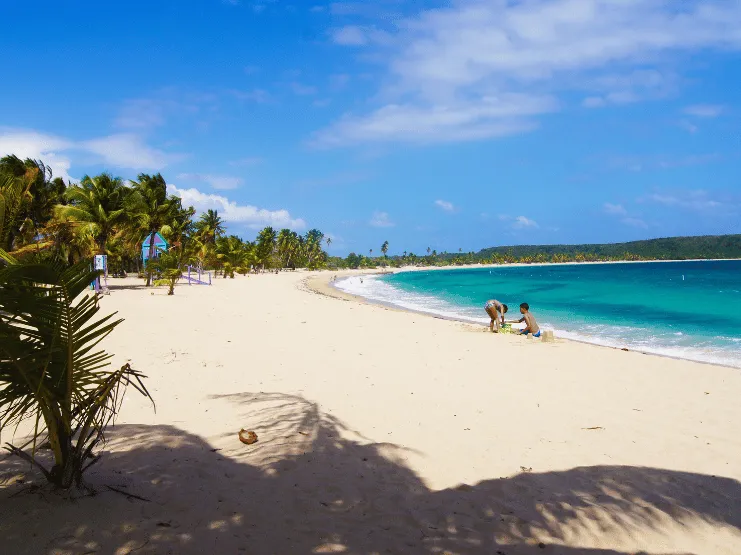
The island offers world-class snorkeling and diving sites, beach horseback riding, hiking trails, and museums.
There are two main towns on the island, Isabel II on the north side where the ferry lets you off, and Esperanza on the south side where most tours meet to explore the bio bay.
With so much to do, you can be sure that a trip to Vieques will not disappoint.
Below is a video that shows you a bit more of Vieques:
Much of Vieques is protected as the Vieques National Wildlife Refuge, managed by the US Fish & Wildlife Service. See our Vieques guide and things to do in Vieques.
How to get to Mosquito Bay from San Juan
Ferry (October 2026): boats to Vieques leave from the Ceiba terminal, about 1 hour 20 minutes by car from Old San Juan without traffic. The operator lists an adult fare of $2.00 one way; a new fare scheme with higher prices for non-residents has been postponed to December 31, 2026, so check puertoricoferry.com before you go. Only residents may currently bring vehicles, so plan on renting a car or using taxis on Vieques. You can also fly to Vieques from the San Juan area.
Bio bay tours run after dark, so plan to spend the night on Vieques. For all the options, read How to get to Vieques.
Is Mosquito Bay the best bio bay in Puerto Rico?
For brightness, yes: it is the bay Guinness World Records lists as the world’s brightest. The trade-off is getting there. If you have only one night and are based in San Juan, Laguna Grande in Fajardo is about an hour’s drive. Compare all three in our bioluminescent bays guide.
Mosquito Bay: no swimming. Only licensed operators may take visitors in, and jet skis and motorboats are banned, to protect the dinoflagellates.
Laguna Grande: visits are by kayak or on Para la Naturaleza’s boardwalk tour; swimming is not part of them.
La Parguera: this is the bay where some licensed boat tours have offered a swim. Rules can change, so ask the operator before you book, and never go in the water on your own at night.
What makes Mosquito Bay special?
Mosquito Bay is able to have such a large concentration of dinoflagellates due to its very small, “s” shaped entrance to the ocean.
While you are kayaking, you may see different types of marine life swimming around you, like small fish and turtles.
The “S” shape of the bay’s entrance traps the single-celled dinoflagellates, allowing them to multiply without being disturbed by the ocean’s currents.
This unique feature coupled with the mangroves that line the entrance to the bay further protects the organisms aiding in their multiplication, allowing Mosquito Bay to be the perfect nursery for dinoflagellates.
Can you go to Mosquito Bay without a tour?
No.
Mosquito Bay is protected by Puerto Rico’s Department Of Natural Resources.
Only licensed tour operators are allowed to bring visitors to the bay.
This allows the area to remain protected and allows a minimal level of disturbance to the magical organisms that live in the bay.
Frequently asked questions
Is Mosquito Bay the brightest bio bay in the world?
Guinness World Records lists Mosquito Bay on Vieques as the world’s brightest bioluminescent bay, with up to 700,000 dinoflagellates per gallon of water.
Can you swim in Mosquito Bay?
No. Swimming is not allowed, and jet skis and motorboats are banned. Visits are only with licensed operators.
Can you visit Mosquito Bay without a tour?
No. It is a protected natural reserve and only licensed operators may take visitors.
How do you get to Mosquito Bay from San Juan?
Drive about 1 hour 20 minutes to the ferry terminal in Ceiba, take the ferry to Vieques ($2.00 adult one way), or fly from the San Juan area. Most visitors stay overnight.
When is the best time to visit Mosquito Bay?
On dark nights near the new moon. Upcoming new moons: Nov 9 and Dec 8, 2026, and Jan 7 and Feb 6, 2027.
Final thoughts
Mosquito Bay is worth the trip if you can spend a night on Vieques. Book a licensed tour, go near the new moon, and check the ferry fares before you travel.
For licensed operators, see our directory of Vieques bio-bay tours.
Sources we checked
Checked in October 2026. Where a fact could not be confirmed against a primary source, we removed it or said so.
- Guinness World Records: brightest bioluminescent bay — Mosquito Bay, Vieques (2006; up to 700,000 Pyrodinium bahamense per gallon)
- Para la Naturaleza: Puerto Mosquito, Vieques — protected reserve under the DRNA, co-managed by the Vieques Conservation and Historical Trust; licensed operators only; no swimming, jet skis or motorboats; Puerto Rico’s three bio bays
- US Naval Observatory: dates and times of the primary moon phases (UT; converted to Atlantic Standard Time)
- Puerto Rico Ferry (operator): fares from Ceiba to Vieques and Culebra
- Metro Puerto Rico (May 4, 2026): new Vieques/Culebra ferry fare scheme postponed to December 31, 2026
- PuertoRico.com drive times (OSRM on OpenStreetMap, October 2026, free-flow, no traffic)
- US Fish & Wildlife Service: Vieques National Wildlife Refuge
Originally published on PuertoRico.com (2022-12-02). Reviewed and updated October 2026: facts were checked against the sources above.