
Quick answer
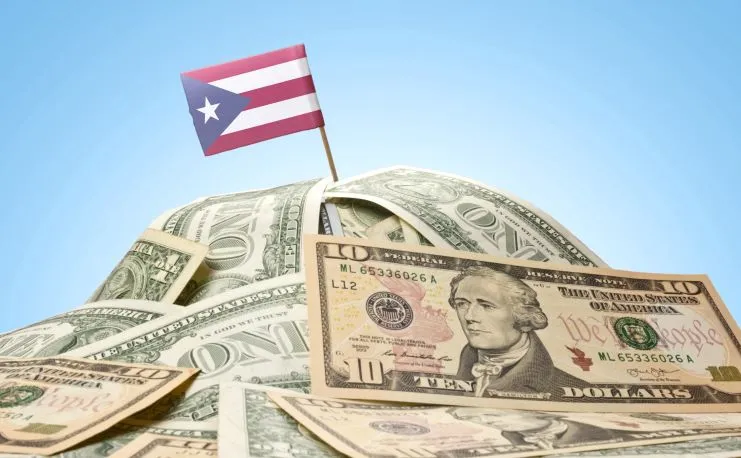
The US dollar. Puerto Rico is a US territory, so the currency is the same as in the 50 states. US visitors do not need to exchange money. International visitors exchange into USD at a bank, airport desk or ATM.
- Cash and major cards (Visa, Mastercard, Amex) work almost everywhere. Some small spots set a card minimum.
- Venmo and Cash App are uncommon. Puerto Rico’s everyday P2P app is ATH Móvil (by Evertec).
- IVU sales tax is 11.5% on most goods and services (see our IVU calculator).
- Locals also call the dollar a “dólar,” a nickel a “vellón,” and a penny a “chavo.”
Updated October 15, 2026. Currency and banking facts come from the Federal Reserve Bank of New York, the U.S. Mint program records and the history of the Puerto Rican peso. Tax rates come from Puerto Rico’s Treasury Department (Hacienda), tipping rules from Act 9-2018, ATH Móvil details from the app’s own help center and Evertec, money-exchange details from Banco Popular, and slang from the Real Academia Española dictionary. Nothing here is tax or legal advice.
Puerto Rico’s currency is the US dollar, and it is the only money in everyday use. The island is a US territory and part of the US banking system, so the bills, coins and bank cards in your wallet work exactly as they do in Miami or Chicago. Visitors from the 50 states have nothing to exchange. If you’re coming from abroad, plan on paying in dollars. For the bigger picture on the island’s status, see is Puerto Rico part of the US?
Is the US dollar the official currency of Puerto Rico?
Yes. Puerto Rico sits inside the Federal Reserve’s Second District, which the New York Fed serves along with New York, parts of New Jersey and Connecticut, and the US Virgin Islands. There is no local version of the dollar: the island has been fully tied into the US currency system for more than a century (see the history below).
You may still spot two coins with an island theme in your change, and both are ordinary legal tender:
- The 2009 Puerto Rico quarter, from the Mint’s series for DC and the US territories. Its reverse shows a garita, one of the stone sentry boxes on the walls of Old San Juan, with a flor de maga and the motto “Isla del Encanto.” It was the first US coin to carry a Spanish inscription. You can see real ones along the old city walls, next to El Morro.
- The 2012 El Yunque quarter, from the America the Beautiful series, featuring a Puerto Rican parrot and a coquí frog. The forest itself is covered in our El Yunque guide.
Did Puerto Rico ever have its own money?
It did, under Spain. Local peso notes were first printed in the early 1800s, and in 1895 a royal decree created peso coins made just for Puerto Rico. After Spain handed the island to the United States in 1898, the Spanish-era Banco Español de Puerto Rico was renamed the Bank of Puerto Rico and kept issuing notes, now counted in dollars, with more series following until 1913. Once the island’s money was folded fully into the US system, those “Puerto Rican dollars” were exchanged for US Treasury currency, and the island has used only US money ever since. Old notes from that era are now collectors’ items, not cash.
Do I need to exchange money?
- Coming from the 50 states: no. Your cash and cards are already in the right currency.
- Coming from another country: the simplest options are to arrive with some dollars or to withdraw them from an ATM with your home debit card (ask your bank about its foreign fees first). Banco Popular says any of its branches will change foreign banknotes into dollars (bills only, no coins). Heading home and need euros, pounds, Canadian dollars or Mexican pesos? Its branch at Luis Muñoz Marín International Airport (SJU) sells those on the spot, weekdays from 8 a.m. to 4 p.m.
Cards, cash and ATMs
Expect to pay by card at hotels, car rentals, supermarkets, chain stores and most sit-down restaurants. Keep some small bills for places that may not take cards:
- beach kiosks, food trucks and roadside lechoneras
- small-town colmados (corner shops) and some parking lots
- tips for housekeeping, guides and boat crews
Puerto Rico has its own debit network, called ATH, so you’ll see that name on local bank cards and in the ATH Móvil app. Before you rely on a mainland card at island ATMs, ask your bank what it charges out of network. Take out cash in town before a day on the smaller islands or up in the mountains.
Sales tax (IVU): what shows up on your receipt
Your receipt will show the IVU (impuesto sobre ventas y uso), Puerto Rico’s sales and use tax. Hacienda puts the standard total at 11.5%: a 10.5% state share plus a 1% municipal share.
Restaurants are the exception to watch for. Since October 1, 2019, eateries that Hacienda certifies may charge a reduced 7% IVU on prepared food, soft drinks, pastries and sweets. Alcoholic drinks still carry the regular rate. So a dinner receipt can show 7% on the food and 11.5% on the cocktails. Hacienda keeps a public list of authorized businesses in its SURI system and suggests checking your receipt before you pay. To estimate a total, try our IVU calculator.
Tipping in Puerto Rico
In the preamble to Act 9-2018, Puerto Rico’s legislature describes the tip as voluntary and says it typically falls between 15% and 20% of what you consumed. The same law bars businesses from calculating suggested tips on a total that already includes the IVU, so the percentage applies to your food and drinks only. If the card terminal offers preset buttons, check the base amount before you tap.
ATH Móvil, Venmo and Cash App
ATH Móvil is the island’s homegrown payment app, built on the ATH network and run by Evertec, which says it has more than two million users. People use it to send and request money, pay businesses by QR code or username, and settle up at participating parking lots. According to the app’s help center, you can only sign up with an ATH debit card (plain or Visa/Mastercard-branded) from a bank or credit union that takes part in the service. In other words, most visitors can’t use it. If a small vendor asks for ATH Móvil, ask whether a card or cash works instead.
What do Puerto Ricans call money?
- Dólar: the dollar.
- Vellón: a nickel. The Spanish dictionary lists this five-cent meaning as a Puerto Rico usage.
- Chavo: a penny, and in the plural (chavos) money in general, as in “no tengo chavos” (I’m broke).
More everyday Spanish for your trip: what language is spoken in Puerto Rico.
Is Puerto Rico expensive?
The dollar is the same as at home, but what you spend depends on where you stay and eat. For real numbers by budget level, read how much a Puerto Rico vacation costs, and for other first-trip basics, see our things to know before you go.
Frequently asked questions
What currency does Puerto Rico use?
The US dollar (USD). Puerto Rico is a US territory, so there is no separate island currency.
Do I need to exchange money for Puerto Rico?
Not if you already use dollars. International visitors should get USD before arrival or withdraw from an ATM on the island.
Do businesses in Puerto Rico take credit cards?
Most do — Visa, Mastercard and American Express are widely accepted. Carry some cash for small shops, food trucks and tips.
Does Puerto Rico have Venmo or Cash App?
Rarely. The local P2P payment app is ATH Móvil. Visitors usually pay with cards or cash.
What is the sales tax in Puerto Rico?
IVU is 11.5% on most goods and services. Hotels and some tourist services may add other fees.
Sources we checked
Checked in October 2026. Where a fact could not be confirmed against a primary source, we removed it or said so.
Originally published on PuertoRico.com (2022-12-27). Reviewed and updated October 2026: facts were checked against the sources above.