Quick answer
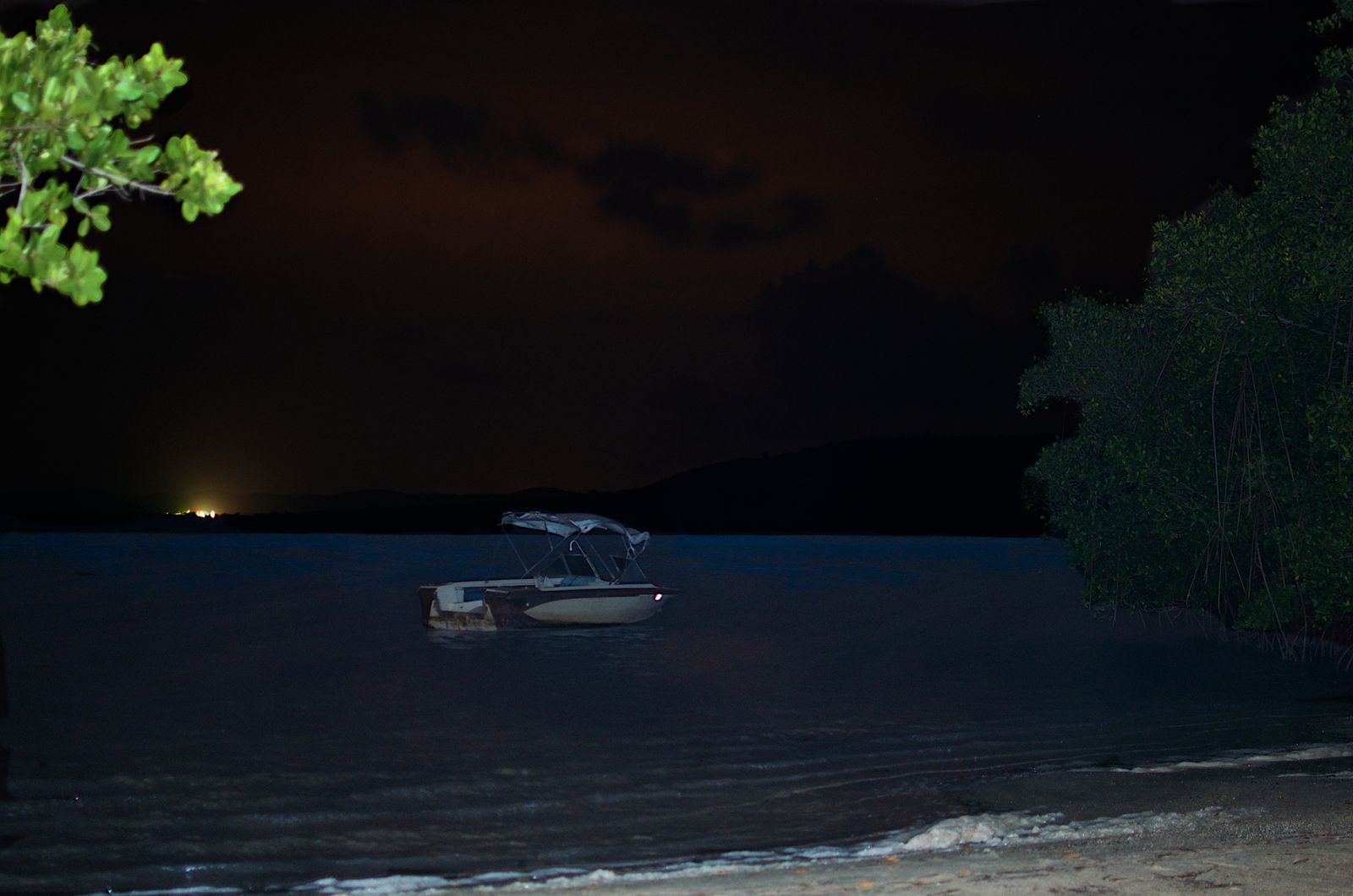
Puerto Rico has three bioluminescent bays: Laguna Grande in Fajardo, Mosquito Bay (Puerto Mosquito) on Vieques and La Parguera in Lajas.
- Brightest: Mosquito Bay, named the world’s brightest by Guinness World Records.
- Easiest from San Juan: Laguna Grande, about an hour’s drive.
- Swimming: not allowed at Mosquito Bay; not part of Laguna Grande tours; some La Parguera boat tours have offered it.
- Best timing: dark nights around the new moon. Next new moons: Oct 10, Nov 9 and Dec 8, 2026.
- All visits are with licensed operators.
Puerto Rico has three bioluminescent bays.
In this article, I’ll share what I learnt about each bio bay, and cover everything that you need to know about Puerto Rico’s bio bays:
– What is bioluminescence?
– What is a bioluminescent bay?
– How many bioluminescent bays are there in Puerto Rico?
– Where are the bioluminescent bays in Puerto Rico located?
– Which bio bay is the best?
– Is it safe to swim in the bioluminescent bays in Puerto Rico?
– Are you allowed to swim in the bioluminescent bays?
– How do you book a bioluminescence tour?
What is bioluminescence?
Bioluminescence is the term used to describe when a living organism emits light.
There are different types of bioluminescence, such as fireflies and certain types of jellyfish.
This emission of light is a type of chemiluminescence, a chemical reaction where light is produced by a living organism.
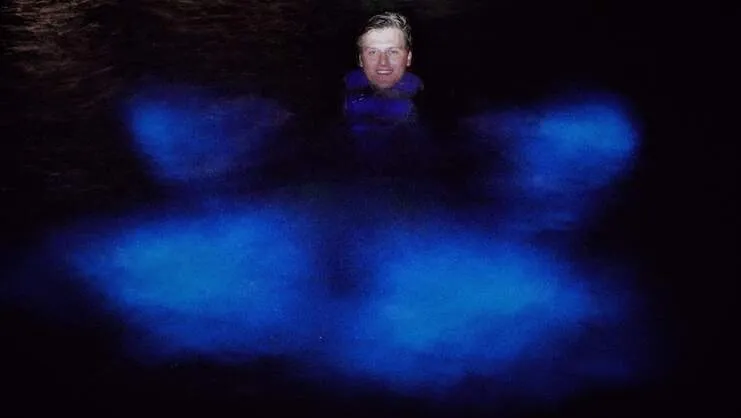
Fireflies are one example of bioluminescence that you may already be familiar with. However, most bioluminescence is found in organisms that live in the ocean. Glow worms, giant glowing squids, jellyfish and shining sea snails all contain elements of bioluminescence.
One thing you can be sure of is that no bioluminescent organism provides as interactive an experience as the dinoflagellates (plankton) that occupy Puerto Rico’s bioluminescent bays.
Carlos Sanchez is a Puerto Rican native that has been visiting the bio bays for more than a decade.
“Dinoflagellate is the name of the glowing organism,” says Sanchez. “They are a single-celled plankton, a microorganism called Pyrodinium bahamense. They are half animal, half plant. Their bodies contain chlorophyll which helps them prepare food by photosynthesis. Scientists believe that their glow is a defense against their predators.” he shared.
Sanchez pulls his hand through the water, activating the dinoflagellate’s glow.
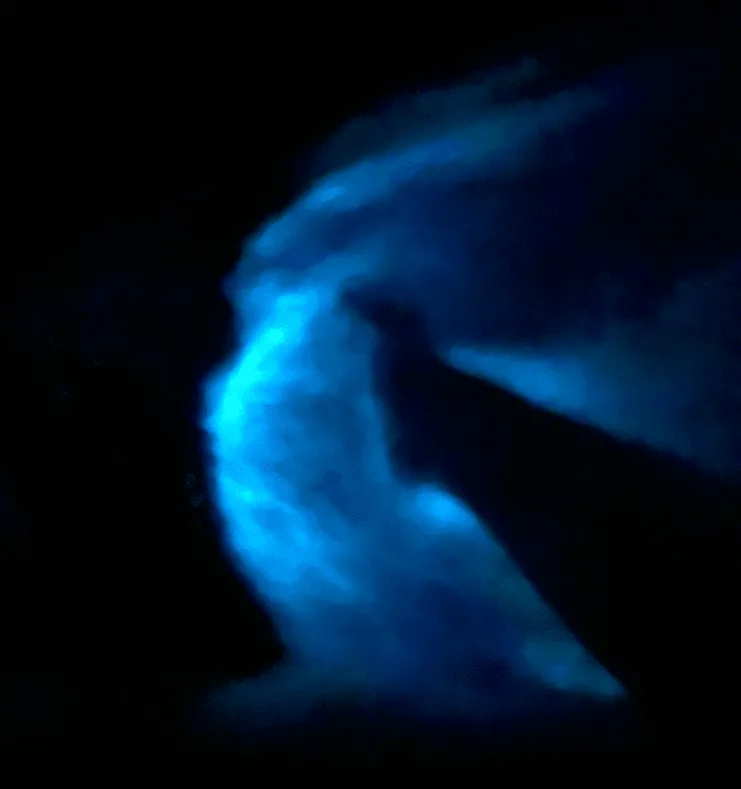
When the dinoflagellate plankton is disturbed, they emit a neon blue glow.
Biologists theorize that some fish may have learned to make use of their defensive bioluminescence.
For example, a fish may swim into an area filled with bioluminescent plankton to watch for the smaller fish who prey on them. When the smaller fish swims into the area and bumps into the plankton, its location is given away, and the larger fish can move in to capture its prey.
It is not uncommon to see fish, and even stingrays swimming underwater with a glowing stream behind them.
What is a bioluminescent bay?
A bioluminescent bay (bio bay) is a bay that contains a very high concentration of bioluminescent dinoflagellate plankton.
These dinoflagellate plankton are found everywhere in regular sea water, but they are in a much higher concentration in bio bays.
They drift into the bio bay from the sea, and then get stuck in the bay due to the fact that the bio bay has a small entrance.
With time, these plankton start to multiply inside the bay as they can’t escape. This dramatically increases the concentration level of plankton inside the bay compared to regular sea water.
When the dinoflagellate plankton are moved in the water, pressure is put on their cell-walls. This causes a chemical reaction inside their cells, which then causes them to emit light (bioluminescence).
If you move regular sea water, you can’t see the bioluminescence as the concentration of plankton is too low to see light being emitted. However, in a bio bay, the concentration of plankton is so high that you can see light being emitted (bioluminescence).
How many bioluminescent bays are there in Puerto Rico?
Three: Laguna Grande in Fajardo, Puerto Mosquito (Mosquito Bay) on Vieques and La Parguera in Lajas.
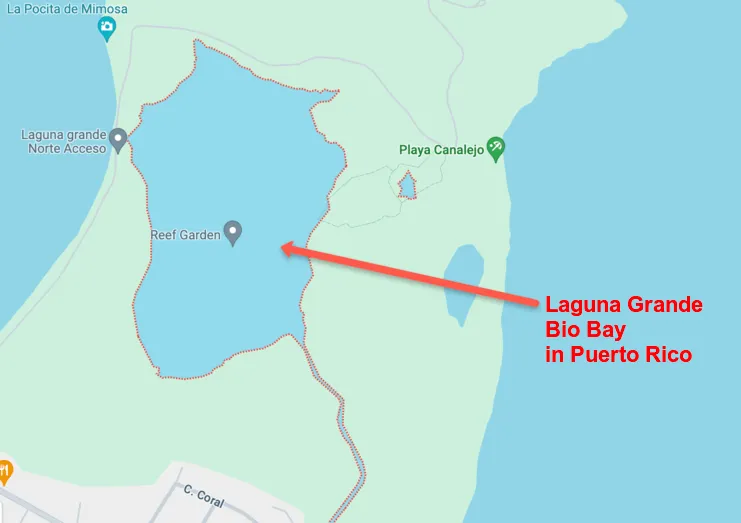
- Laguna Grande, Fajardo — inside the Cabezas de San Juan nature reserve on the northeast tip of the main island. About an hour’s drive from Old San Juan or the airport without traffic; most visits are guided kayak tours through a mangrove channel, and Para la Naturaleza, which operates Cabezas de San Juan, also offers a no-kayak night tour by trolley and boardwalk.
- Puerto Mosquito (Mosquito Bay), Vieques — named the world’s brightest bioluminescent bay by Guinness World Records. It is a protected reserve under the DRNA, co-managed by the Vieques Conservation and Historical Trust. Getting there means the ferry from Ceiba (adult fare $2.00 one way) or a flight, and usually a night on Vieques.
- La Parguera, Lajas — on the southwest coast, about 2½ hours from San Juan or about an hour from Aguadilla. Boat and kayak tours leave from the La Parguera waterfront; the bay closes for three full-moon days each lunar cycle.
Where are the bioluminescent bays in Puerto Rico located?
Laguna Grande is on the northeast tip of the main island, in Fajardo. It is about 1 hour 10 minutes from Old San Juan and about an hour from the airport (SJU) without traffic. See Laguna Grande bio bay and browse Fajardo bio-bay and kayak tours.
Mosquito Bay is on the south coast of Vieques, an island municipality east of the main island. Take the ferry from Ceiba (about 1 hour 20 minutes from Old San Juan by car) or a small plane, and plan to stay the night. See Mosquito Bay, How to get to Vieques, and Vieques bio-bay tours.
La Parguera is a coastal village in Lajas, on the southwest coast, about 2½ hours from San Juan and about an hour from Aguadilla. See La Parguera bio bay.
Which bio bay is the best?
It depends on what you want:
- The brightest glow: Mosquito Bay on Vieques. Guinness World Records lists it as the world’s brightest bioluminescent bay, with up to 700,000 dinoflagellates per gallon of water. The trade-off is the trip: a ferry or flight, and usually a night on the island.
- The easiest trip: Laguna Grande in Fajardo, about an hour from San Juan, with kayak tours through a mangrove channel or a no-kayak boardwalk tour.
- The southwest: La Parguera, if you are staying near Cabo Rojo, Lajas, Mayagüez or Aguadilla.
Brightness changes from week to week with rain and other conditions, so no bay can promise a glow on a given night.
Can you swim in Puerto Rico’s bioluminescent bays?
Mosquito Bay: no swimming. Only licensed operators may take visitors in, and jet skis and motorboats are banned, to protect the dinoflagellates.
Laguna Grande: visits are by kayak or on Para la Naturaleza’s boardwalk tour; swimming is not part of them.
La Parguera: this is the bay where some licensed boat tours have offered a swim. Rules can change, so ask the operator before you book, and never go in the water on your own at night.
What are the rules?
The bays are protected natural areas. Visit only with a licensed operator, follow your guide’s instructions, and don’t use flash photography. Mosquito Bay bans jet skis and motorboats. At La Parguera, a 2023 DRNA order closes the bay for three full-moon days each lunar cycle.
How do you book a bioluminescence tour?
Book with a licensed operator for the bay you want — start with licensed Fajardo operators for Laguna Grande or Vieques operators for Mosquito Bay. Ask when the tour starts relative to moonrise, whether it runs in rain, and what the cancellation policy is.
When to go
The glow is easiest to see when the sky is dark. Around the new moon the moon is down for the whole evening. In the days after the full moon, the moon rises later each night, so early-evening tours can still be dark; around the full moon itself, the moon is up all night and the glow is much harder to see. Since June 2023, a DRNA order closes La Parguera’s bay for three full-moon days every lunar cycle.
| New moon (darkest skies) | Full moon |
|---|---|
| Oct 10, 2026 | Oct 26, 2026 |
| Nov 9, 2026 | Nov 24, 2026 |
| Dec 8, 2026 | Dec 23, 2026 |
| Jan 7, 2027 | Jan 22, 2027 |
| Feb 6, 2027 | Feb 20, 2027 |
| Mar 8, 2027 | Mar 22, 2027 |
| Apr 6, 2027 | Apr 20, 2027 |
| May 6, 2027 | May 20, 2027 |
| Jun 4, 2027 | Jun 18, 2027 |
| Jul 3, 2027 | Jul 18, 2027 |
More detail: When is the best time to see bioluminescence?
Frequently asked questions
How many bioluminescent bays are in Puerto Rico?
Three: Laguna Grande (Fajardo), Mosquito Bay (Vieques) and La Parguera (Lajas).
Which Puerto Rico bio bay is the brightest?
Mosquito Bay on Vieques. Guinness World Records lists it as the world’s brightest bioluminescent bay.
Can you swim in the bio bays?
Not at Mosquito Bay, and swimming is not part of Laguna Grande tours. Some licensed boat tours at La Parguera have offered a swim, so ask the operator.
When is the best time to see the bio bays?
On dark nights around the new moon. Upcoming new moons: Oct 10, Nov 9 and Dec 8, 2026, and Jan 7, 2027 (US Naval Observatory).
Which bio bay is closest to San Juan?
Laguna Grande in Fajardo, about an hour’s drive without traffic.
Can you visit a bio bay without a tour?
Plan on a licensed tour. Mosquito Bay allows only licensed operators, and the bays are protected areas.
Final thoughts
If you only have one night and are staying in San Juan, Laguna Grande is the practical choice. If you want the brightest glow and have time for Vieques, choose Mosquito Bay. In the southwest, La Parguera is the closest. Whichever you pick, go near the new moon and book a licensed tour.
For more ideas, see the best things to do in Puerto Rico.
Sources we checked
Checked in October 2026. Where a fact could not be confirmed against a primary source, we removed it or said so.
- Guinness World Records: brightest bioluminescent bay — Mosquito Bay, Vieques (2006; up to 700,000 Pyrodinium bahamense per gallon)
- Para la Naturaleza: Puerto Mosquito, Vieques — protected reserve under the DRNA, co-managed by the Vieques Conservation and Historical Trust; licensed operators only; no swimming, jet skis or motorboats; Puerto Rico’s three bio bays
- Para la Naturaleza: “Bioluminiscencia y contaminación lumínica” night tour at Cabezas de San Juan, Fajardo — trolley and boardwalk over Laguna Grande, no kayak; visibility not guaranteed
- Metro Puerto Rico (June 8, 2023): DRNA Administrative Order 2023-02 closes La Parguera’s bio bay for three full-moon days every lunar cycle
- US Naval Observatory: dates and times of the primary moon phases (UT; converted to Atlantic Standard Time)
- Puerto Rico Ferry (operator): fares from Ceiba to Vieques and Culebra
- Metro Puerto Rico (May 4, 2026): new Vieques/Culebra ferry fare scheme postponed to December 31, 2026
- PuertoRico.com drive times (OSRM on OpenStreetMap, October 2026, free-flow, no traffic)
Originally published on PuertoRico.com (2022-09-02). Reviewed and updated October 2026: facts were checked against the sources above.