
The short version
- Primera Hora reported the MESSAR experiment launches Sunday at 11:47 a.m. AST from Cape Canaveral on a SpaceX Falcon 9 carrying Northrop Grumman Cygnus NG-25
- El Vocero reported the project led by Dr. Amílcar Rincón Charris follows the 2021 PR-CuNaR2 satellite and involves six alumni and two current students
- NotiCel reported the autonomous instrument will be installed on the ISS on Dec. 4 and run for six months sending telemetry data
- El Nuevo Día reported findings could aid planetary defense models by revealing asteroid regolith composition and behavior
Launch details
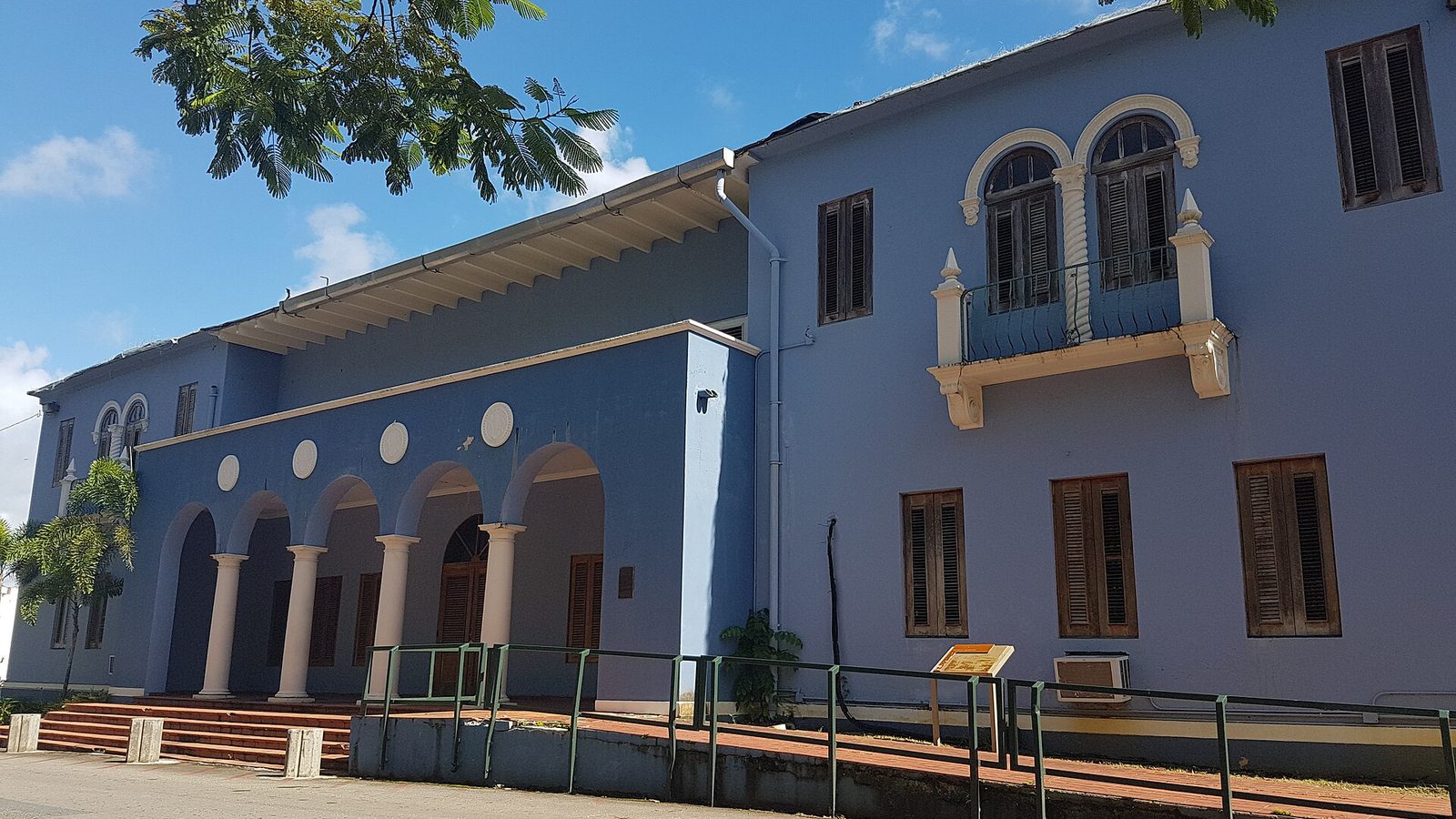
A scientific experiment developed at the Inter American University of Puerto Rico Bayamón campus will travel to the International Space Station on Sunday. The MESSAR instrument studies how sound waves travel through materials simulating asteroid surfaces in microgravity conditions. El Vocero reported
The launch is scheduled for 11:47 a.m. Puerto Rico time from Launch Complex 40 at Cape Canaveral Space Force Station in Florida aboard a Northrop Grumman Cygnus XL spacecraft propelled by a SpaceX Falcon 9 rocket as part of the NG-25 commercial resupply mission. If postponed, the next launch window is Monday, Nov. 30 at 11:24 a.m. Primera Hora reported. The device is expected to be installed on the ISS on Friday, Dec. 4. NotiCel reported
Also on PuertoRico.com: Florida travel guide
What the sources posted
Posts and statements below are the sources' own words, quoted as published. They are not independently verified.
Cinco años después del lanzamiento del primer satélite puertorriqueño volvemos a tener a un profesor, egresados y estudiantes de nuestra Universidad vinculados a una misión espacial. Este acontecimiento es motivo de profundo orgullo para toda la comunidad universitaria de la Interamericana.
Our translation: Five years after the launch of the first Puerto Rican satellite we again have a professor, alumni and students from our University linked to a space mission. This event is a source of deep pride for the entire Inter American University community.
The source's own statement, as quoted by Primera Hora. Not verified by PuertoRico.com.
Los hallazgos podrían aportar información sobre la composición y el comportamiento físico de los asteroides, así como contribuir al desarrollo de modelos matemáticos y computacionales que permitan anticipar su respuesta ante fuerzas externas.
Our translation: The findings could provide information on the composition and physical behavior of asteroids, as well as contribute to the development of mathematical and computational models that allow anticipating their response to external forces.
The source's own statement, as quoted by El Nuevo Día. Not verified by PuertoRico.com.
Project background
The research is led by Dr. Amílcar Rincón Charris, an adjunct engineering professor at Inter Bayamón and Collins Aerospace Puerto Rico engineer. It began in 2021 following the launch of PR-CuNaR2, Puerto Rico's first satellite, which was also developed by Rincón Charris and students. The team includes six alumni and two current students, who are the researcher's children. El Nuevo Día reported
MESSAR stands for Microgravity Experiment for the Speed of Sound in Asteroid Regolith. It examines sound transmission in regolith, a layer of fragmented dust and rock particles covering celestial bodies, under reduced gravity. The autonomous instrument records acoustic signals, stores data on memory cards and transmits via telemetry without constant astronaut assistance. Results will be compared with Earth-based lab tests and used for scientific publications. Primera Hora reported
Potential applications
Dr. Rincón Charris stated the findings could provide information on asteroid composition and physical behavior, helping develop mathematical and computational models to predict responses to external forces. This knowledge is of particular interest for planetary defense research aimed at reducing risks from potential celestial body impacts on Earth. El Vocero reported
University interim president Dr. Jacqueline Álvarez Peña said five years after the first Puerto Rican satellite, having faculty, alumni and students linked to a space mission is a source of deep pride for the Inter American University community. She added these achievements show the reach of university education when spaces for research, innovation and collaboration are fostered. NotiCel reported
Where the sources differ
All sources agree on the launch date and time, rocket and spacecraft details, project name and purpose, leadership by Dr. Amílcar Rincón Charris, team composition, origins after PR-CuNaR2, backers including NASA Puerto Rico Space Grant and EPSCoR, and potential planetary defense applications. Primera Hora and El Vocero give the backup launch date as Nov. 30 while El Nuevo Día and NotiCel match exactly. Slight variations exist in quoted length of statements from university president Jacqueline Álvarez Peña and in emphasis on family involvement by student Alejandro Rincón Torres, but core facts align across Primera Hora, El Vocero, NotiCel and El Nuevo Día.
What the reports do not say
The reports do not specify the exact cost of the MESSAR project, whether any Puerto Rican astronauts or NASA officials will be involved in its installation, the precise number of experiments to be run during the six months, or a timeline for when analyzed data and publications will be released. They also omit details on backup plans if the Dec. 4 installation is delayed and any specific risk-mitigation measures for the instrument in space.
Sources
Every link below was opened and checked when this story was published. Official means a government body, agency or the organization itself; Reporting means a news outlet.
- Official Experimento científico puertorriqueño viajará mañana a la Estación Espacial Internacional
- Reporting Experimento científico puertorriqueño viajará mañana a la Estación Espacial Internacional
- Reporting Experimento científico puertorriqueño viajará este domingo a la Estación Espacial Internacional
- Reporting Experimento científico puertorriqueño viajará a la Estación Espacial Internacional mañana
- Reporting Experimento científico puertorriqueño viajará a la Estación Espacial Internacional este domingo
How we checked this
Primera Hora, El Vocero, NotiCel and El Nuevo Día all covered the upcoming MESSAR launch with nearly identical core details drawn from the same university press release. Quotes from Dr. Rincón Charris and Dr. Álvarez Peña appear across multiple outlets while personal reflections from team members Alejandro Rincón Torres and Sebastián Medina Maysonet are featured in some but not all reports.
Compiled by the PuertoRico.com News Desk from the reports and statements listed above, and checked against them before publishing. It does not include original interviews. Spot an error? Email support@puertorico.com with a link to this story.
 Nils Huenerfuerst / Wikimedia Commons · CC BY 4.0
PuertoRico.com is free, and readers like you keep it that way.
The PuertoRico.com newsroom checks every story against its sources and publishes it free. If this one helped, a contribution of any size keeps the next one free too.
Secure checkout by Stripe: card, Apple Pay, Google Pay or Link.
One payment, nothing to sign up for.
Contributions go to Puerto Rico.com, LLC. They are not charitable donations and are not tax-deductible. Payments are processed by Stripe.
Thank you for keeping PuertoRico.com free.
Your contribution went through. It helps pay for the next story.
Contributions go to Puerto Rico.com, LLC. They are not charitable donations and are not tax-deductible. Payments are processed by Stripe.