Antonio Rafael Barceló: biography
Early life and family
He became an orphan at age three after his father died in 1870 and his mother in 1871. He was then raised by his aunt Carmela de León and his grandmother Belén de León. As a youth he showed an interest in politics. On February 4, 1899, he married Maria Georgina Josefina Bird Arias, daughter of sugar baron Jorge Bird León. 1 2
Union Party years
Barceló joined the Autonomist Party and became its secretary. He left the Autonomist Party to help found the Union Party of Puerto Rico with Luis Muñoz Rivera, José de Diego, Rosendo Matienzo Cintrón and others. In 1904 the Union Party won elections; Barceló was elected to the Chamber of Delegates in 1905. In 1910 he founded the Association of Puerto Rico to protect local coffee, tobacco and sugar industries. In 1913 the legislature passed law 52 that recognized the association and its Hecho en Puerto Rico label. From 1917 to 1932 he served in the Senate of Puerto Rico and was elected its first president. He opposed the Jones-Shafroth Act of 1917 because it granted U.S. citizenship without full rights and kept control of judicial and executive branches with the United States. He later shifted the party's focus toward greater autonomy as a step to independence, causing José de Diego to leave. In 1921 he opposed Governor Emmet Montgomery Reily's policies that promoted Americanism and placed mainland officials in local posts. Reily resigned in 1923 after corruption allegations. As Senate president Barceló backed legislation that provided funds for the School of Tropical Medicine, the Capitol building, the state penitentiary and worker housing known as Barrio Obrero. He also supported construction of University of Puerto Rico buildings and development of local faculty. Differences with Eduardo Georgetti over the alliance led Georgetti to withdraw. Barceló survived an assassination attempt but continued his political work. 1
Liberal Party and later career
Tensions within the Alianza with Tous Soto and Resident Commissioner Félix Córdova Dávila over consultation on appointments led Barceló to withdraw the Unionist sector in 1932. He founded the Puerto Rican Liberal Party with the same original goals of autonomy leading to independence. Felisa Rincón de Gautier and Ernesto Ramos Antonini joined him. He invited Luis Muñoz Marín to the party. In the 1932 elections the Liberal Party received more votes than the Republicans or Socialists separately but lost to their coalition. Barceló and Muñoz Marín were both elected senators. Barceló favored a gradual process toward independence after achieving autonomy while Muñoz Marín pushed for faster independence. After the 1935 Río Piedras massacre, Senator Millard Tydings introduced an independence bill in 1936 that most parties supported but Muñoz Marín opposed for economic reasons. Barceló refused to step down. Muñoz Marín formed Acción Social Puertorriqueña inside the party. He and his followers created the Partido Liberal, Neto, Auténtico y Completo, which later became the Popular Democratic Party and adopted the Free Associated State status Barceló had earlier proposed. 1
Legacy and family
Barceló helped pass laws establishing a minimum wage, workers' compensation and limits on working hours. He introduced legislation for the Puerto Rico State Capitol. After his death public buildings and schools were named for him, including the Antonio R. Barceló Legislative Building that once housed the School of Tropical Medicine. The party ended in 1948. His grandson Carlos Romero Barceló later served as governor with a pro-statehood platform through the New Progressive Party. 1 2
Questions about Antonio Rafael Barceló
When was Antonio Rafael Barceló born?
Antonio Rafael Barceló was born on April 15, 1868 in Fajardo, Puerto Rico.
Why did Antonio Barceló oppose the Jones-Shafroth Act?
He believed it granted U.S. citizenship without full constitutional rights and left judicial and executive branches under U.S. control, interfering with eventual independence.
What caused the split between Barceló and Luis Muñoz Marín?
Barceló favored gradual independence after achieving autonomy while Muñoz Marín pushed for immediate independence. Muñoz Marín also opposed the 1936 Tydings independence bill on economic grounds.
Which institutions did Barceló help establish as Senate president?
He supported legislation for the School of Tropical Medicine, the Puerto Rico Capitol, the state penitentiary, Barrio Obrero worker housing and University of Puerto Rico buildings.
When did Antonio Rafael Barceló die?
Antonio Rafael Barceló died on December 15, 1938 in San Juan, Puerto Rico, aged 70.
Sources
- Wikipedia: Antonio Rafael Barceló
- Wikipedia (español): Antonio R. Barceló
- Wikidata: Q4776898
- Library of Congress: Antonio Rafael Barceló
- El Nuevo Día (cited by Wikipedia)
- Senado de Puerto Rico (cited by Wikipedia)
- JSTOR (cited by Wikipedia)
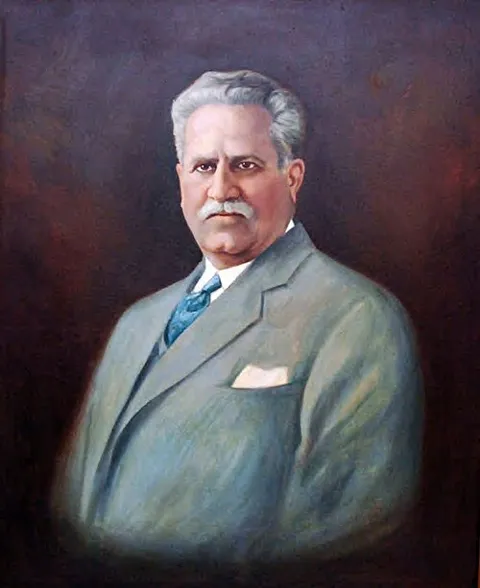
Photo: Antonio Rafael Barceló.jpg, Estrella Díaz (Public domain). Resized and converted to WebP.
Reviewed November 18, 2026. Original biography by PuertoRico.com. Editorial policy