Blanca Canales: biography
Early life and family
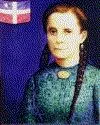
Blanca Canales was born on February 17, 1906, in Jayuya, Puerto Rico, as Blanca Canales Torresola. She was the younger sister of writer and politician Nemesio Canales. Her family was politically active, with her father belonging to the Union Party of Puerto Rico, which advocated for the island's independence. Her mother encouraged her children to think independently. As a child she read books about other nations and their heroes. She often attended political meetings with her father, enjoying the speeches and patriotic atmosphere. She completed her primary and secondary education in Jayuya. Her father died in 1924, after which her mother moved the family to Ponce. Canales graduated from Ponce High School. In May 1930 she earned a bachelor's degree from the University of Puerto Rico. Before graduating she attended a conference by Pedro Albizu Campos, president of the Puerto Rican Nationalist Party, and was impressed by his independence ideals. She then studied social work at the same university. 1
Nationalist Party involvement
Canales returned to Jayuya and worked at a local rural school. In 1931 she joined the Puerto Rican Nationalist Party and helped organize the Daughters of Freedom, its women's branch. During the 1940s her active participation was limited to collecting funds because her job required constant travel between San Juan and Ponce. Hostile events between the U.S.-appointed government and Nationalists escalated in the 1930s. In 1936 Pedro Albizu Campos was arrested. Albizu Campos was released from jail in 1947. On May 21, 1948, the Puerto Rican Senate, controlled by the Popular Democratic Party under Luis Muñoz Marín, approved a bill that became the Gag Law, or Law 53, signed on June 10, 1948, by Governor Jesús T. Piñero. The law criminalized printing, publishing or exhibiting material intended to paralyze the government, organizing related groups, and singing patriotic songs or displaying the Puerto Rican flag. Penalties included up to ten years in prison and a $10,000 fine. Leopoldo Figueroa, the only non-Popular Democratic Party member in the House of Representatives, called the law repressive and a violation of the First Amendment. On June 21, 1948, Albizu Campos spoke in Manatí explaining the law's unconstitutionality, with Nationalists attending to protect him from arrest. 1
Jayuya Uprising
On October 26, 1950, Albizu Campos held a meeting in Fajardo and learned police planned to arrest him. He escaped and ordered a revolution. Police intercepted a Nationalist caravan in Peñuelas on October 27, killing four. Uprisings were ordered for October 30 in several towns including Jayuya. On October 30, 1950, Canales, her cousin Elio Torresola and Carlos Irizarry led Nationalists into Jayuya by bus and car. They went to her house in Barrio Coabey, where she had stored arms and ammunition. Armed with those weapons, the group attacked and occupied the police station, then the post office, cut telephone lines, and raised the Puerto Rican flag in the town plaza, declaring Puerto Rico a free republic. After learning Carlos Irizarry was wounded, Canales took him to a hospital in Utuado. Jayuya remained under Nationalist control for three days. U.S. military planes, artillery, mortar fire, grenades, infantry troops and the Puerto Rican National Guard under Major General Luis R. Esteves then attacked. The Nationalists surrendered on November 1, 1950. Canales was arrested and charged with killing a police officer, wounding three others and burning the post office. After a federal trial she received a life sentence plus sixty years. In June 1951 she was sent to the Alderson Federal Prison Camp in West Virginia. 1
Later years and legacy
After 17 years in prison she received a full pardon in 1967 from Governor Roberto Sanchez Vilella. She remained an active independence advocate until her death on July 25, 1996, in Jayuya. She is buried in the Municipal Cemetery there. The house where Blanca and Nemesio Canales were born and raised was converted into a museum by the City of Jayuya. A plaque honoring women of the Puerto Rican Nationalist Party was placed at the monument to Jayuya Uprising participants in Mayagüez, with Canales' name on the second line of the third plate. 1
Questions about Blanca Canales
When was Blanca Canales born?
Blanca Canales was born on February 17, 1906 in Jayuya, Puerto Rico.
What sentence did Blanca Canales receive after the Jayuya Uprising?
She was sentenced to life imprisonment plus sixty years after a federal trial. She served 17 years before receiving a full pardon in 1967 from Governor Roberto Sanchez Vilella.
How long did Nationalists control Jayuya during the 1950 uprising?
Nationalists controlled Jayuya for three days from October 30 until U.S. forces retook the town on November 1, 1950.
What was the Gag Law that preceded the 1950 revolts?
Law 53 of 1948 criminalized actions intended to paralyze the government, including displaying the Puerto Rican flag and singing patriotic songs, with penalties of up to ten years in prison and a $10,000 fine.
When did Blanca Canales die?
Blanca Canales died on July 25, 1996 in Jayuya, Puerto Rico, aged 90.
Sources
- Wikipedia: Blanca Canales
- Wikipedia (español): Blanca Canales
- Wikidata: Q2905918
- Library of Congress: Blanca Canales
- Yale University (cited by Wikipedia)
- Latin American Studies (cited by Wikipedia)
We did not find a freely licensed photo we could use, so we show initials instead.
Reviewed November 18, 2026. Original biography by PuertoRico.com. Editorial policy