Héctor Feliciano: biography
Early life and family
Héctor Feliciano was born in 1952 in Philadelphia while his father completed a medical residency. His parents were Héctor and Nereida. The family moved to San Juan where he completed primary and secondary studies at Colegio San Ignacio de Loyola. Although he developed an early interest in art and culture, his family expected him to study medicine. He attended Brandeis University in Waltham and received a bachelor's degree in history and art history in 1974. Feliciano earned a master's degree from the Columbia University Graduate School of Journalism. He later obtained a doctorate in literature from the University of Paris while employed by the city of Paris cultural affairs bureau. 1
Journalism career
Feliciano started as a cultural writer for the Paris bureau of The Washington Post. In 1988 he was preparing an article for the Los Angeles Times about a stolen Murillo painting acquired by the Louvre when he learned that an estimated 20 percent of art looted during World War II remained missing. His reporting revealed that families of victims had rarely been consulted. During the 1998-99 academic year he was one of fourteen journalists chosen for a National Arts Journalism Program fellowship at Columbia University focused on arts and culture. He later served as editor in chief of World Media Network, a syndicate for 23 European newspapers. Feliciano has written for El País and Clarín and directed programs at the Ministry of Culture and Club des Poètes in Paris. 1
The Lost Museum and Nazi art research
Building on Lynn H. Nicholas's book The Rape of Europa, Feliciano conducted further research from 1989 using German looting inventories, declassified documents and more than 200 interviews. French ministries initially blocked access to records until requests from victims' families succeeded. The book traces works through German officials, dealers and auction houses including Christie's and Sotheby's. It revealed that the Musée National d'Art Moderne held seized works identified by an "R" code for recuperation and criticized curators for insufficient efforts to locate owners. It was rejected by at least 30 U.S. publishers before a French house accepted it; HarperCollins later bought U.S. rights. The work has been translated into several languages including Russian and discusses Switzerland's dealer-friendly laws and Russia's refusal to return items. 1
Aftermath, litigation and later activities
Publication prompted the French government to increase searches for owners of nearly 2,000 looted works. A Matisse painting in the Seattle Art Museum was identified as belonging to Paul Rosenberg's heirs. A 1911 Cubist landscape by Albert Gleizes at the Pompidou Center, looted from Alphonse Kann, was returned to his heirs. Auction houses began halting sales of suspect works. Feliciano organized the First International Symposium on Cultural Property and Patrimony at Columbia University in 1999 and a panel titled "The Art of the Enemy" at the School of Visual Arts in 2002. He has served on the Presidential Commission on Holocaust Assets in the United States and is a Fellow of the New York Institute for the Humanities at New York University. He currently teaches an honors seminar on religious art at New York University. 1
Ties to Puerto Rico
Although born in Philadelphia, Feliciano was raised in San Juan and attended school there. His Puerto Rican parents maintained the family's connection to the island. He is identified as a Puerto Rican journalist and author in coverage of his work on cultural restitution. 1
Questions about Héctor Feliciano
Where is Héctor Feliciano from?
Héctor Feliciano was born in Philadelphia, Pennsylvania.
What prompted Héctor Feliciano to investigate Nazi-looted art?
While preparing a 1988 article for the Los Angeles Times about a stolen Murillo painting bought by the Louvre, he learned that an estimated 20 percent of art looted during World War II was still missing and that victim families had rarely been consulted.
How did museums respond to the claims in The Lost Museum?
French ministries initially stalled access to records. The book revealed that the Musée National d'Art Moderne used an "R" code for recuperation works and criticized curators for limited efforts to find owners of thousands of unclaimed pieces.
What legal actions followed publication of the book?
The Wildenstein family sued Feliciano for $1 million in damages over claims of business with Nazi officials; a French court rejected the claim in 1999. Feliciano's 2001 suit against the Rosenberg family for a finder's fee on recovered paintings was dismissed in Manhattan in 2003.
Sources
- Wikipedia: Héctor Feliciano
- Wikidata: Q5963819
- Library of Congress: Héctor Feliciano
- CNN (cited by Wikipedia)
- Yale University (cited by Wikipedia)
- The New York Times (cited by Wikipedia)
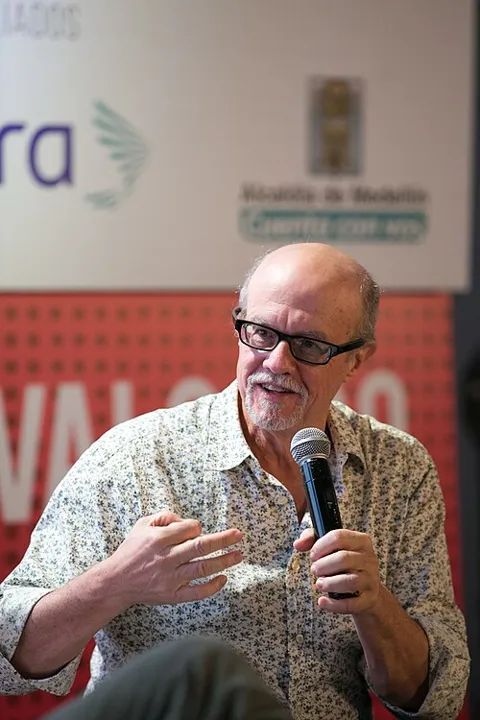
Photo: Héctor Feliciano - ¿Cómo pensar el arte, el placer, la belleza y la verdad? DEL1436 (30017008126).jpg, FNPI (CC BY-SA 2.0). Resized and converted to WebP.
Reviewed November 18, 2026. Original biography by PuertoRico.com. Editorial policy