
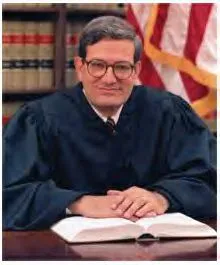
José A. Cabranes: biography
Early life and education
José Alberto Cabranes was born on December 22, 1940, in Mayagüez, Puerto Rico, into a family of educators. Both of his parents were school teachers who had been educated in Puerto Rico's public schools and at the University of Puerto Rico in the early decades of the 20th century, part of the first generation educated under the American flag after 1898. At age five he moved with his family to The Bronx, New York, where his father had been recruited to direct Melrose House, a settlement house aiding Puerto Rican migrants. Cabranes attended St. Anselm’s School and later public schools in Flushing, Queens. He graduated from Flushing High School in 1957. Cabranes earned a Bachelor of Arts in history from Columbia College in 1961. He then taught history of Puerto Rico and United States history at Colegio San Ignacio de Loyola in Río Piedras, Puerto Rico. He received a Juris Doctor from Yale Law School in 1965, followed by a Master of Letters in international law from the University of Cambridge in 1967. 1
Legal, academic and government service
From 1967 to 1971 Cabranes worked as an associate at the New York law firm Casey, Lane & Mittendorf. During this period he became involved in civic affairs of the Puerto Rican community in New York, serving as a trustee of the Hudson Guild settlement house and as a director of Citizens Union. In 1971 he was named chairman of the board of ASPIRA of New York and later served as chairman of the Puerto Rican Legal Defense and Education Fund from 1975 to 1980. In 1971 he joined Rutgers University Law School as an associate professor, teaching administrative law, conflicts of law and international law. That same year Mayor John V. Lindsay appointed him to the board of the New York City Health and Hospitals Corporation. In 1973 he took leave from Rutgers to serve as special counsel to Governor Rafael Hernández-Colón and head of the Commonwealth’s Washington office. In 1975 Cabranes became the first general counsel of Yale University, serving under presidents Kingman Brewster Jr., Hanna Holborn Gray and A. Bartlett Giamatti. While at Yale he served as a public member of the United States Delegation to the Conference on Security and Cooperation in Europe in Belgrade from 1977 to 1978 and as consultant to Secretary of State Cyrus R. Vance. He published Citizenship and the American Empire in 1978, a legislative history of the 1917 law granting U.S. citizenship to Puerto Ricans. President Jimmy Carter appointed him to the President’s Commission on Mental Health from 1977 to 1979. 1
Federal judicial service
In 1979 President Jimmy Carter nominated Cabranes to the United States District Court for the District of Connecticut on the recommendation of Senator Abraham Ribicoff. He was confirmed unanimously on December 10, 1979, becoming the first Puerto Rican to serve as a federal judge in the continental United States. His district court service ended on August 12, 1994, when he was elevated to the Second Circuit. While on the district court he was elected to the Board of the Federal Judicial Center and in 1988 was named by Chief Justice William Rehnquist to the Federal Courts Study Committee. In 1994 President Bill Clinton nominated him to the United States Court of Appeals for the Second Circuit on the recommendation of Senator Daniel Patrick Moynihan. Confirmed unanimously on August 9, 1994, he became the first Hispanic judge on that court and the second Puerto Rican on any U.S. Court of Appeals. Cabranes was considered by President Clinton in 1993 for the Supreme Court seat that went to Ruth Bader Ginsburg and again in 1994 for the seat filled by Stephen Breyer. On August 9, 2013, Cabranes was designated by the Chief Justice of the United States to a seven-year term as one of the three judges on the Foreign Intelligence Surveillance Court of Review. He assumed senior status on March 9, 2023, after announcing his intention the previous year. 1
Notable rulings
Gatlin (2000) Cabranes held that federal courts lacked jurisdiction to try a civilian for a crime on a U.S. military base abroad, identifying a jurisdictional gap later closed by Congress. Thomas (2001) he wrote for the en banc court that drug type and quantity must be charged in the indictment and found by a jury under Apprendi v. New Jersey. Quinones (2002) he upheld the constitutionality of the Federal Death Penalty Act against Eighth and Fourteenth Amendment challenges. Southern Peru Copper Corporation (2003) he ruled that the rights to life and health were not sufficiently definite to support a claim under the Alien Tort Statute for pollution-related illness. Pataki (2006) he held for the en banc court that Section 2 of the Voting Rights Act did not cover New York’s prisoner disenfranchisement law. DeStefano (2008) his dissent from denial of en banc rehearing, joined by five colleagues, urged Supreme Court review of whether an employer could discard race-neutral test results that produced racially disparate outcomes; the Supreme Court later reversed the panel decision. Ashcroft (2008) he wrote for the panel dismissing claims under the Torture Victim Protection Act and declining to imply a Bivens remedy. In the Terrorist Bombings cases (2008) he held that the Fourth Amendment’s warrant requirement does not apply to overseas searches by U.S. agents and that oral Miranda warnings sufficed for statements obtained abroad. Dorozhko (2009) he allowed a securities-fraud suit against a computer hacker based on affirmative misrepresentation. Ray (2009) he ruled that the Speedy Trial Clause applies only to trials, not sentencing, but that a 15-year sentencing delay violated due process. 1
University service, clerks and law reform
Cabranes has served on the boards of Colgate University, Yale University (as the first Roman Catholic Fellow of the Yale Corporation) and Columbia University. He was elected to the American Law Institute in 1980 and became a life member in 2005. Notable former law clerks include federal judges Robert N. Chatigny, Jesse M. Furman, William J. Nardini, Michael Farbiarz and Carlos G. Muñiz, as well as Vanderbilt professor Lisa Schultz Bressman and Ibotta founder Bryan Leach. 1
Questions about José A. Cabranes
When was José A. Cabranes born?
José A. Cabranes was born on December 22, 1940 in Mayagüez, Puerto Rico. José A. Cabranes is 85 years old.
What made Cabranes the first Puerto Rican federal judge in the continental United States?
His unanimous confirmation on December 10, 1979, to the U.S. District Court for the District of Connecticut by President Jimmy Carter.
Which Supreme Court seats was Cabranes reportedly considered for in the 1990s?
The seat filled by Ruth Bader Ginsburg in 1993 and the seat filled by Stephen Breyer in 1994.
What was the outcome of Cabranes's dissent in Ricci v. DeStefano?
The Supreme Court granted certiorari, reversed the Second Circuit panel decision and entered judgment for the plaintiff firefighters.
Sources
- Wikipedia: José A. Cabranes
- Wikidata: Q6291233
- Library of Congress: José A. Cabranes
- Columbia University (cited by Wikipedia)
- The New York Times (cited by Wikipedia)
- Federal Judicial Center (cited by Wikipedia)
- U.S. Courts (cited by Wikipedia)
- Yale University (cited by Wikipedia)
Photo: JoseACabranes.jpg, Unknown author (Public domain). Resized and converted to WebP.
Reviewed November 18, 2026. Original biography by PuertoRico.com. Editorial policy
