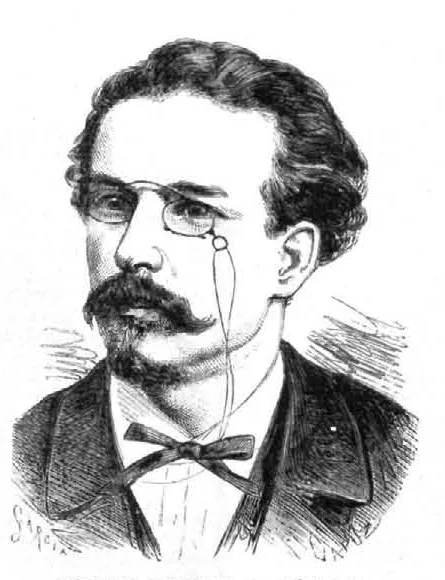
José Ferrer Canales: biography
Early life and family
José Ferrer Canales was born on September 18, 1913, in Santurce, San Juan, Puerto Rico, into a poor working-class family. He attended Pedro G. Goyco Elementary School, Román Baldorioty de Castro School and Central Superior High School in San Juan while also working after school to help support his family. He enrolled at the University of Puerto Rico in 1934. There he met Pedro Albizu Campos, which led to his involvement in the pro-independence movement. He earned a bachelor's degree in arts magna cum laude in 1937 and a master's degree in arts in 1944 with a thesis on Enrique José Varona. 1 2
Educator in Puerto Rico and the United States
From 1937 to 1943 Ferrer Canales taught Spanish at a high school in Humacao. While in New York he taught Spanish at Hunter College. In 1949 he moved to the United States and taught at universities in Louisiana, Texas and Washington, D.C. He earned a doctorate in letters from the National Autonomous University of Mexico in 1952 with the thesis "Varona, escritor". 1
Writer and speaker
Ferrer Canales wrote essays that addressed the defense of the Spanish language, the rescue of Puerto Rican identity and the Caribbean and Antillean character of Puerto Ricans. He supported the idea of an Antillean Confederation inspired by Hostos and was known as "El último antillano". His published books include "Marginalia" (1939), "Por nuestra lengua y nuestra soberanía" (1941), "Agonía y esperanza de Puerto Rico" (1962), "Imagen de Varona" (1964), "Regionalism and University" (1965), "Acentos cívicos" (1972), "Gandhi: evocación del centenario" (1972), "Asteriscos" (1990) and "Martí y Hostos" (1991). He also published short stories and articles on education, politics and other subjects in journals such as Asomante, Revista Hispánica Moderna, Revista Iberoamericana, Repertorio Americano, Revista del Colegio de Abogados and La Torre. He was invited as a guest speaker or participant in literary congresses in the United States, Mexico, Brazil, Canada, Ecuador, Peru, Venezuela, Spain, France, Hungary and England. 2
Later years, honors and legacy
Ferrer Canales retired from the University of Puerto Rico in 1983. Anthropologist Ricardo Alegría persuaded him to teach at the Center for Advanced Studies of Puerto Rico and the Caribbean. He also wrote a literary criticism column for the newspaper El Nuevo Día. Ferrer Canales died on July 20, 2005, in Hato Rey, San Juan, Puerto Rico. He was survived by his wife Ana Hilda Betancourt and is buried in the Villa Palmeras Cemetery in Santurce, San Juan. 1 2
Ties to Puerto Rico
Born and raised in Santurce, Ferrer Canales maintained a lifelong connection to Puerto Rico through his teaching at the University of Puerto Rico in Río Piedras, his writings on Puerto Rican identity and sovereignty, and his activism for independence and an Antillean Confederation. His essays and courses emphasized the Caribbean roots of Puerto Rican culture and the ideas of Hostos and Martí. Even during years spent teaching in the United States and studying in Mexico he continued to focus on Puerto Rican and Caribbean themes. After retirement he returned to teaching in Puerto Rico at the Center for Advanced Studies and contributed columns to local newspapers until his death in San Juan in 2005. 1 2
Questions about José Ferrer Canales
When was José Ferrer Canales born?
José Ferrer Canales was born on September 18, 1913 in Santurce, San Juan, Puerto Rico.
Why was José Ferrer Canales known as "El último antillano"?
He advocated for the dream of an Antillean Confederation inspired by Eugenio María de Hostos and emphasized the Caribbean and Antillean character of Puerto Ricans in his writings and teaching.
What led to José Ferrer Canales being dismissed from the University of Puerto Rico in 1948?
His pro-independence activism and support for university autonomy during a period of political unrest in Puerto Rico.
Which thinkers most influenced the writings of José Ferrer Canales?
Enrique José Varona, Eugenio María de Hostos and José Martí. He wrote his master's and doctoral theses on Varona and later published books on Martí and Hostos.
When did José Ferrer Canales die?
José Ferrer Canales died on July 20, 2005 in Hato Rey, San Juan, Puerto Rico, aged 91.
Sources
- Wikipedia: José Ferrer Canales
- Enciclopedia de Puerto Rico: José Ferrer Canales
- Wikidata: Q6292202
- Library of Congress: José Ferrer Canales
- Fundación Nacional para la Cultura Popular (cited by Wikipedia)
We did not find a freely licensed photo we could use, so we show initials instead.
Reviewed November 18, 2026. Original biography by PuertoRico.com. Editorial policy