Juan Tizol: biography
Early life and family
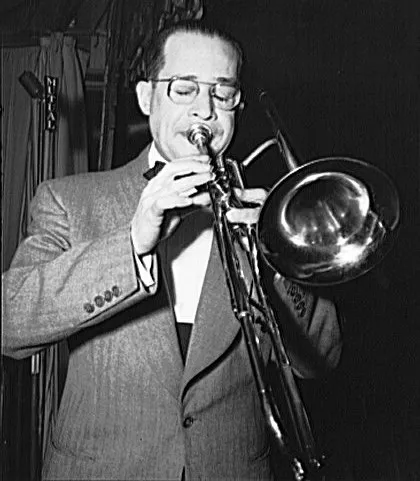
Juan Tizol Martínez was born on January 22, 1900, in Vega Baja, Puerto Rico. Music surrounded him from childhood in a family full of musicians. He began on violin before switching to valve trombone, the instrument he used for his entire career. In his youth Tizol performed in his uncle's band and gained experience playing in local operas, ballets, and dance ensembles in the capital. 1 2
Move to the United States
In 1920 Tizol joined a band headed to the United States that reached Washington, D.C., traveling as stowaways. The group settled at the Howard Theatre, performing for touring shows and silent films while also working in small jazz and dance groups. It was at the Howard Theatre that he first encountered Duke Ellington. A recommendation from trumpeter Arthur Whetsel led to his joining Ellington's orchestra in mid-1929. 1 2
Years with Duke Ellington
Tizol sat beside Joe "Tricky Sam" Nanton in the two-trombone section, becoming the fifth voice in the brass section. His warm, rich tone from Puerto Rican training allowed Ellington to write for an independent trombone section separate from the trumpets and that could carry the melody. Known as one of the band's strongest sight-readers, Tizol played with accuracy and served as the stable foundation of the trombone section. Although not primarily an improviser, he frequently performed written solos that highlighted his technique and agility. 1 2
Beyond performing, Tizol copied parts from Ellington's scores for upcoming shows. He also composed several works for the orchestra. His best-known pieces, Caravan from 1936 and Perdido from 1941, became jazz standards frequently recorded by others. Mercer Ellington noted that the melody for Caravan drew from Tizol's youth in Puerto Rico. Tizol introduced Latin influences through additional compositions including Moonlight Fiesta, Jubilesta, and Conga Brava. 1 2
Later career and life in California
Tizol left Ellington's band in 1944 to join Harry James's orchestra in Los Angeles, primarily to spend more time with his wife, Rosebud Brown, who lived there. He returned to Ellington in 1951 along with James's drummer and alto saxophonist in an event called the James raid, but went back to James in 1953. Tizol made brief returns to Ellington's band in the early 1960s before retiring in Los Angeles. 1 2
Legacy and ties to Puerto Rico
He died on April 23, 1984, in Inglewood, California, two years after the death of his wife. 1 2
Questions about Juan Tizol
When was Juan Tizol born?
Juan Tizol was born on January 22, 1900 in Vega Baja, Puerto Rico.
How did Juan Tizol contribute to Duke Ellington's composing style?
Tizol's warm tone allowed Ellington to write for an independent trombone section and to feature trombones with saxophones on leading melodies.
Which compositions by Juan Tizol became jazz standards?
Caravan from 1936 and Perdido from 1941 are his best-known works and remain jazz standards performed worldwide.
What Latin influences did Tizol bring to Ellington's orchestra?
He introduced Central American and Caribbean sounds through pieces such as Conga Brava, Moonlight Fiesta, Jubilesta, and several others composed between 1942 and 1951.
When did Juan Tizol die?
Juan Tizol died on April 23, 1984 in Inglewood, California, aged 84.
Sources
- Wikipedia: Juan Tizol
- Wikipedia (español): Juan Tizol
- Wikidata: Q1349428
- NPR (cited by Wikipedia)
- Library of Congress (cited by Wikipedia)
- The New York Times (cited by Wikipedia)
- AllMusic (cited by Wikipedia)
- IMDb: Juan Tizol (credits)
Photo: Juan Tizol.jpg, Gordon Parks (CC BY-SA 4.0). Resized and converted to WebP.
Reviewed November 18, 2026. Original biography by PuertoRico.com. Editorial policy