Luis R. Esteves: biography
Early life and family
Luis Raul Esteves y Völckers was born on April 30, 1893, in Aguadilla, Puerto Rico, to Francisco Esteves Soriano and Enedina Völckers Van der Dijs. His father had served in the Spanish Army and later as mayor of Aguadilla, while his mother was of German and Dutch descent. He received his primary education in the local grammar school and went to high school in Mayagüez, Puerto Rico. 1
The family welcomed the arrival of American forces during the Spanish-American War. His father encouraged a military career in keeping with family tradition, but his mother hoped he would become an engineer and study in the United States. Limited family finances prevented her plan. Esteves applied to the United States Military Academy without his parents' knowledge after seeing an advertisement and was accepted. 1
West Point and early military service
At West Point, Esteves tutored classmate Dwight D. Eisenhower in Spanish, a required subject for graduation. He graduated in 1915 alongside Eisenhower, Omar Bradley, Joseph McNarney, James Van Fleet and George E. Stratemeyer, becoming the first Puerto Rican to complete the academy. He was also the first member of that class to reach general officer rank. 1
Puerto Ricans were not United States citizens at the time of his graduation, creating an obstacle to receiving a commission. The War Department cited precedents from the American Revolutionary War involving foreign officers such as the Marquis de Lafayette. Esteves was commissioned as a second lieutenant and assigned to the 23rd Infantry Regiment, where he worked in the National Matches of Florida. 1
During the Pancho Villa incident in 1916, he served as a second lieutenant in the 8th Infantry Brigade under General John J. Pershing. He was promoted to first lieutenant in June 1916, placed in charge of infantry units protecting bridges near El Paso, Texas, and later transferred to Polvo, Mexico, where local residents named him mayor and judge during his stay. 1
Founding the Puerto Rico National Guard
Esteves was promoted to captain. He helped organize the 23rd Battalion, which was composed of Puerto Ricans and was stationed in Panama during World War I. Esteves was later assigned command of a machine gun company and a battalion. He was sent to Camp Las Casas and Henry Barracks in Puerto Rico and served as an instructor in the preparation of Puerto Rican Officers for the Porto Rico Regiment of Infantry (which in 1919 was renamed the 65th Infantry). 1
He identified the need for a local militia and lobbied colonial governor Arthur Yager and the legislature. The National Guard Bureau approved the proposal, and the Puerto Rico National Guard was organized on July 19, 1919. He joined the new force on February 25, 1920, as commander of the First Battalion of the First Puerto Rico Regiment. 1
On February 7, 1939, he was named Adjutant General. He oversaw an increase in recruits at Camp Tortuguero. In 1942 he commanded the temporary State Guard. On October 15, 1940, the Puerto Rico National Guard was activated by Executive Order 3551. Esteves was promoted to brigadier general, given command of the 92nd Infantry Brigade, and later organized a State Guard of nine regiments at the request of Interim Governor José Miguel Gallardo. 1
Later service, writings and death
On June 22, 1946, he received the Legion of Merit from the Military Department of the Antilles. He reorganized the Puerto Rico National Guard and continued as Adjutant General until retiring in June 1957. During the Puerto Rican Nationalist Party Revolts of 1950, the Guard was mobilized under his command by orders of Governor Luis Muñoz Marín and U.S. Brigadier General Edwin L. Sibert to respond in Jayuya, Utuado and San Juan. 1
Esteves published the books Los Barrabases, ¡Los Soldados Son Así!, Cosas de Viajero and Cosas de Soldados. The second title recounts anecdotes and stories of Puerto Rican soldiers from the organization of the original regiment through World War II. His main hobby was studying military history. He married Guadalupe Navarro and they had four children: Raúl, Roberto, Maricel and Vernon. He also helped establish the first two theaters in Aguadilla with Juan Garcia. 1
He retired on April 30, 1957, for health reasons. Luis R. Esteves died on March 12, 1958, in San Juan, Puerto Rico. His remains are interred at Cementerio Histórico Urbano de Aguadilla. The Puerto Rico National Guard Armory in Hato Rey was renamed in his honor in 1958, and a street in front of its headquarters in Old San Juan was named La Calle Gen. Esteves. In 2017 he was posthumously inducted into the Puerto Rico Veterans Hall of Fame. 1
Legacy and ties to Puerto Rico
A speech dedicated to him was delivered by Division General Juan Cordero at the re-inauguration of the PRNG Military Museum in 1962. 1
Questions about Luis R. Esteves
When was Luis R. Esteves born?
Luis R. Esteves was born on April 30, 1893 in Aguadilla, Puerto Rico.
Why was Luis R. Esteves able to receive a U.S. Army commission before Puerto Ricans were granted citizenship?
The War Department cited precedents from the American Revolutionary War when foreign officers such as the Marquis de Lafayette received commissions in the Continental Army.
What role did Esteves play during the 1950 Nationalist uprisings in Puerto Rico?
He commanded the Puerto Rico National Guard, mobilized by Governor Luis Muñoz Marín and U.S. Brigadier General Edwin L. Sibert, to confront nationalists in Jayuya, Utuado and San Juan.
Which books did Luis R. Esteves write about Puerto Rican soldiers?
He authored Los Barrabases, ¡Los Soldados Son Así!, Cosas de Viajero and Cosas de Soldados. The second book recounts anecdotes of Boricua soldiers from the original regiment through World War II.
When did Luis R. Esteves die?
Luis R. Esteves died on March 12, 1958 in San Juan, Puerto Rico, aged 64.
Sources
- Wikipedia: Luis R. Esteves
- Wikipedia (español): Luis R. Esteves
- Wikidata: Q6701022
- U.S. Army (cited by Wikipedia)
- Library of Congress (cited by Wikipedia)
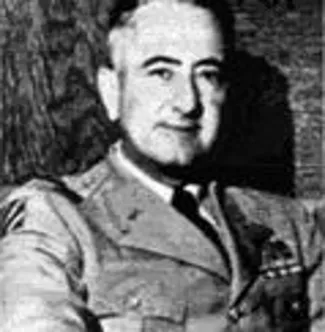
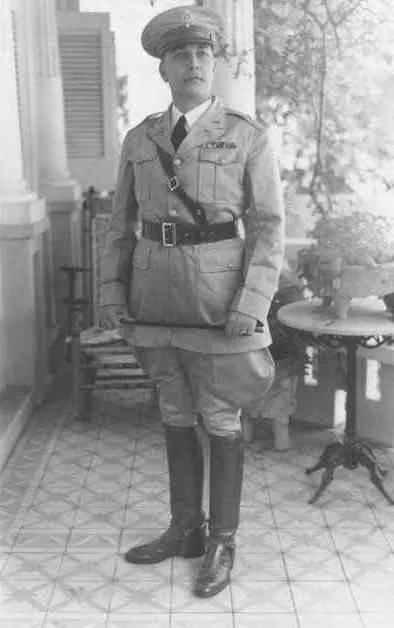
Photo: Esteves.jpg, Unknown author (Public domain). Resized and converted to WebP.
Reviewed November 18, 2026. Original biography by PuertoRico.com. Editorial policy