Maurice Ferré: biography
Early life and family
Maurice Antonio Ferré was born on June 23, 1935, in Ponce, Puerto Rico. He was the son of businessman José Ferré and nephew of Governor of Puerto Rico Luis A. Ferré. His father visited Miami in the 1920s, noted the absence of tall buildings, and entered construction and real estate development in the city. Ferré was born when the family returned to Ponce. Ferré graduated from The Lawrenceville School in New Jersey in 1953. He earned a bachelor of science in architectural engineering from the University of Miami in 1957 and a Master of Business Administration from the same institution in 1958. In the mid-1950s he married Mercedes, a Venezuelan-born heiress. The couple had four sons and two daughters. 1 2
Business career
Ferré served as a director of fourteen corporations operated by the Ferré family in Florida, Puerto Rico, and Venezuela. The family owned Maule Industries, a concrete company valued at $600 million that filed for bankruptcy in 1976 during a recession. He worked as a property owner, developer, banker, and business consultant. He also held research and teaching positions. 1 2
Political career
Ferré ran unsuccessfully for the Florida State Senate in 1966. He won election to the Florida House of Representatives as a Democrat in 1967, representing the 91st district until 1968. In late 1967 he was appointed to the Miami City Commission to fill a vacancy and held both positions until he resigned from the state house on March 1, 1968. He resigned from the city commission in late 1970 to run for county mayor. In 1970 Ferré lost the race for Metropolitan Dade County Mayor to Stephen P. Clark. He was appointed acting mayor of Miami in mid-1973 by Governor Reubin Askew while the incumbent was suspended. Elected to a full term in November 1973, he won five more two-year terms in 1975, 1977, 1979, 1981, and 1983. He lost his bid for a seventh term in 1985 and failed to regain the office in 1987. Ferré served on the Dade County Board of Commissioners from 1993 to 1997 and as its vice-chairman from 1993 to 1996. He ran for Miami-Dade County mayor in 1996, placing third with 20 percent of the vote, and again in 2004, receiving 17.76 percent. In 2001 he lost a bid to return as mayor of Miami. In 2010 he sought the Democratic nomination for U.S. Senate, finishing fourth with 4.9 percent. 1
Mayoral tenure and national roles
As mayor from 1973 to 1985, Ferré became the first Latino and first Puerto Rican-born mayor of a major mainland U.S. city. His tenure overlapped with a liberal Metro Dade city manager and was viewed as a progressive period. He participated in the United States Conference of Mayors. President Gerald Ford appointed him to the Presidential Advisory Committee on Refugees in 1975. President Jimmy Carter named him to the Presidential Advisory Board of Ambassadorial Appointments in 1977 and included him in the U.S. delegation to the 1978 UNESCO General Assembly. Ferré's time in office included the 1980 Mariel boatlift, changes in immigration policy, the crack cocaine epidemic, and riots following the acquittal of police officers in the Arthur McDuffie case. He had enjoyed strong African American support in earlier elections, but his dismissal of African American city manager Howard Gary contributed to the loss of that support and his defeat in 1985. He was a member of the Non-Group of business elites, a founding member of the National Association of Latino Elected Officials, Caribbean/Central America Action, and the Inter-American Dialogue. He chaired the Hispanic Council on Foreign Affairs and served on boards of the National Democratic Institute and the Council on Foreign Relations. 1
Later activities, legacy, and ties to Puerto Rico
Ferré held a fellowship at Princeton University while writing a book on Hispanic contributions to American culture. He promoted the "intermestic" approach to finding consensus on Puerto Rico's political status from both international and domestic perspectives. He delivered the keynote address on this topic to the Puerto Rico Senate on February 16, 2006, during a Governors' Day special session. In 2011 Governor Rick Scott appointed him to the Florida Transportation Commission. He endorsed candidates across party lines in later Florida gubernatorial races. A park district in Miami formerly known as Museum Park was renamed in his honor in early 2019. Ferré died on September 19, 2019, in his Coconut Grove residence in Miami after battling spinal cancer for two years. He was buried at Caballero Rivero Woodlawn Park North Cemetery and Mausoleum. 1 2
Questions about Maurice Ferré
When was Maurice Ferré born?
Maurice Ferré was born on June 23, 1935 in Ponce, Puerto Rico.
What was Maurice Ferré's connection to Puerto Rico's Ferré family?
He was the son of businessman José Ferré and nephew of Governor Luis A. Ferré.
Why did Ferré promote the intermestic dialogue on Puerto Rico?
He sought consensus on the island's political status from both international and domestic perspectives.
What major crises occurred in Miami during Ferré's mayoralty?
His tenure included the 1980 Mariel boatlift, the crack cocaine epidemic, and riots after the Arthur McDuffie verdict.
When did Maurice Ferré die?
Maurice Ferré died on September 19, 2019 in Miami, Florida, aged 84.
Sources
- Wikipedia: Maurice Ferré
- Wikipedia (español): Maurice Ferré
- Wikidata: Q6793078
- Miami Herald (cited by Wikipedia)
- The New York Times (cited by Wikipedia)
- CBS News (cited by Wikipedia)
- Los Angeles Times (cited by Wikipedia)
- Politico (cited by Wikipedia)
- Orlando Sentinel (cited by Wikipedia)
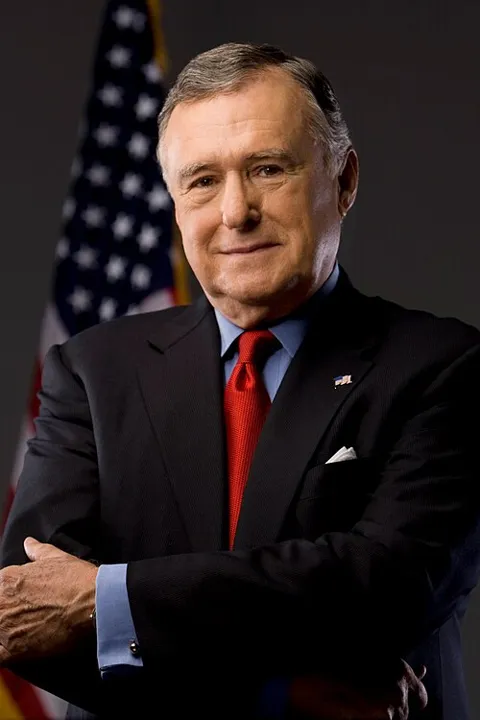
Photo: Maurice Ferre 2009.jpg, Maurice Ferre (CC BY 2.0). Resized and converted to WebP.
Reviewed November 18, 2026. Original biography by PuertoRico.com. Editorial policy