Rafael Cordero: biography
Early life and family
Rafael Cordero y Molina was born on October 24, 1790, in San Juan to Lucas Cordero and Rita Molina, who were free people of African descent. He had two older sisters, Gregoria and Celestina. Cordero received no formal schooling but was educated at home by his parents and through his own reading, especially of religious texts. At age 14 he received the sacrament of Confirmation from Bishop Juan Alejo de Arizmendi. His sister Celestina opened a free school for girls in 1802. Cordero remained a devout Catholic throughout his life and supported himself as a tobacco worker while pursuing his educational goals. 1 2 3
Establishing the free school
In 1826 Cordero opened a free primary school in his house on Luna Street in San Juan. He taught reading, writing, calligraphy, mathematics, history, geography, and Christian doctrine without charging fees. Students included children who were Black, white, mulatto, poor, or from middle-class families. Among his pupils were future leaders Román Baldorioty de Castro and Alejandro Tapia y Rivera. Cordero continued teaching until eight days before his death. In 1866, following an educational reform, the government named him an incomplete master, making him a public employee while he kept instruction free. 1 2 3
Cordero supported the school through his earnings as a tobacco worker and by renting part of his house. Contemporaries noted that even wealthy white families eventually sent their children to study with him. His approach demonstrated that racial and economic integration in education was feasible. 2 3
Recognition and charity
The Sociedad Económica de Amigos del País awarded Cordero the Premio de Virtud for his decades of unpaid teaching. He received 100 pesos, used half to buy books and clothing for his neediest students, and distributed the rest to the homeless and poor. 1 2 3
Death and cultural legacy
Cordero died on July 5, 1868, in San Juan. More than 2,000 people attended his funeral. He had asked public instruction authorities to continue educating his final students, a request that was fulfilled. Poet José Gualberto Padilla wrote the poem "El maestro Rafael" in his honor. In 1891 Francisco Oller completed the painting "La Escuela del Maestro Rafael Cordero," now held by the Ateneo Puertorriqueño, which depicts the interior of the Luna Street school. The Puerto Rico Teachers Association presents the National Medal Rafael Cordero each year to an outstanding educator. Multiple schools in Puerto Rico and the United States carry his name, including a high school in San Juan, an elementary school in Aguadilla, one in Jersey City, New Jersey, and a junior high school in Brooklyn, New York. 1 2 3
Path to sainthood and ties to Puerto Rico
On December 9, 2013, Pope Francis declared that Cordero had practiced heroic virtue and named him Venerable, the first step toward possible canonization. Cuban independence leader José Martí referred to him as the "Santo Varón." His work is viewed as foundational to primary education in 19th-century Puerto Rico, promoting literacy and moral formation across racial lines during the era of slavery. 1 2 3
Questions about Rafael Cordero
When was Rafael Cordero born?
Rafael Cordero was born on October 24, 1790 in San Juan, Puerto Rico.
Which notable Puerto Ricans studied under Rafael Cordero?
Román Baldorioty de Castro and Alejandro Tapia y Rivera attended his free school in San Juan.
What did Rafael Cordero do with the money from the Premio de Virtud?
He used half to buy books and clothes for his students and gave the other half to the homeless.
What is the current status of Rafael Cordero's cause for sainthood?
Pope Francis declared him Venerable on December 9, 2013, the first step toward possible canonization.
When did Rafael Cordero die?
Rafael Cordero died on July 5, 1868 in San Juan, Puerto Rico, aged 77.
Sources
- Wikipedia: Rafael Cordero (educator)
- Wikipedia (español): Rafael Cordero y Molina
- Enciclopedia de Puerto Rico: Rafael Cordero
- Wikidata: Q7282084
- Metro Puerto Rico (cited by Wikipedia)
- Library of Congress (cited by Wikipedia)
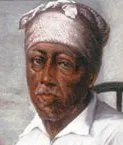
Photo: Rafael Cordero.JPG, Francisco Manuel Oller (Public domain). Resized and converted to WebP.
Reviewed November 18, 2026. Original biography by PuertoRico.com. Editorial policy