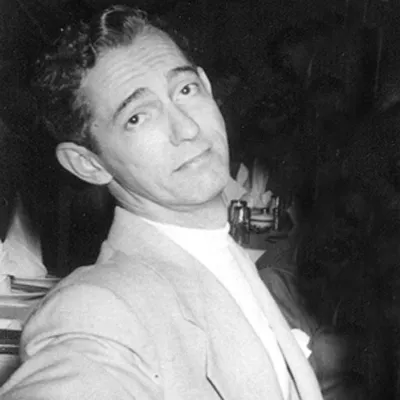
Ramón Rivero: biography
Early life and family
Ramón Rivero was born Arturo Ramón Máximo Ortiz del Rivero on May 29, 1909, in Naguabo, Puerto Rico, to José Ortiz Alibrán and Providencia del Rivero. The family lived first on La Cambímbora street at Playa Húcares before moving in 1917 to the Old San Juan section of San Juan, where he completed primary and secondary education. While there he learned baseball and received a tryout offer from the New York Giants, which he declined. Upon returning to Puerto Rico he played for the Senadores de San Juan baseball club. After marrying, he found it hard to support his family on a player's salary and moved to Cayey, where he worked as a physical education instructor in a local school. 1 2
Theatrical and radio career
In Cayey he met José Luis Torregrosa and joined his traveling theatrical company. They performed together in the comedy El proceso de Armando Líos. After seeing Cuban comedian Leopoldo Fernández perform, Rivero created an Afro-Puerto Rican character inspired by a man he knew in San Juan named Diplomacia; he called the character Diplo. With Torregrosa he founded the theatrical company La Farándula Bohemia, which helped popularize the Diplo character. At his father's request he changed his name from Arturo Ramón Máximo Ortiz del Rivero to Ramón Rivero and added the nickname Diplo. Rivero and Torregrosa discovered poet Juan Boria performing in Loíza in 1941 and added him to their troupe. Rivero's comedy appeared in radio programs including Los embajadores del buen humor, La vida en broma and El Tremendo Hotel, for which he also wrote scripts. During World War II, La Farándula Bohemia toured U.S. military bases with Puerto Rican troops; Rivero entertained the soldiers and carried mail back to their families. Industrialist Ángel Ramos signed Rivero to an exclusive contract for WKAQ Radio; El Tremendo Hotel became the island's most popular radio show and helped launch careers of Luis Vigoreaux, Miguel Ángel Álvarez and Sylvia Rexach. In one broadcast of El Tremendo Hotel, Rivero denounced a U.S. newspaperwoman who claimed Puerto Rican men sold their women to American servicemen and urged listeners to expel her from the island. In 1946 El Mundo newspaper began a comic strip based on the Diplo character, the first such honor for a local entertainer. Rivero produced and acted in theatrical works including Mosquilandia, El Príncipe Wele-Wele, A Mi Me Matan Pero Yo Gozo, Ese Niño Es Mio, Hay Que Defenderse, La Familia del Lío and El Tremendo Hotel. 1 2
Television, film and composition
Rivero made his television debut in Puerto Rico in La Taberna India, the first comedy/variety show on Puerto Rican TV. After years of success in radio, he debuted on television at WKAQ-TV. Six months later, he debuted La Farándula Corona. He became known as Rey de la Farándula and Señor Televisión. In winter 1953 he took El Tremendo Hotel to New York City for three weeks of sold-out performances at Teatro San Juan, Teatro Hispano and Teatro Puerto Rico before the Puerto Rican community that had migrated there in the 1940s. In Cuba he appeared in the film Una Gallega en La Habana with Niní Marshall. In 1953 he starred as Pepe in the Puerto Rican film Los Peloteros, directed by Jack Delano and co-starring Míriam Colón as his wife Lolita. The government-sponsored DIVEDCO production told the true story of a man who coaches a poor children's baseball team and helps them raise funds. Rivero wrote more than 3000 scripts for radio, theater, television and film. He authored the books ¿Por qué se ríe la gente? and El Álbum de la Radio (1940-1948), the first historical study of Puerto Rican radio. He composed more than ten songs including ¿Por qué será?, Ya me olvidaste, Comienza el fin, Así es, Me gustó, Hola don Pepito and Donde quiera que tú vayas. 1 2
Activism and later years
In 1953 Rivero organized the world's first known Walk-A-Thon, walking 80 miles from San Juan across the mountain roads of Cayey known as La Piquiña to Ponce. The four-day trek raised the equivalent of $85,000 for the Liga Puertorriqueña Contra el Cáncer. He defended victims of injustice during student revolts at the University of Puerto Rico, led the island's first actors' strike, and fought racial prejudice on television by casting Black performers. Juan Boria first appeared on La Taberna India, followed by Rita Delgado and Dixon on La Farándula Corona. In 1955 doctors advised Rivero to reduce his workload because of health concerns. Sponsor Cervecería India insisted he continue producing three weekly television shows, leading to his resignation. He then created La Farándula Corona for rival Cervecería Corona, which became popular. In 1956 he was organizing a benefit performance in Yabucoa after it was devastated by Hurricane Santa Clara when he died suddenly on August 24 of a congenital aneurysm. He was survived by five children, three from his first two marriages and two from his third marriage to actress Alicia Bibiloni. He was buried at Cementerio Santa María Magdalena de Pazzi in San Juan; the island observed two weeks of national mourning and an estimated 50,000 people attended his funeral. 1 2
Legacy and ties to Puerto Rico
The Government of Puerto Rico declared a national Ramón Rivero Diplo Day in 2009 and approved Law 115 in 2006 designating every May 29 as Día de Ramón Ortiz del Rivero (Diplo). His hometown of Naguabo named an urbanization after him. In 1965 a 15-foot bronze statue of Rivero as Diplo was unveiled in the town square. Poet Juan Antonio Corretjer wrote the poem Morir y Reír (A Ramón Rivero) dedicated to him and the Diplo character. A commemorative Diplo Returns to San Juan walkathon that year raised nearly $200,000. Rivero is remembered as a pioneer of Puerto Rican radio and television who created La Taberna India and La Farándula Corona. His work in Los Peloteros remains a landmark in local cinema. The original Walk-A-Thon he organized became part of Puerto Rican collective memory and has been replicated many times. Born in Naguabo and raised in San Juan and Cayey, Rivero maintained deep ties to the island through his career, activism on behalf of cancer patients and actors, and efforts to combat racial prejudice in media. 1 2
Questions about Ramón Rivero
When was Ramón Rivero born?
Ramón Rivero was born on May 29, 1909 in Naguabo, Puerto Rico.
What character did Ramón Rivero create that became a Puerto Rican cultural icon?
Rivero created the comical Afro-Puerto Rican character Diplo, inspired by a man named Diplomacia he met in his youth in San Juan. The character appeared in theater, radio, a newspaper comic strip and television.
Which film is considered one of the best ever made in Puerto Rico starring Ramón Rivero?
In 1953 Rivero starred as Pepe in Los Peloteros, directed by Jack Delano and co-starring Míriam Colón. The DIVEDCO production told the true story of a man coaching a poor children's baseball team.
What pioneering charity event did Ramón Rivero organize in 1953?
Rivero organized the world's first known Walk-A-Thon, walking 80 miles from San Juan to Ponce over four days and raising the equivalent of $85,000 for the Liga Puertorriqueña Contra el Cáncer.
When did Ramón Rivero die?
Ramón Rivero died on August 24, 1956 in San Juan, Puerto Rico, aged 47.
Sources
- Wikipedia: Ramón Rivero
- Wikipedia (español): Ramón Rivero
- Wikidata: Q7290549
- Library of Congress: Ramón Rivero
- Fundación Nacional para la Cultura Popular (cited by Wikipedia)
- Oficina de Servicios Legislativos de Puerto Rico (cited by Wikipedia)
- El Nuevo Día (cited by Wikipedia)
- IMDb: Ramón Rivero (credits)
Photo: New York City 1953, Ramón Rivero at the Stork Club (cropped).png, Ramón Rivero (Life time: Ramón Rivero estate) (CC BY-SA 3.0). Resized and converted to WebP.
Reviewed November 18, 2026. Original biography by PuertoRico.com. Editorial policy