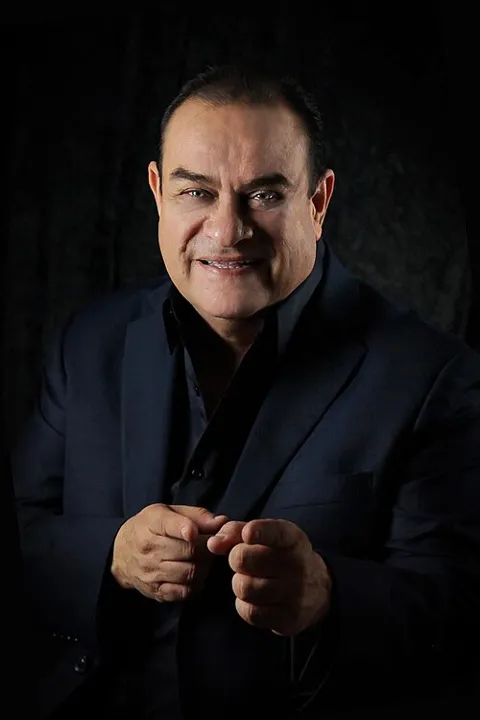
Tite Curet Alonso: biography
Early life and family
Catalino Curet Alonso was born on February 12, 1926, in the barrio El Hoyo Inglés of Guayama, Puerto Rico. His father, Eduardo Curet, taught Spanish and played in Simón Madera's band, while his mother, Juana Alonso, worked as a seamstress. The experiences of daily life in that working-class neighborhood later shaped many of his song themes. He received his primary and secondary education there and counted Rafael Cortijo, Ismael Rivera and Daniel Santos among his childhood friends. At age 15, in 1941, he wrote his first song. He also studied composition and solfeo with the Colombian teacher Jorge Rubiano. 1 2 3
Journalism, postal work and first compositions
After graduating from Central High School in Santurce, Curet Alonso enrolled at the University of Puerto Rico to study journalism and sociology. During free hours and vacations he continued writing songs. In 1960 he moved to New York City and became a sports columnist for the newspaper La Prensa. He also wrote columns for Puerto Rican publications that included El Mundo, El Reportero, El Vocero and Primera Hora. In 1965 Joe Quijano recorded his composition Efectivamente, which became a hit and marked the start of his public recognition as a composer. 1 2 3
For La Lupe he wrote several songs in 1968 and 1969, among them Carcajada final, Puro teatro and La tirana, the last adapted from a bolero originally intended for another singer. He also composed for Nelson Ned and produced adaptations such as the Spanish version of Usted abusó from the bossa nova classic. His collaboration with the Fania label began at the end of the 1960s; he supplied many of the songs recorded by its artists and sometimes acted as producer. 1 2 3
Salsa with a conscience and major songs
Curet Alonso developed a style described as salsa with a conscience. His lyrics addressed social issues, the hardships faced by poor Afro-Puerto Ricans, romantic themes and the beauty of black Caribbeans. Among his best-known compositions are Anacaona, Periódico de ayer, Lamento de Concepción, Las Caras Lindas, Juan Albañil, Mi triste problema, Tiemblas, Plantación Adentro, De todas maneras rosas, Marejada feliz, Barrunto, Juanito Alimaña, Pa' que afinquen and Tema de tu regreso. He wrote songs tailored to specific artists, taking into account their vocal style and personality. In 1974 he recorded the album Aquí estoy con un poco de algo under his own name for the WS Latino label. He also composed sambas, one of which, Samba de Flora, was recorded by Airto Moreira. Other interpreters of his work include Cheo Feliciano, Celia Cruz, Willie Colón, Tito Rodríguez, Olga Guillot, Héctor Lavoe, Ray Barretto, Tito Puente, Ismael Miranda, Roberto Roena, Bobby Valentín, Marvin Santiago, Willie Rosario, Rubén Blades, Andy Montañez, Tommy Olivencia, Frankie Ruiz, Menudo, La Sonora Ponceña, Raphy Leavitt y La Selecta, Richie Ray y Bobby Cruz and the Trío Los Panchos. 1 2 3
He translated the Broadway song Si yo fuera rico from Fiddler on the Roof into Spanish. For ten years he produced and hosted the radio program Tropicalísimo on WRTU 89.7, Radio Universidad de Puerto Rico. 1 2 3
Later years, honors and death
From 1985 until his death he lived with Norma Salazar, who in 2002 published the book Tite Curet Alonso: lírica y poesía. He received two honorary doctorates, one from Universidad del Turabo and one from the University of Puerto Rico. In 1990 the Día Nacional de la Salsa festival was dedicated to him. He was inducted into the International Latin Music Hall of Fame in 2001 and won awards at the Festival de la Canción de Buga, the Festival de la Salsa de Caracas and the Festival Internacional de Río de Janeiro. A cultural library named after him opened in 2000 on Calle San Sebastián in Old San Juan. 1 2 3
He died of a heart attack on August 5, 2003, at St. Joseph Hospital in Baltimore, Maryland. Friends Richie Viera and William Nazaret arranged for his body to be returned to Puerto Rico. He received a state funeral with a wake at the Instituto de Cultura Puertorriqueña, honors at the Capitol building and San Juan City Hall, and burial at Santa María Magdalena de Pazzis Cemetery in Old San Juan. Rubén Blades suspended tour dates to attend, and Cheo Feliciano was among the pallbearers. A two-disc posthumous collection of music composed by Tite Curet Alonso titled Alma de Poeta appeared in 2009. A life-sized statue of Curet Alonso sits at Plaza de Armas in San Juan on his favorite bench spot. 1 2 3
Ties to Puerto Rico and catalog disputes
Born and raised in Puerto Rico, Curet Alonso maintained deep ties to the island throughout his life. He wrote many songs that celebrated Puerto Rican identity and the experiences of its people. 1 2 3
Questions about Tite Curet Alonso
Where is Tite Curet Alonso from?
Tite Curet Alonso was born in Guayama, Puerto Rico.
Which famous salsa song did Tite Curet Alonso write for Ismael Rivera that celebrates Black pride?
Las Caras Lindas (De Mi Gente Negra), recorded by Ismael Rivera, is considered a classic in Puerto Rico.
How many of Tite Curet Alonso's songs were blocked from Puerto Rican radio because of the ACEMLA dispute?
Most of his catalog was kept off the air from 1995 to 2009; in 2009 an agreement allowed licensing of 695 songs originally with Fania.
For which major salsa artists did Tite Curet Alonso compose hits in the late 1960s and 1970s?
He wrote for La Lupe, Cheo Feliciano, Héctor Lavoe, Willie Colón, Celia Cruz, Rubén Blades and Ismael Rivera, among many others.
When did Tite Curet Alonso die?
Tite Curet Alonso died on August 5, 2003 in Baltimore, Maryland.
Sources
- Wikipedia: Tite Curet Alonso
- Wikipedia (español): Tite Curet Alonso
- Enciclopedia de Puerto Rico: Tite Curet Alonso
- Wikidata: Q3392788
- WAPA (cited by Wikipedia)
- Fundación Nacional para la Cultura Popular (cited by Wikipedia)
- Library of Congress (cited by Wikipedia)
- IMDb: Tite Curet Alonso (credits)
We did not find a freely licensed photo we could use, so we show initials instead.
Reviewed November 18, 2026. Original biography by PuertoRico.com. Editorial policy