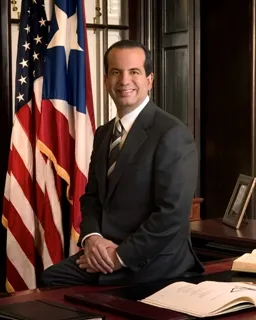
Aníbal Acevedo Vilá: biography
Early life and education
He attended Colegio San José High School. In 1982 he earned a Bachelor of Arts in political science and government at the University of Puerto Rico, Río Piedras campus. He received a Juris Doctor degree magna cum laude from the University of Puerto Rico School of Law in 1985. After passing the bar exam he completed a clerkship at the Supreme Court of Puerto Rico under Associate Justice Federico Hernández Denton. In 1987 he obtained an LL.M. from Harvard Law School. From 1987 to 1988 he clerked for Chief Judge Levin Hicks Campbell of the U.S. Court of Appeals for the First Circuit in Boston. 1 2
Early political career
Acevedo Vilá began his political career in 1989 as legislative affairs advisor to Governor Rafael Hernández Colón and later became director of the Legislative Affairs Office at La Fortaleza. He helped draft the Education Reform and Municipal Reform legislation. In 1992 he was elected at-large representative to the Puerto Rico House of Representatives. He served on committees including Government, Retirement System and Women's Affairs. He participated in the 1993 plebiscite campaign supporting commonwealth status, which won. Reelected in 1996, he was named Minority Leader of the House in 1997. That February he won election as president of the Popular Democratic Party against Eudaldo Báez Galib by a vote of 180 to 124. In 1998 he led the party campaign against the Young Bill in Congress, which would have required periodic renewal of commonwealth status. The party instead supported the "none of the above" option in the 1998 plebiscite, which received the majority of votes. 1 2
In 1999 Acevedo Vilá became vice-president of the Popular Democratic Party under Sila Calderón. He won the 1999 primary for resident commissioner against José Alfredo Hernández Mayoral with 54 percent of the vote. In the 2000 general election he defeated incumbent Carlos Romero Barceló. He was sworn in as the 17th Resident Commissioner on 3 January 2001. He worked on legislation to provide equal funding for education and Medicare in Puerto Rico. 1 2
Governor of Puerto Rico
When Governor Sila Calderón chose not to seek reelection in 2003, Acevedo Vilá initially prepared to run for mayor of San Juan. After José Hernández Mayoral withdrew, he became the Popular Democratic Party candidate for governor and won the party presidency again on 14 August 2004. The narrow result triggered a full recount and legal challenges over mixed ballots known as "pivazos" or "melones." The Supreme Court of Puerto Rico ruled 4-3 that the ballots were valid. The case reached the U.S. District Court and the First Circuit Court of Appeals, which deferred to the Puerto Rico Supreme Court. 1 2
The opposing New Progressive Party controlled the Legislative Assembly and the resident commissioner position, creating what Acevedo Vilá called a "shared government." He sought bipartisan support for cabinet nominees and legislation but faced repeated conflicts. The legislature overrode one of his vetoes, the first such override of a democratically elected governor. Budget disputes led to the previous year's budget remaining in force for the first time. In April 2006 a funding shortfall led to a two-week partial government shutdown until an agreement provided a loan and replaced the excise tax with a 7 percent sales tax while requiring operational cost reductions. 1 2
Later career and legal matters
Acevedo Vilá ran for reelection in 2008 but lost to Luis Fortuño by 224,894 votes. He resigned as president of the Popular Democratic Party two days later. In 2020 he ran unopposed in the Popular Democratic Party primary for resident commissioner but lost the general election with 32 percent of the vote. He is an adjunct professor at the University of Puerto Rico School of Law. 1 2
Personal life and ties to Puerto Rico
Acevedo Vilá was married to Luisa Gándara, who served as First Lady during his governorship and later as a member of the House of Representatives. They have two adult children, one a Harvard graduate and the other a schoolteacher educated at the University of Puerto Rico. The family lives in San Juan. 1 2
Questions about Aníbal Acevedo Vilá
When was Aníbal Acevedo Vilá born?
Aníbal Acevedo Vilá was born on February 13, 1962 in San Juan, Puerto Rico. Aníbal Acevedo Vilá is 64 years old.
What was the margin of victory in Aníbal Acevedo Vilá's 2004 gubernatorial election?
Acevedo Vilá won by 3,880 votes, approximately 0.2 percent of the total. The narrow margin triggered a full recount and court challenges over mixed ballots that were ultimately validated by the Supreme Court of Puerto Rico.
How did Aníbal Acevedo Vilá describe his administration because the opposing party controlled the legislature?
He called it a "shared government." He sought bipartisan support for bills and cabinet nominees but faced repeated conflicts including a veto override and budget disputes that led to a partial government shutdown in 2006.
What happened in the federal case against Aníbal Acevedo Vilá in 2008 and 2009?
He was indicted on 24 counts of campaign finance violations. Fifteen counts were dismissed in December 2008. In March 2009 a jury found him not guilty on all remaining charges.
Sources
- Wikipedia: Aníbal Acevedo Vilá
- Wikipedia (español): Aníbal Acevedo Vilá
- Wikidata: Q615126
- CNN (cited by Wikipedia)
- Biographical Directory of the U.S. Congress (cited by Wikipedia)
- El Nuevo Día (cited by Wikipedia)
- Univision (cited by Wikipedia)
- Primera Hora (cited by Wikipedia)
- The New York Times (cited by Wikipedia)
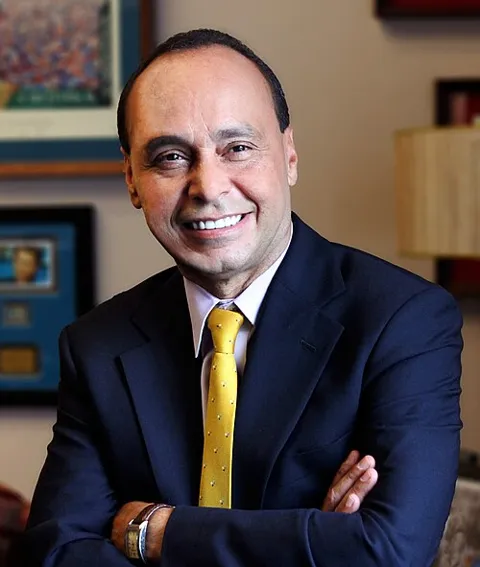
Photo: Anibal Acevedo Vila.jpg, Former United States House of Representatives federal office of Former U.S. Representative Anibal Acevedo Vila of Puerto (Public domain). Resized and converted to WebP.
Reviewed November 18, 2026. Original biography by PuertoRico.com. Editorial policy