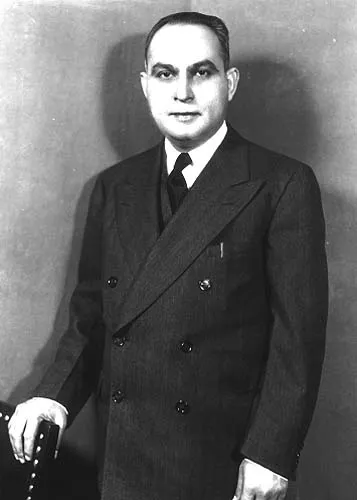
Bolívar Pagán: biography
Early life and family
Bolívar Pagán was born on May 16, 1897, in Guayanilla, Puerto Rico. He received his primary education in the public schools of Adjuntas and attended secondary school at Ponce High School. While still a student there, he contributed articles to several newspapers including El Día, Nosotros, Renacimiento and Puerto Rico Ilustrado, and served as editor of La Idea and La Aurora. In 1919 he became vice president of the Socialist Party of Puerto Rico. He graduated with a law degree from the University of Puerto Rico School of Law in 1921, was admitted to the bar the same year, and began practicing law in San Juan. The next year he served as judge in Fajardo. 1 2
Political career in Puerto Rico
Pagán ran unsuccessfully for the Puerto Rican Senate as a Socialist Party candidate in 1924 and again in 1928. He served as city treasurer of San Juan for four years beginning in 1925. On his third attempt he won election to the Senate in 1933 and held the seat until 1939, rising to president pro tempore and majority floor leader. During his Senate years he helped pass legislation on universal suffrage, workers' compensation, and the creation of the Instituto de Literatura Puertorriqueña. He also served as interim mayor of San Juan from 1936 to 1937. In 1935 he traveled to Washington as part of a legislative commission seeking statehood for Puerto Rico. 1 2
Resident Commissioner in Washington
In 1939 Governor William D. Leahy appointed Pagán Resident Commissioner to the U.S. House of Representatives to fill the vacancy left by the death of his father-in-law, Santiago Iglesias. He was elected to the post in 1940 under a coalition of the Socialist Party and the Republican Union. In the 78th Congress he sat on the Committees on Agriculture, Labor, and the Territories. In the following Congress he added assignments on Insular Affairs, Military Affairs, and Naval Affairs. He successfully advocated extending social security benefits and workers' compensation laws to Puerto Rico, continuing the work begun by Iglesias. Pagán introduced several bills to allow Puerto Ricans to elect their own governor, although none passed during his term. He also informed Congress of dissatisfaction among some Puerto Ricans with Governor Rexford G. Tugwell. He was a member of the American Group of the Inter-Parliamentary Union. 1 2
Later Senate service, writings and death
He resumed his law practice in San Juan. He wrote and published several books on politics and history. Among them are America y Otras Paginas (1922), Ley Municipal Revisada, Anotada y Comentada (1925), Ideales en Marcha (1939), Puerto Rico: The Next State (1942), Crónicas de Washington (1949), and the two-volume Historia de los Partidos Politicos Puertorriqueños (1898-1956) (1959). Bolívar Pagán died on February 9, 1961, in San Juan. He was buried at the Puerto Rico Memorial Cemetery in Carolina. 1 2
Legacy and ties to Puerto Rico
Pagán's legislative work focused on social and labor issues important to Puerto Rico, including universal suffrage and workers' compensation. His books remain a documented source on the history of Puerto Rican political parties from 1898 to 1956. Born in Guayanilla and educated in Adjuntas and Ponce, he maintained a long career in public service on the island and represented its interests in Washington. 1 2
Questions about Bolívar Pagán
When was Bolívar Pagán born?
Bolívar Pagán was born on May 16, 1897 in Guayanilla, Puerto Rico.
What legislation did Bolívar Pagán help pass while in the Puerto Rican Senate?
He worked on bills for universal suffrage, workers' compensation, and the creation of the Instituto de Literatura Puertorriqueña.
Which books did Bolívar Pagán write about Puerto Rican political history?
His major work is Historia de los Partidos Politicos Puertorriqueños (1898-1956), published in 1959. He also wrote Puerto Rico: The Next State in 1942.
Who appointed Bolívar Pagán as Resident Commissioner in 1939?
Governor William D. Leahy appointed him to fill the vacancy caused by the death of Santiago Iglesias.
When did Bolívar Pagán die?
Bolívar Pagán died on February 9, 1961 in San Juan, Puerto Rico, aged 63.
Sources
- Wikipedia: Bolívar Pagán
- Wikipedia (español): Bolívar Pagán
- Wikidata: Q1619179
- Biographical Directory of the U.S. Congress: Bolívar Pagán
- Library of Congress: Bolívar Pagán
- U.S. House of Representatives (cited by Wikipedia)
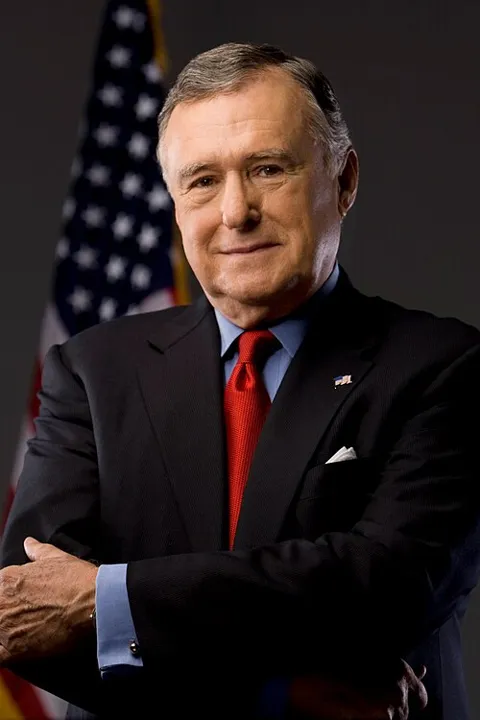
Photo: Bolívar Pagán.jpg, US gov (Public domain). Resized and converted to WebP.
Reviewed November 18, 2026. Original biography by PuertoRico.com. Editorial policy