Francisco Oller: biography
Early life and family
His paternal grandparents came from Catalonia while his maternal family had lived in Puerto Rico since the seventeenth century. Baptized in the Cathedral of San Juan, he began art studies at age eleven with Juan Cleto Noa in San Juan. At eighteen he moved to Madrid and entered the Royal Academy of San Fernando under Federico de Madrazo. 1 2 5
In 1858 he went to Paris, studying with Thomas Couture, Gustave Courbet, and at the Louvre. He sang as a baritone in local operas and met Puerto Rican expatriates Ramón Emeterio Betances and Salvador Carbonell del Toro. He exhibited alongside Bazille, Renoir, Monet, and Sisley. 1 2 5
Return to Puerto Rico and art schools
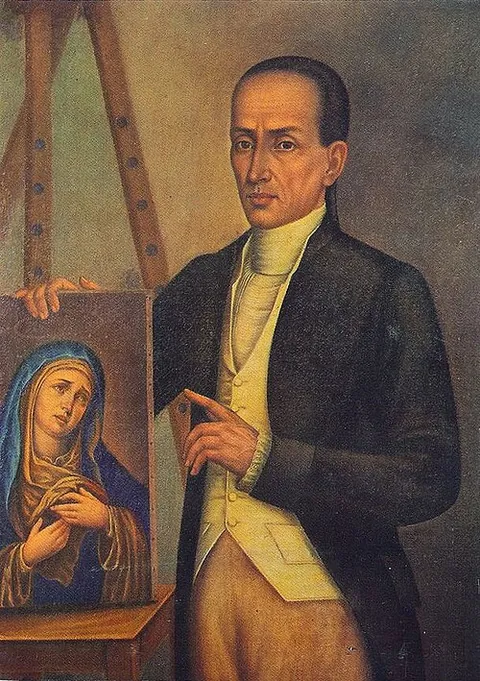
Oller returned to Puerto Rico in 1865 and confronted the reality of slavery, producing works such as El negro flageado and El castigo del negro enamorado. In 1868 he founded the Free Academy of Art of Puerto Rico, also called Salón Washington, offering free drawing classes that grew to eighty-four students. He published a manual on drawing from nature and perspective in 1869. He lived for a time in the former house of José Campeche, whose work he copied and admired. 1 2 5
He taught at the Escuela Normal of the University of Puerto Rico from 1903 to 1904, influencing early twentieth-century Puerto Rican artists. He maintained contact with political developments and opposed social injustices including slavery, influenced by friendships with Betances and Román Baldorioty de Castro. 1 2 5
Impressionist period and major works
Oller spent nearly two decades in Europe across three trips to Paris, working with Impressionist and Post-Impressionist artists while developing his own style. He participated in the 1864 Paris Salon and the 1875 Salon des Refusés. His French landscapes show stronger Impressionist traits, while Puerto Rican subjects retain a realist character. In 1879 he painted Battle of Treviño during his final European stay, using loose brushwork to convey atmosphere rather than precise realism. 1 2
Hacienda La Fortuna from 1885 depicts a sugar plantation. La escuela del Maestro Rafael Cordero, painted 1890–92, shows the educator at work with children of different races and classes in a modest schoolroom, highlighting access to education. Still lifes such as Still Life with Avocados and Utensils and Still Life with Soursops from 1891 capture local produce. His largest surviving work, El Velorio of 1893, measures eight by thirteen feet and portrays a baquiné for a dead child in a rural house where most participants celebrate while the parents mourn; it hangs permanently at the University of Puerto Rico Museum and is considered a national treasure. 1 2 5
Later years and recognition
Spain named him a knight of the Order of Carlos III in 1870 and official painter to the royal court of Amadeo I in 1872. He returned permanently to Puerto Rico in 1896. Oller died on May 17, 1917, in San Juan and was buried at Santa María Magdalena de Pazzis Cemetery. His paintings are held in the Musée d'Orsay, the Louvre (Bords de Seine), the Prado (Feria francesa, acquired 2026), the University of Puerto Rico Museum, the Museo de Arte de Ponce, and other institutions. Several works were lost to hurricanes or theft. 1 2 5
Legacy and ties to Puerto Rico
Oller introduced Realism and Impressionism to Puerto Rico, combining them with local traditions to change painting in the Caribbean. He portrayed unidealized rural workers, tropical landscapes, and social scenes, giving historical context through a Puerto Rican perspective. Artists such as Ramón Fradé and Miguel Pou followed his approach. 61 in the Bronx, New York. A Francisco Oller and Diego Rivera Museum of Art exists in Buffalo. 1 2 5
Questions about Francisco Oller
When was Francisco Oller born?
Francisco Oller was born on June 17, 1833 in Bayamón, Puerto Rico.
Why is El Velorio considered a Puerto Rican national treasure?
The 1893 painting measures eight by thirteen feet and depicts a baquiné for a dead child. It uses small visible brush strokes and accurate light effects. It hangs permanently at the University of Puerto Rico Museum of History, Anthropology, and Art and cannot leave the collection.
Which European artists did Francisco Oller know in Paris?
He met Claude Monet, Pierre-Auguste Renoir, Alfred Sisley, Frédéric Bazille, Camille Pissarro, and Paul Cézanne. He briefly taught Cézanne and introduced him to Pissarro in 1861. He also studied with Gustave Courbet and Thomas Couture.
What schools did Francisco Oller found in Puerto Rico?
In 1868 he opened the Free Academy of Art, known as Salón Washington, offering free classes. In 1884 he founded an art school for young women that later became part of the Universidad Nacional. He taught at the University of Puerto Rico Normal School from 1903 to 1904.
When did Francisco Oller die?
Francisco Oller died on May 17, 1917 in San Juan, Puerto Rico, aged 83.
Sources
- Wikipedia: Francisco Oller
- Wikipedia (español): Francisco Oller
- Wikidata: Q2681959
- Encyclopedia of Puerto Rico: Francisco Oller
- Enciclopedia de Puerto Rico: Francisco Oller
- The New York Times (cited by Wikipedia)
- The Wall Street Journal (cited by Wikipedia)
- Library of Congress (cited by Wikipedia)
- Smithsonian Institution (cited by Wikipedia)
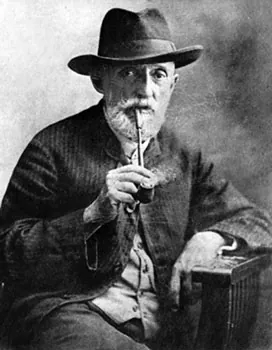
Photo: Francisco Oller y Cestero.jpeg, Unknown author (Public domain). Resized and converted to WebP.
Reviewed November 18, 2026. Original biography by PuertoRico.com. Editorial policy