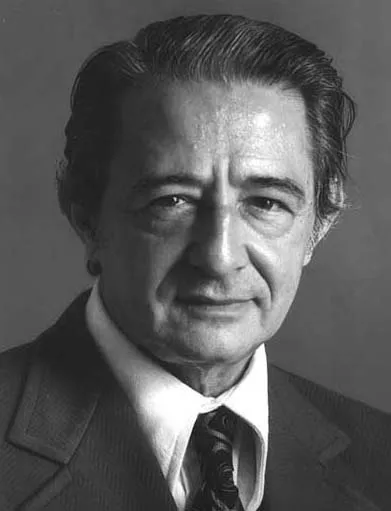
Jaime Benítez Rexach: biography
Early life and family
Jaime Benítez Rexach was born on October 29, 1908, in Vieques to Luis Benítez and Candida Rexach. His mother died when he was seven and his father a year later. An older sister in San Juan raised him and his siblings. He attended public schools before leaving in 1926 for Georgetown University, where he earned an LL.B. in 1930 and an LL.M. in 1931. He passed the District of Columbia bar that year and returned to Puerto Rico. In 1938 he received an M.A. from the University of Chicago. 1
University leadership
In 1931 Benítez joined the University of Puerto Rico faculty as associate professor of social and political sciences, serving until 1942. That year he became chancellor of the Río Piedras campus, a post he held until 1966. During his tenure the student body grew from five thousand to forty thousand. He attracted Spanish exiles after the civil war, among them poet Juan Ramón Jiménez, cellist Pablo Casals, and others including Zenobia Camprubí, Jorge Enjuto, Cristóbal Ruiz, and Pedro Salinas. He also appointed local artists and writers such as Luis Palés Matos, Evaristo Ribera Chevremont, Francisco Matos Paoli, Julio Rosado del Valle, Francisco Rodón, and Augusto Rodríguez. Benítez promoted university reform based on ideas from José Ortega y Gasset and Robert Maynard Hutchins. Reforms included adopting Spanish as the preferred language of instruction, granting scholarships to low-income students, sending scholarship recipients to study in the United States, creating research centers such as the Institute of Caribbean Studies, reorganizing into faculties of Humanities, Natural Sciences, and Social Sciences, and establishing graduate programs, the School of Medicine, School of Dentistry, and School of Planning. He created the Department of General Studies in 1943, which became a faculty in 1945, requiring all students to take courses in philosophy, physical sciences, biological sciences, social sciences, and humanities. He supported the arts by hosting operas, theatrical productions, the Casals Festival, exhibitions from the Museum of Modern Art in New York, architectural designs by Henry Klumb, and works by Rufino Tamayo. The university choir toured internationally and technical experts assisted modernization projects in Africa, Latin America, India, and Egypt. He founded and directed the literary review La Torre from 1956 to 1971. 1 2
Political activity and constitutional role
Benítez was a close associate of Luis Muñoz Marín and a member of the Popular Democratic Party. In 1951 he served as a member of the Constitutional Convention of Puerto Rico and chaired the Drafting Committee on the Bill of Rights. He collaborated on the initial draft of the Constitution's Preamble and helped include social and economic rights alongside human rights. He also belonged to the United States National Commission for UNESCO from 1948 to 1954, attending conventions in Paris in 1950 and Havana in 1952. In 1956 he was elected a Fellow of the American Academy of Arts and Sciences and served as president of the National Association of State Universities from 1957 to 1958. In 1948, during his chancellorship, he denied nationalist leader Pedro Albizu Campos access to the Río Piedras campus for a speech, leading to student protests, a strike, temporary closure of the university, and expulsion of strike leaders. His relationship with Muñoz Marín deteriorated in 1957 when the governor accused him of building a rival political movement; Benítez survived a vote of confidence by one vote in the Council on Higher Education. They reconciled publicly before the 1960 elections, though tensions continued. 1
Congressional service and later career
In 1972 Benítez was elected Resident Commissioner of Puerto Rico and served from 1973 to 1977 on the House Committee on Education and Labor. He introduced legislation to extend the Higher Education Act of 1965 to Puerto Rico, sponsored a bill to let American Samoa elect its governor and lieutenant governor, and supported a loan to the Virgin Islands government. He advocated for the existing commonwealth status over statehood or independence. He lost his bid for reelection in 1976. He wrote books on the university as a "house of studies," including Junto a la Torre (1963), Ética y estilo de la universidad (1964), La universidad del futuro (1964), and Sobre el futuro cultural y político de Puerto Rico (1965). He received honorary doctorates from the University of the West Indies, Inter-American University, Catholic University of Puerto Rico, University of New York, Fairleigh Dickinson University, University of Miami, and UPR Medical Sciences Campus. He was named Professor Emeritus at UPR Río Piedras. 1
Legacy and ties to Puerto Rico
Benítez died on May 30, 2001, in San Juan and was interred at Santa María Magdalena de Pazzis Cemetery. A law granted his widow a life pension. In 2002 the Inter-American University published a compilation of his speeches titled Discursos. The university honored the centenary of his birth in 2008 with three days of conferences. University Avenue at the Río Piedras campus was renamed Paseo Jaime Benítez. The main amphitheater at the Medical Sciences campus, a new General Studies building at Río Piedras (2009), and the Jaime Benítez National Park at Condado Lagoon (2008) carry his name. The Fundación Jaime Benítez-Rexach at the University of Puerto Rico in Arecibo was created in 2001 to support the institution's socio-cultural, educational, and economic needs. His papers are held at the Colección Puertorriqueña of the UPR Río Piedras library. A 2008 biography edited by Héctor Luis Acevedo was presented at the Puerto Rico Capitol. In 2010 former Secretary of Health Enrique Vázquez Quintana reviewed Benítez's role in creating the Medical Sciences Campus and its impact on public health. 1
Questions about Jaime Benítez Rexach
When was Jaime Benítez Rexach born?
Jaime Benítez Rexach was born on October 29, 1908 in Vieques, Puerto Rico.
What reforms did Jaime Benítez implement at the University of Puerto Rico?
He established Spanish as the preferred language of instruction, created the Department of General Studies, founded new faculties and graduate programs including the School of Medicine, granted scholarships to low-income students, and attracted Spanish exile scholars and local artists.
What was Jaime Benítez's role in the 1952 Constitution of Puerto Rico?
He chaired the Drafting Committee on the Bill of Rights and collaborated on the initial draft of the Preamble, helping include social and economic rights.
Which institutions and places in Puerto Rico are named after Jaime Benítez?
Paseo Jaime Benítez at UPR Río Piedras, the main amphitheater at the Medical Sciences campus, the General Studies building at Río Piedras, and the Jaime Benítez National Park at Condado Lagoon.
When did Jaime Benítez Rexach die?
Jaime Benítez Rexach died on May 30, 2001 in San Juan, Puerto Rico, aged 92.
Sources
- Wikipedia: Jaime Benítez Rexach
- Enciclopedia de Puerto Rico: Jaime Benítez Rexach
- Wikidata: Q1862978
- Biographical Directory of the U.S. Congress: Jaime Benítez Rexach
- Library of Congress: Jaime Benítez Rexach
- The New York Times (cited by Wikipedia)
- Primera Hora (cited by Wikipedia)
- WAPA (cited by Wikipedia)
- Oficina de Servicios Legislativos de Puerto Rico (cited by Wikipedia)
- El Vocero (cited by Wikipedia)
- Universidad de Puerto Rico (cited by Wikipedia)
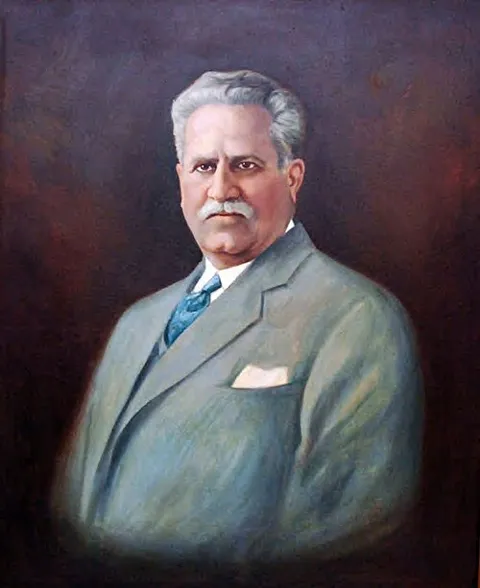
Photo: Jaime Benítez.jpg, Unknown author (Public domain). Resized and converted to WebP.
Reviewed November 18, 2026. Original biography by PuertoRico.com. Editorial policy