José Julián Acosta: biography
Early life and education
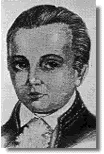
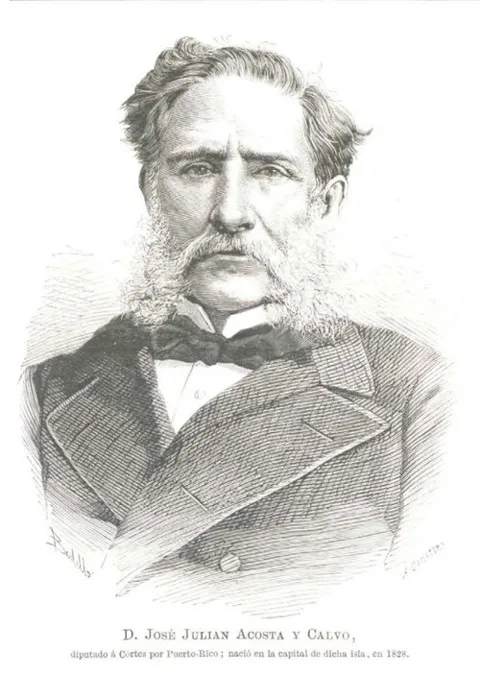
José Julián Acosta Calbo was born on February 16, 1825, in San Juan, Puerto Rico, to Francisco de Acosta y Sandoval and Juana Antonia Calbo y Garriga. He received his primary education under Rafael Cordero, whose teachings influenced him throughout his life. He then pursued further studies in Paris, London and Berlin, where he studied under naturalist Alexander von Humboldt. Upon returning to Puerto Rico, Acosta worked as a professor of botany and maritime sciences. He later served as director of the Instituto Civil de Segunda Enseñanza in San Juan and also taught at the Seminario Conciliar and the Escuela de Comercio y Náutica. 1 2 3
During his time in Madrid, Acosta joined Román Baldorioty de Castro, Alejandro Tapia y Rivera and others in the Sociedad Recolectora de Documentos Históricos de la Isla de San Juan Bautista de Puerto Rico. The group searched Spanish archives for documents related to Puerto Rico. Acosta contributed to the second Aguinaldo puertorriqueño in 1846 and later wrote literary criticism essays on authors including Miguel de Cervantes, Victor Hugo and Alejandro Tapia y Rivera. 3
Abolitionist efforts
From 1865 to 1867, Acosta served on a Puerto Rican commission with Segundo Ruiz Belvis and Francisco Mariano Quiñones that participated in the Junta Informativa de Reformas de Ultramar in Madrid. There he presented arguments for the abolition of slavery in Puerto Rico, working alongside the Sociedad Abolicionista Española. In 1866 he submitted the Informe sobre la abolición de la esclavitud en la isla de Puerto Rico. That same year in Madrid, Acosta was named a member of the Real Academia de la Historia for his editing work on Fray Iñigo Abbad y Lasierra's Historia geográfica, civil y natural de la isla de San Juan Bautista de Puerto Rico. He added notes, corrected errors and extended the history into the 1870s. 1 2 3
After returning to Puerto Rico, Acosta faced harassment from Spanish authorities because of his liberal views. Following the 1868 Grito de Lares revolt, he was suspected of involvement despite not participating and was imprisoned by General Pavia in the dungeons of Fort San Felipe del Morro. He later described his experiences in the pamphlet Horas de Prisión. 1 2 3
Political career and writings
Acosta helped organize the Partido Liberal Reformista in 1870 and founded and edited its newspaper El Progreso. He was elected as a deputy to the Spanish Cortes in 1871 and 1879. Acosta contributed to the Biblioteca histórica de Puerto Rico published by Alejandro Tapia y Rivera in 1854. 1 2 3
In 1873 Acosta saw the result of his abolitionist work when the decree abolishing slavery in Puerto Rico was proclaimed on March 22. 1 2 3
Legacy and ties to Puerto Rico
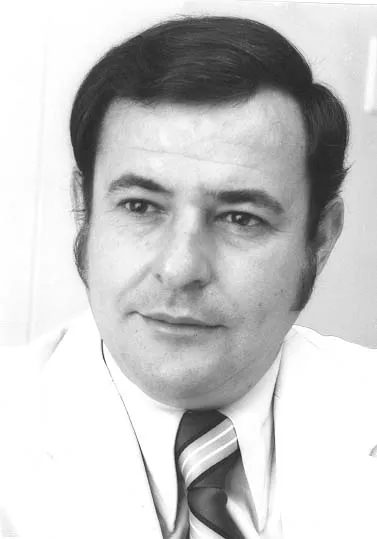
His great-grandson was Colonel Gilberto José Marxuach, known as the Father of the San Juan Civil Defense. Acosta's historical research, editing of primary sources and political advocacy for liberal reforms and abolition formed a documented part of 19th-century Puerto Rican intellectual and political history. 1 2 3
Questions about José Julián Acosta
When was José Julián Acosta born?
José Julián Acosta was born on February 16, 1825 in San Juan, Puerto Rico.
What role did José Julián Acosta play in the 1866 abolition efforts?
He served on the Puerto Rican commission to the Junta Informativa de Reformas de Ultramar in Madrid and presented the Informe sobre la abolición de la esclavitud en la isla de Puerto Rico.
Which historical work did Acosta edit that led to his membership in the Real Academia de la Historia?
He edited Fray Iñigo Abbad y Lasierra's Historia geográfica, civil y natural de la isla de San Juan Bautista de Puerto Rico, adding notes, corrections and extensions to the 1870s.
What political parties did Acosta lead or join?
He helped found the Partido Liberal Reformista, served as its president in 1873, and later joined the Partido Autonomista formed by Román Baldorioty de Castro.
When did José Julián Acosta die?
José Julián Acosta died on August 26, 1891 in San Juan, Puerto Rico, aged 66.
Sources
- Wikipedia: José Julián Acosta
- Wikipedia (español): José Julián Acosta
- Enciclopedia de Puerto Rico: José Julián Acosta
- Wikidata: Q1325518
- Library of Congress (cited by Wikipedia)
Photo: José Julián Acosta y Calvo.jpg, Félix Badillo y Rodrigo / Arturo Carretero (Public domain). Resized and converted to WebP.
Reviewed November 18, 2026. Original biography by PuertoRico.com. Editorial policy