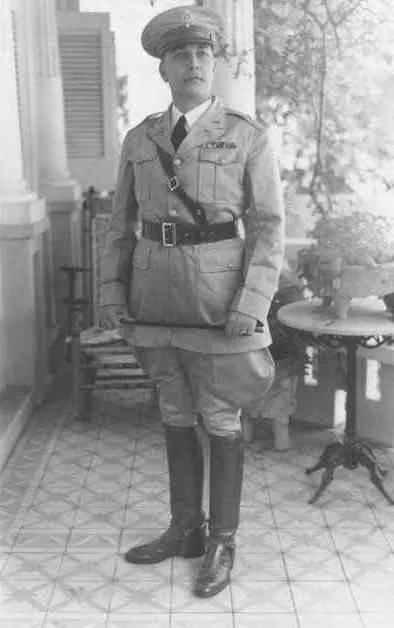
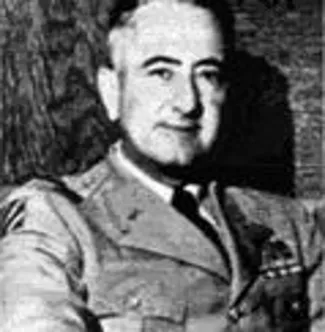
Manuel Goded Llopis: biography
Early life and family
Manuel Goded Llopis was born on 15 October 1882 in San Juan, Puerto Rico, when the island was still a Spanish colony. His family had a military tradition and Catalan origins; his father served as an artillery commander. After the Spanish-American War ended with the Treaty of Paris of 1898, the family moved to peninsular Spain. At age fourteen he entered the Infantry Academy in Toledo. He graduated and received assignments in the Spanish Army. 1 2
Rif War and promotions
During the Rif War in Spanish Morocco, Goded participated in combat operations against the rebellion led by Abd-el-Krim. In 1924 he was promoted to colonel for war merits. The following year he commanded the amphibious landing at Alhucemas Bay in the Battle of Alhucemas, an action regarded as the beginning of the end of the Rif Rebellion. Spain regained control of the territory by 1927. 1 2
Political involvement under dictatorship and republic
Goded initially supported the right-wing dictatorship of Miguel Primo de Rivera established in 1923. He later criticized the regime and participated in intrigues against it. In 1930 he temporarily served as acting minister of the Army on several occasions, replacing General Dámaso Berenguer. He became involved in the 1932 Carabanchel incident and the Sanjurjada coup attempt of 10 August 1932, after which the government removed him from active duty. He received an amnesty under the government of Alejandro Lerroux and returned to service. In October 1934 he collaborated with Francisco Franco in the repression of the Asturias revolt by government order. He later joined the clandestine Unión Militar Española and formed part of its central committee. In early 1936, after the Popular Front took power, his lack of alignment with the new government led to his transfer to a remote command in the Balearic Islands as commanding general, a post with limited troops intended to restrict his influence. 1 2
July 1936 revolt and execution
When right-wing generals launched the military revolt against the Second Republic in July 1936, Goded was assigned to lead the uprising in Barcelona. On the morning of 19 July he declared a state of war in the Balearic Islands, quickly securing control of Mallorca and Ibiza. He then flew to Barcelona in a seaplane, escorted by a squadron of seaplanes, to direct operations there. His forces failed to take control of the city after intense fighting against organized left-wing resistance in the industrialized region. Facing blockade, Goded agreed to surrender on 19 July. He was arrested that afternoon by Republican authorities. Imprisoned on the prison ship Uruguay with other captured rebels, he was compelled to broadcast a radio message ordering his remaining troops to surrender and acknowledging the failure of the uprising. His voice was heard across Spain and encouraged Republican supporters. On 11 August 1936 a Republican military court tried him for treason and sentenced him to death. He was executed by firing squad the next day, 12 August 1936, at Montjuïc Castle in Barcelona alongside other officers including Álvaro Fernández Burriel. 1 2
Legacy and ties to Puerto Rico
Goded's death removed a key figure from the Nationalist side in Catalonia and eliminated one of Francisco Franco's personal and political rivals within the rebel movement. 1
Questions about Manuel Goded Llopis
When was Manuel Goded Llopis born?
Manuel Goded Llopis was born on October 15, 1882 in San Juan, Puerto Rico.
What was Manuel Goded Llopis's role in the Battle of Alhucemas?
In 1925 he led the amphibious landing at Alhucemas Bay during the Rif War. The operation is considered the beginning of the end of the Rif Rebellion.
Why did Goded broadcast a surrender message from prison?
After his capture in Barcelona on 19 July 1936, Republican authorities compelled him to order his remaining troops to surrender via radio.
How did Goded's Puerto Rican birth affect his later career?
Born in San Juan when it was a Spanish colony, his family moved to Spain in 1898. He began his military education in Toledo at age fourteen and spent his entire career in the Spanish Army.
When did Manuel Goded Llopis die?
Manuel Goded Llopis died on August 12, 1936 in Barcelona, Spain, aged 53.
Sources
- Wikipedia: Manuel Goded
- Wikipedia (español): Manuel Goded
- Wikidata: Q2604672
- Library of Congress: Manuel Goded Llopis
- The New York Times (cited by Wikipedia)
- Yale University (cited by Wikipedia)
We did not find a freely licensed photo we could use, so we show initials instead.
Reviewed November 18, 2026. Original biography by PuertoRico.com. Editorial policy