Michael N. Hall: biography
Early life and education
Michael Nip Hall was born on 12 June 1953 in Puerto Rico. His family moved to Peru when he was three years old and then to Venezuela. At the age of 13 he moved to the United States and attended St. Mark's School in Southborough, Massachusetts. Hall began studies at the University of North Carolina at Chapel Hill as an arts major and later changed to zoology with the goal of entering medicine. He received a BSc in 1976. After gaining clinical experience at a local hospital he completed an undergraduate honors thesis in a molecular genetics laboratory. In 1981 he earned a PhD from Harvard University. 1
Career path
After receiving his doctorate Hall spent eight months in 1981 as a research fellow at the Pasteur Institute in Paris, where he studied bacterial genetics in the groups of François Jacob and Jacques Monod. He then joined the laboratory of Ira Herskowitz at the University of California, San Francisco as a Helen Hay Whitney Fellow and became a principal investigator there in 1984. In 1987 Hall moved to Basel, Switzerland, and joined the Division of Biochemistry at the Biozentrum of the University of Basel as assistant professor. He was promoted to full professor in 1992. From 2002 to 2009 and again from 2013 to 2016 he served as vice director of the Biozentrum. In 2023 he accepted an appointment as distinguished principal investigator at the Institute of Human Biology of Hoffmann-La Roche in Basel. Hall chaired the European Molecular Biology Organization Council from 2021 to 2022 after earlier service on the council from 2017 to 2019 and 2020 to 2022. He also serves on the board of trustees of the Louis-Jeantet Foundation. 1
Research on TOR and mTOR
Hall's laboratory investigates the PI3K/AKT/mTOR pathway and mechanisms of cell growth control. In 1991 he identified two yeast genes, TOR1 and TOR2, whose mutation prevented rapamycin from inhibiting cell growth. He named the genes Target of Rapamycin and his group sequenced them, establishing that they encode homologous protein kinases. Three years later Stuart Schreiber identified the mammalian version of the protein and named it mammalian target of rapamycin, later renamed mechanistic target of rapamycin while retaining the mTOR abbreviation. The TOR or mTOR protein kinase is activated by growth factors such as insulin, nutrients and cellular ATP levels, and it controls cell growth and metabolism. Dysregulation of TOR signaling is linked to aging, cancer, obesity, diabetes and cardiovascular disease. Hall's group showed that TOR proteins assemble into two distinct complexes, TORC1 and TORC2. They demonstrated that the mammalian counterpart mTORC2 is resistant to rapamycin and controls a signaling pathway separate from that of mTORC1. The laboratory identified specific roles for each complex: mTORC1 stimulates nucleotide synthesis and responds to glutamine, while mTORC2 promotes lipid synthesis and tumorigenesis. In collaboration with Nenad Ban and Timm Maier, Hall's team reported the atomic structures of mTORC1 in 2016 and mTORC2 in 2018. 1
Questions about Michael N. Hall
When was Michael N. Hall born?
Michael N. Hall was born on June 12, 1953 in Puerto Rico. Michael N. Hall is 73 years old.
What does the acronym TOR stand for in Michael Hall's research?
TOR stands for Target of Rapamycin. Hall named the yeast genes TOR1 and TOR2 after discovering that mutations in them prevented rapamycin from inhibiting cell growth.
What are the two TOR protein complexes identified by Hall's laboratory?
Hall's group discovered TORC1 and TORC2. They showed that mTORC1 and mTORC2 have distinct functions, with mTORC2 being resistant to rapamycin.
Where does Michael Hall work as a professor?
Hall is professor at the Biozentrum of the University of Basel in Switzerland. In 2023 he also became distinguished principal investigator at the Institute of Human Biology of Hoffmann-La Roche in Basel.
Sources
- Wikipedia: Michael N. Hall
- Wikidata: Q1928689
- Library of Congress: Michael N. Hall
- Harvard University (cited by Wikipedia)
- DOI (cited by Wikipedia)
- National Institutes of Health (cited by Wikipedia)
- Nature (cited by Wikipedia)
- Yale University (cited by Wikipedia)
- PNAS (cited by Wikipedia)
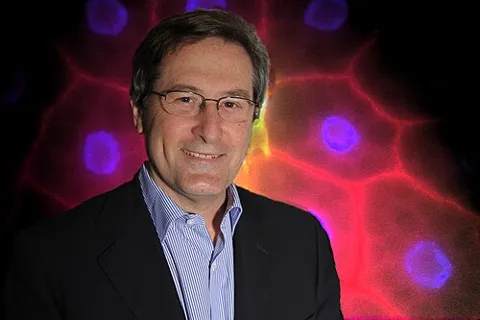
Photo: Michael N Hall.jpg, Ingrid Singh, Photo Department, Biozentrum, University of Basel, Switzerland (CC BY-SA 3.0). Resized and converted to WebP.
Reviewed November 18, 2026. Original biography by PuertoRico.com. Editorial policy