Ray Barretto: biography
Early life and family
Ray Barretto was born in Brooklyn, New York, to parents who had moved from Puerto Rico in the early 1920s. His father left the family when Barretto was four years old. From an early age he absorbed his mother's appreciation for jazz artists such as Duke Ellington and Count Basie. 1 2
Military service and discovery of Latin jazz
In 1946, at age 17, Barretto joined the U.S. Army and was stationed in Germany. There he encountered Belgian vibraphonist Fats Sadi. Hearing Dizzy Gillespie's recording of "Manteca," composed with Chano Pozo and Gil Fuller, convinced him to pursue music. 1 2
Sideman years and first hits
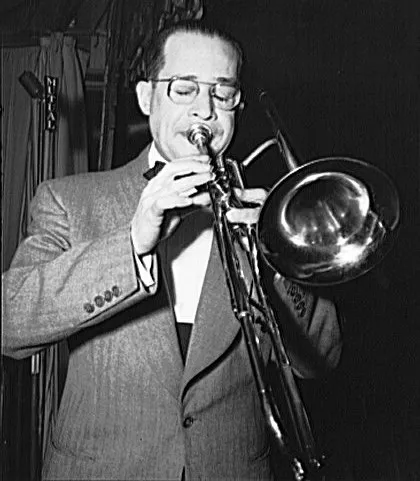
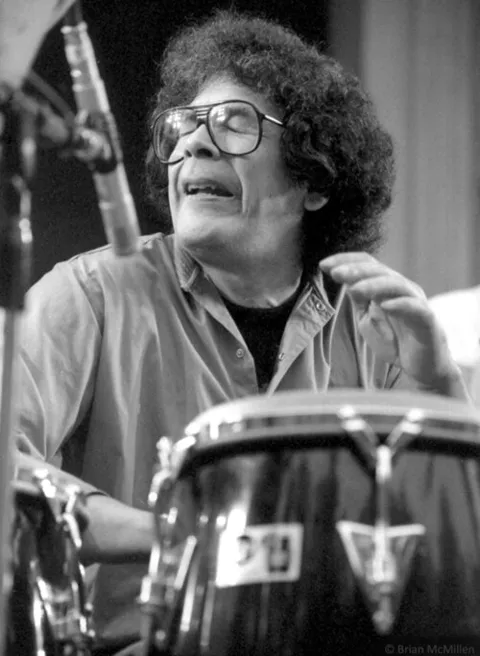
Returning to New York in 1949, Barretto joined jam sessions and developed his conga technique. He is noted as the first U.S.-born percussionist to integrate the conga drum into jazz ensembles. Charlie Parker invited him to perform, and he later played with José Curbelo and spent four years with Tito Puente, receiving his first recording credit in 1958. In 1960 he worked as a house musician for Prestige, Blue Note and Riverside, and recorded with Herbie Mann. He played conga on Kenny Burrell's 1963 album Midnight Blue. 1
In 1962 Barretto formed Charanga La Moderna and recorded "El Watusi" for Tico Records, which became a major pachanga hit and his first commercial success. He signed with United Artists' Latin division in 1965, releasing boogaloo albums including El Ray Criollo. In 1967 he joined Fania Records; his 1968 album Acid became a landmark boogaloo recording featuring vocalist Adalberto Santiago. 1 2
Fania All-Stars and salsa recordings
Barretto served as musical director of the Fania All-Stars and appeared in the film Our Latin Thing. His 1972 album Que viva la música included the track "Cocinando," used in the film's soundtrack. The 1973 album Indestructible featured the song "La familia" and new vocalist Tito Allen. In 1973, Barretto recorded the album Indestructible, in which he played "La familia", a song written by José Curbelo in 1953 and recorded by the sonero Carlos Argentino with the Cuban band Sonora Matancera; Tito Allen joined as new vocalist. Allen left the band after Indestructible. The series of departures left Barretto depressed and disappointed with salsa; he then redirected his efforts to jazz, while remaining as musical director of the Fania All Stars. In 1975 he released the album Barretto with vocalists Rubén Blades and Tito Gómez. He also recorded with the Rolling Stones, Bee Gees and on Herbie Mann's Discotheque album. In 1979, he recorded La Cuna for CTI Records and produced a salsa record for Fania, titled Rican/Struction, which was named 1980 "Best Album" by Latin N.Y. Magazine, with Barretto crowned as 'Conga Player of the Year'. 1 2
His final Fania album, Soy dichoso, appeared in 1990. That same year he won a Grammy Award in the Tropical Music category for Ritmo en el corazón, a collaboration with Celia Cruz and Adalberto Santiago. In 1991 his earlier song "A Deeper Shade of Soul" was sampled by the Dutch band Urban Dance Squad for a Billboard Hot 100 hit. 1
Later career, New World Spirit and recognition
In the 1990s Barretto formed the New World Spirit jazz ensemble and recorded multiple albums for Concord Jazz. He left the Latin Legends of Fania group to concentrate on this project. In 1999 he was inducted into the International Latin Music Hall of Fame. The National Endowment for the Arts named him a Jazz Master in 2006. He remained active as a bandleader and producer, touring in the United States, Europe, Africa, Israel and Latin America while living in Northern New Jersey. 1 2
Questions about Ray Barretto
When was Ray Barretto born?
Ray Barretto was born on April 29, 1929 in Brooklyn, New York.
What inspired Ray Barretto to play Latin music?
Hearing Dizzy Gillespie's recording of "Manteca" while stationed in Germany convinced him that Latin jazz was his calling.
Which album earned Ray Barretto his only Grammy Award?
He won the 1990 Grammy for Tropical Music with Ritmo en el corazón, recorded with Celia Cruz and Adalberto Santiago.
How did Ray Barretto contribute to the Fania All-Stars?
Barretto served as a long-time member and musical director of the Fania All-Stars while recording multiple albums for the label.
When did Ray Barretto die?
Ray Barretto died on February 17, 2006 in Hackensack, New Jersey, aged 76.
Sources
- Wikipedia: Ray Barretto
- Wikipedia (español): Ray Barretto
- Wikidata: Q740099
- Encyclopaedia Britannica: Ray Barretto
- NPR (cited by Wikipedia)
- The New York Times (cited by Wikipedia)
- Library of Congress (cited by Wikipedia)
- Recording Academy (Grammy) (cited by Wikipedia)
- IMDb: Ray Barretto (credits)
Photo: Ray Barretto.jpg, Brianmcmillen (CC BY-SA 4.0). Resized and converted to WebP.
Reviewed November 18, 2026. Original biography by PuertoRico.com. Editorial policy