Roberto Cofresí: biography
Early life and family
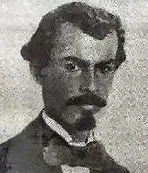
Roberto Cofresí y Ramírez de Arellano was born on June 17, 1791, in Cabo Rojo, Puerto Rico, to Francisco José Cofresí, an Austrian nobleman from Trieste who had settled there, and María Germana Ramírez de Arellano y Segarra, from a prominent local family descended from Navarrese and Aragonese royalty. The youngest of four children, he had two brothers, Juan Francisco and Juan Ignacio, and one sister, Juana. His mother died when he was four years old, after which an aunt helped raise him. His father later had another child, Julián, with María Sanabria. The family lived in El Tujao near the coast. Cofresí was baptized Catholic shortly after birth. His father died in November 1814, leaving a modest estate that left the family in difficult circumstances. 1
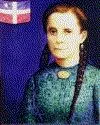
On January 14, 1815, Cofresí married Juana Creitoff, probably born in Cabo Rojo to Dutch parents. They had two sons who died shortly after birth and a daughter, Bernardina, born in 1821. The couple faced financial hardship, living with relatives and owning no property by 1818. Cofresí paid low taxes that year and worked at sea, including on fishing corrals in Boquerón Bay and later on the vessel Ramona ferrying goods between southern municipalities. He had ties to local merchants and officials, including his brothers-in-law in San Germán. 1
Land-based crime before piracy
Economic hardship in Cabo Rojo followed the Spanish American wars of independence, with ports at a standstill and increased taxes. Political changes after the Royal Decree of Graces of 1815 brought European immigrants and refugees, raising prices and straining food distribution. This environment contributed to rising crime, including highway robbery in southern and central Puerto Rico. Cofresí led a criminal gang in San Germán that stole cattle, food and crops. He was linked to groups operating near Hormigueros since 1818 and associated with nobleman Juan Geraldo Bey, known as El Holandés. 1
In November 1820, a group from Cabo Rojo robbed travelers near Yauco. Authorities suspected Cofresí's involvement due to timing and connections. Investigations led to arrests, including Bey, who testified that Cofresí led a gang. The Ramírez de Arellano family, relatives of Cofresí and influential in local politics and law enforcement, helped protect him. Wanted posters were issued, and in July 1821 he and his gang were captured and tried in San Germán, where connections to crimes were proven. While imprisoned, his daughter Bernardina was born on August 17, 1821. Cofresí escaped, possibly using noble status or family influence, and became a fugitive. Little is documented of his activities in 1822, though he maintained contacts across Puerto Rico. 1
Pirate career in the Caribbean
By 1823 Cofresí had likely served on the corsair barquentine El Scipión, captained by José Ramón Torres and managed by his cousin José María Ramírez de Arellano, the first mayor of Mayagüez. He turned to piracy in early 1823, becoming the last major target of West Indies anti-piracy operations. He commanded small-draft vessels, most notably the fast six-gun sloop Anne, preferring speed and maneuverability. Crews were small, usually 10 to 20 men recruited locally from Puerto Rico, with occasional members from other Antilles islands, Central America and Europe. He avoided direct confrontations when possible but engaged United States vessels twice, attacking the schooners USS Grampus and USS Beagle. 1 2
Cofresí plundered at least eight confirmed vessels and has been credited with over 70 captures. His network included civil informants and associates on land who warned of danger and helped sell plunder through improvised markets in Cabo Rojo. His brothers assisted by gathering maritime traffic information and moving goods. Victims were mostly foreigners and immigrants arriving after 1815; he usually spared criollos. Reports indicate 300 to 400 people died from his activities, though he never confessed to murder. He operated from bases on Mona Island and Saona, using coastal signals for communication. Specific attacks included the American schooner John near Desecheo Island in October 1823 and the brigantine William Henry in November 1823. 1
Capture, trial and execution
Cofresí evaded vessels from Spain, Gran Colombia, the United Kingdom, Denmark, France and the United States. Local authorities sought international help. Spain allied with the United States West Indies Squadron and the Danish government in Saint Thomas. After a 45-minute battle in which his vessel was damaged, Cofresí abandoned ship and escaped overland; he was recognized by a resident who ambushed and injured him. He was captured and made an unsuccessful attempt to bribe an official with hidden plunder. 1 2
Cofresí and his crew were taken to San Juan, Puerto Rico. A military tribunal found them guilty and sentenced them to death. On March 29, 1825, Cofresí and most of his crew were executed by firing squad in San Juan. 1 2
Legacy and cultural impact
After his death, Cofresí inspired stories and myths, many portraying him with a Robin Hood-like philosophy of stealing from the rich to give to the poor. This image became widely accepted as fact in Puerto Rico and the West Indies, though historians debate the extent of any generosity. Historical and legendary versions of his life have inspired songs, poems, plays, books and films. Locations in Puerto Rico such as caves, beaches and alleged hideouts or treasure sites bear his name. A resort town near Puerto Plata in the Dominican Republic is named Cofresí. 1 2
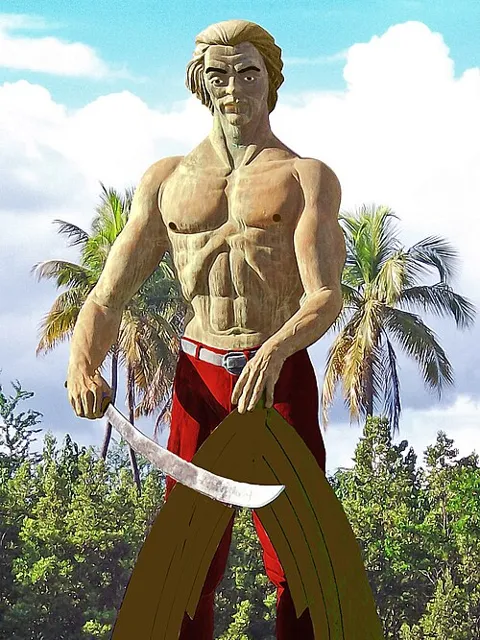
Cultural works include the ballet El Pirata Cofresí performed in 2007, a monument in Boquerón Bay sculpted by José Buscaglia Guillermety, and numerous books such as Walter R. Cardona Bonet's biography, Lee Cooper's The Pirate of Puerto Rico, and others in Spanish, English and German. Modern perspectives note that romanticism and inconsistent legends have shaped public perception, sometimes portraying him as an antihero challenging inequality or as a villain. 2
Questions about Roberto Cofresí
When was Roberto Cofresí born?
Roberto Cofresí was born on June 17, 1791 in Cabo Rojo, Puerto Rico.
How did Roberto Cofresí evade capture for so long?
Cofresí used small, fast vessels, local knowledge of Caribbean geography, rotating crews and a network of land-based informants and family members who warned him of approaching forces and helped sell plunder.
What vessels did Cofresí attack from the United States Navy?
His forces engaged the West Indies Squadron twice, attacking the schooners USS Grampus and USS Beagle.
Why is Cofresí often compared to Robin Hood in Puerto Rican folklore?
Stories claim he shared loot with the needy, especially family and friends in Cabo Rojo, although historians note these accounts are largely legendary and lack contemporary verification.
When did Roberto Cofresí die?
Roberto Cofresí died on March 29, 1825 in San Juan, Puerto Rico, aged 33.
Sources
- Wikipedia: Roberto Cofresí
- Wikipedia (español): Roberto Cofresí
- Wikidata: Q2341815
- Smithsonian Institution (cited by Wikipedia)
- Library of Congress (cited by Wikipedia)
Photo: Roberto Cofresí y Ramírez de Arellano, Cabo Rojo.jpg, Jerjes Medina Albino (CC BY-SA 3.0). Resized and converted to WebP.
Reviewed November 18, 2026. Original biography by PuertoRico.com. Editorial policy