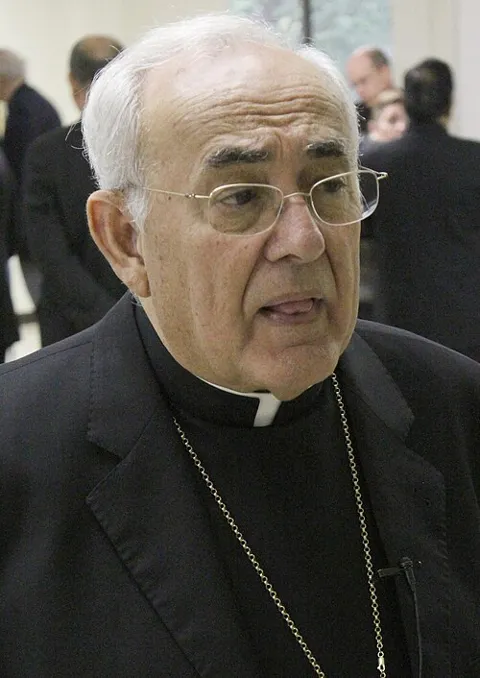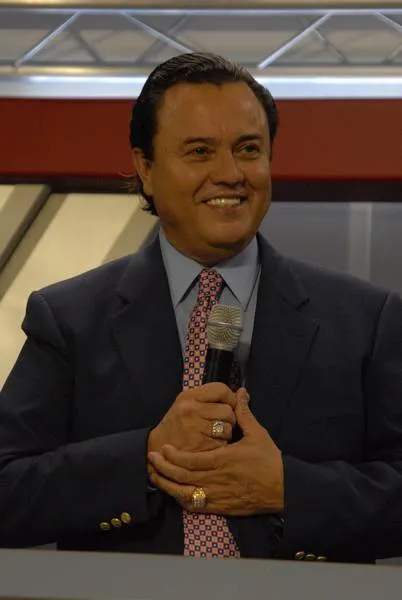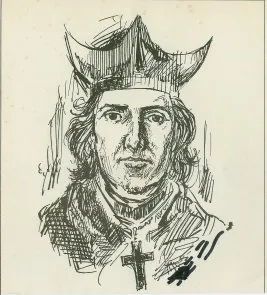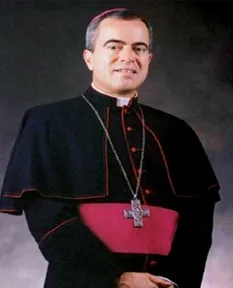
Roberto González Nieves: biography
Early life and family
Roberto Octavio González Nieves was born on June 2, 1950, in Elizabeth, New Jersey, to Puerto Rican parents. The family moved to San Juan where he grew up in a parish staffed by Franciscans. He has described himself as a child of the Puerto Rican diaspora with Puerto Rico as his emotional and primary homeland. 1 2
From 1957 to 1964 he attended Academia Santa Monica in Santurce. He began priestly formation at St. Joseph Seraphic Minor Seminary in Callicoon, New York, from 1964 to 1968. He graduated from Siena College in Loudonville, New York, in 1973 with a B.A. in English. 1 2
He was accepted as a candidate for the Franciscans at Christ House in Lafayette, New Jersey, in 1970. He entered the novitiate at St. Francis Friary in Brookline, Massachusetts, in 1971. He professed first vows on August 25, 1974, and solemn vows on August 21, 1976. 1
González earned a Master of Sacred Theology degree in 1977 from the Washington Theological Coalition in Silver Spring, Maryland. He received a master's degree in 1978 and a doctorate in sociology in 1984 from Fordham University in New York City. His doctoral thesis examined ecological, ethnic and cultural factors of church practice in an urban Roman Catholic parish. 1
Priest and early episcopal roles
On May 8, 1977, González was ordained a priest for the Order of Friars Minor by Bishop Lorenzo Graziano, a fellow Franciscan. He served at St. Pius V Parish beginning in 1982 and at Holy Cross Parish in the Bronx from 1986 to 1988. In 1987 New York City Mayor Ed Koch appointed him to the New York City Police Review Panel. 1 2
On July 19, 1988, Pope John Paul II named him auxiliary bishop of the Archdiocese of Boston and titular bishop of Ursona. He received episcopal consecration on October 3, 1988, in Boston from Cardinal Bernard Law, with Cardinals John O'Connor and Luis Aponte Martínez as co-consecrators. 1 2
On May 16, 1995, he was appointed coadjutor bishop of the Diocese of Corpus Christi in Texas. He succeeded as diocesan bishop on April 1, 1997, upon the retirement of Bishop René Gracida. While there he served on United States Conference of Catholic Bishops committees for Hispanic Affairs and the Church in Latin America. 1 2
Archbishop of San Juan
On March 26, 1999, Pope John Paul II appointed González archbishop of the Archdiocese of San Juan. He was installed on May 8, 1999. The ceremony was attended by San Juan Mayor Sila Calderón and former Governor Carlos Romero Barceló. His predecessor, Cardinal Luis Aponte Martínez, noted it was the first time a Puerto Rican archbishop succeeded another Puerto Rican archbishop. 1 2
He joined Reverend Jesse Jackson at an interfaith prayer service in East Harlem in September 1999 and preached in Spanish on Puerto Rican nationalism and anti-colonialism. He distanced himself from specific positions on the island's legal status but supported institutions that foster Puerto Rican national identity. He participated in efforts to resolve the 2006 government shutdown alongside Protestant leaders, persuading Governor Aníbal Acevedo Vilá, Senate President Kenneth McClintock and House Speaker José Aponte Hernández. 1
He attended both sessions of the Synod of Bishops on the Family in 2014 and 2015 as president of the Puerto Rico episcopal conference. 1
Altar of the Homeland and other activities
In 2013 González arranged the transfer of the remains of Ramón Power y Giralt from Spain to Puerto Rico, working with the Bishop of Cádiz and Ceuta. The remains arrived in San Juan on April 6, 2013. On June 10, 2013, the 200th anniversary of Power's death, his remains and those of Juan Alejo de Arizmendi were reinterred in a chapel at the Cathedral of San Juan Bautista that González had prepared. He decreed the establishment of the Chapel of the Holy Christ of the entire Puerto Rican nation as a place of prayer for Puerto Rico, its diaspora and all inhabitants. 1
He has received honorary doctorates from St. Bonaventure University, Universidad Central de Bayamón, Siena College and the Graduate Theological Foundation. Regis College awarded him its Presidential Medal in 2000 and Fordham University gave him the Sapientia et Doctrina award in 2009 for contributions to Hispanic ministry. 1
Ties to Puerto Rico
González has expressed pride in being Puerto Rican and has called on the United States government to preserve the national identity of Puerto Ricans. He has criticized political corruption on the island and issued a pastoral letter titled 'Patria, nación, identidad' that affirms the unity of those concepts. He participated in the 150th anniversary commemoration of Luis Muñoz Rivera's birth in Barranquitas where he stated that Puerto Rico is a nation that does not want to disappear. 1 2
Raised in San Juan after moving from New Jersey, he grew up in a Franciscan parish and attended local schools. He worked to repatriate historical figures' remains to strengthen Puerto Rican identity and established a chapel dedicated to the entire Puerto Rican nation including its diaspora. 1 2
Questions about Roberto González Nieves
When was Roberto González Nieves born?
Roberto González Nieves was born on June 2, 1950 in Elizabeth, New Jersey. Roberto González Nieves is 76 years old.
What is the Altar of the Homeland created by Roberto González Nieves?
It is the Chapel of the Holy Christ of the entire Puerto Rican nation at the Cathedral of San Juan Bautista where the remains of Ramón Power y Giralt and Juan Alejo de Arizmendi were reinterred in June 2013. González described it as a privileged place of prayer for Puerto Rico, its diaspora and all inhabitants.
Which dioceses did Roberto González Nieves lead before San Juan?
He served as auxiliary bishop of Boston from 1988 to 1995 and as bishop of Corpus Christi from 1997 to 1999.
How did Roberto González Nieves describe his connection to Puerto Rico?
He has called himself a child of the Puerto Rican diaspora and identified Puerto Rico as his emotional and primary homeland. He has expressed pride in being Puerto Rican and advocated for preserving the island's national identity.
Sources
- Wikipedia: Roberto González Nieves
- Wikipedia (español): Roberto González Nieves
- Wikidata: Q1341266
- The New York Times (cited by Wikipedia)
- The Washington Post (cited by Wikipedia)
- ABC News (cited by Wikipedia)
- Primera Hora (cited by Wikipedia)
- El País (cited by Wikipedia)
- Library of Congress (cited by Wikipedia)
Photo: Archbishop Roberto González Nieves.jpg, Brenda Garza (CC BY-SA 4.0). Resized and converted to WebP.
Reviewed November 18, 2026. Original biography by PuertoRico.com. Editorial policy