Iris M. Zavala: biography
Early life and family
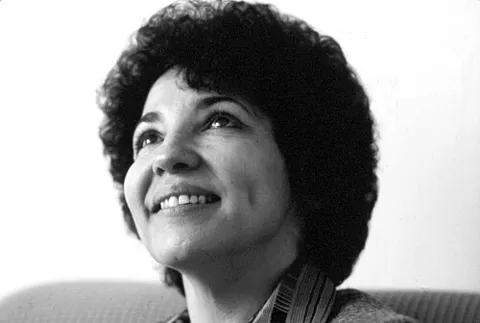
Iris M. Zavala was born on 27 December 1936 in Ponce, Puerto Rico. She earned a B.A. in literature from the University of Puerto Rico. 1 2
Academic career
Zavala taught at universities in Puerto Rico, Mexico, the United States, the Netherlands, Italy, Germany and Spain. She also taught at the University of Minnesota and other American institutions. 1 2
She produced scholarly editions, literary criticism and essays. Among her editorial projects were collaborative volumes on the 1868 Revolution, Puerto Rican independence thought, feminist literary theory and the works of Mikhail Bakhtin. She contributed to multi-volume histories of Spanish literature published by Castalia, Crítica and Akal. 1 2
Literary works
In 1980 she published the novel Kiliagonía, set in Ponce and later translated as Chiliagony. Her second novel, Nocturna, mas no funesta, appeared in 1987 from Montesinos in Barcelona and was adapted for theater by Grupo Alcores in Madrid. Subsequent novels included El libro de Apolonia o de las islas in 1992, El sueño del amor in 1998 and Percanta que me amuraste in 2007. 1 2
Her poetry collections comprise Barro doliente from 1965, Poemas prescindibles in 1972, Escritura desatada in 1974, Que nadie muera sin amar el mar in 1983 and Poesía completa in 2007. She also wrote the creative fiction El bolero. Historia de un amor, first issued in 1991 and reissued in expanded form in 2000. 1 2
Early scholarly titles include Unamuno y su teatro de conciencia in 1963, La angustia y el hombre in 1965, Masones, comuneros y carbonarios in 1970 and Ideología y política en la novela española del siglo XIX in 1971. Later works examined Romanticism, Modernism, postmodernity, Bakhtinian dialogism, erotic discourse and ethical philosophy in literature. 1 2
Feminist scholarship and major projects
Zavala coedited the multi-volume Breve historia feminista de la literatura española en lengua castellana and its extensions covering Catalan, Galician and Basque writing. She also edited or coedited collections on women, feminist identity, erotic and transgressive discourses, and the social imaginary of Hispanic modernisms. Her 2004 book La otra mirada del siglo XX examined women in twentieth-century Spain. 1 2
She produced studies on Rubén Darío, Valle-Inclán, Miguel de Unamuno and Don Quijote. Titles such as La posmodernidad y M. Bajtin, Unamuno y el pensamiento dialógico, Leer Don Quijote and La (Di)famación de la cultura reflect her interest in dialogic thought, ethics and literary theory. She edited critical editions of Alejandro Sawa and contributed to journals including Nueva Revista de Filología Hispánica. 1 2
Honors and ties to Puerto Rico
King Juan Carlos I of Spain awarded her the Encomienda, Lazo de Dama de la Orden de Mérito Civil in 1988. The Instituto de Cultura Puertorriqueña gave her its Medal of Honor in 1994. The University of Puerto Rico conferred a Doctor Honoris Causa in 1996. The Ateneo Puertorriqueño awarded her its Gold Medal in 1998. She held the UNESCO Chair in Latin American Studies at Pompeu Fabra University in 2001, received an honorary doctorate from the University of Málaga in 2004 and the María Zambrano Thought Award from the Junta de Andalucía in 2006. She also received the Pen Club Award for El libro de Apolonia o de las islas. 1 2
Zavala was named one of Ponce's greatest writers and honored at the Park for Illustrious Ponce Citizens. 1 2
Questions about Iris M. Zavala
When was Iris M. Zavala born?
Iris M. Zavala was born on December 27, 1936 in Ponce, Puerto Rico.
Which of Iris M. Zavala's novels is set in Ponce?
Kiliagonía, published in 1980, is set in Ponce. It was later translated into English as Chiliagony.
What theater group adapted one of Zavala's novels?
Grupo Alcores in Madrid adapted her 1987 novel Nocturna, mas no funesta for theatrical performance.
What major honor did King Juan Carlos I bestow on Zavala?
In 1988 he awarded her the Encomienda, Lazo de Dama de la Orden de Mérito Civil.
When did Iris M. Zavala die?
Iris M. Zavala died on April 10, 2020 in Madrid, Spain, aged 83.
Sources
- Wikipedia: Iris M. Zavala
- Wikipedia (español): Iris M. Zavala
- Wikidata: Q6070306
- El Nuevo Día (cited by Wikipedia)
- Library of Congress (cited by Wikipedia)
Photo: Iris Zavala.jpg, Elisa Cabot (CC BY-SA 2.0). Resized and converted to WebP.
Reviewed November 18, 2026. Original biography by PuertoRico.com. Editorial policy