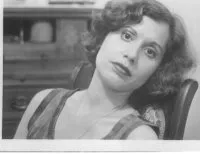
Pura Belpré: biography
Early life and family
Pura Teresa Belpré was born on February 2, 1899, in Cidra, Puerto Rico. She graduated from Central High School in Santurce in 1919 and enrolled at the University of Puerto Rico in Río Piedras with the goal of becoming a teacher. 1 2
In 1920 she traveled to New York City to attend her sister Elisa's wedding. While there she was recruited for a public library campaign seeking young women from diverse ethnic backgrounds. This opportunity marked the start of her long residence in the city, with only brief interruptions. 1 2
Librarianship in New York
Belpré began working for the New York Public Library in 1921 after an initial period in the garment industry. She became the first Puerto Rican hired by the system when she accepted the position of Hispanic Assistant at the 135th Street branch in Harlem under the mentorship of Ernestine Rose. 1 2
She started formal studies at the Library School of the New York Public Library in 1925. In 1929 she transferred to the 115th Street branch to serve the growing Puerto Rican population in southwest Harlem. There she created bilingual story hours, acquired Spanish-language books, and organized programs tied to traditional holidays such as Three Kings Day. 1 2
Belpré participated in meetings of groups including the Puerto Rican Brotherhood of America and La Liga Puertorriqueña e Hispana. Her initiatives turned the 115th Street branch and later the 110th Street Aguilar branch into cultural centers for Latino residents. The branches hosted figures such as Mexican muralist Diego Rivera. 1 2
After her husband's death in 1960 she returned to part-time library work as Spanish Children's Specialist. She visited neighborhoods across the city with large numbers of Latino children. In 1968 she retired from that role but joined the South Bronx Library Project to promote library services in Latino communities. 1 2
Literary career and major works
Her first published story was Pérez and Martina, a Puerto Rican folktale about a romance between a cockroach and a mouse. She also collected and translated numerous Puerto Rican folktales into English for young readers. In 1946 she released The Tiger and the Rabbit and Other Tales, later reissued with illustrations by Tomie de Paola in 1965. Her 1962 book Juan Bobo and the Queen's Necklace: A Puerto Rican Folk Tale, illustrated by Christine Price, was the first major Juan Bobo story published in the United States. 1 2
Additional titles include Ote: A Puerto Rican Folk Tale from 1969 with illustrations by Paul Galdone, Santiago illustrated by Symeon Shimin that same year, Dance of the Animals in 1972, Once in Puerto Rico in 1973, and The Rainbow-Colored Horse in 1978 with illustrations by Antonio Martorell. She also co-authored Libros en Español: An Annotated List of Children's Books in Spanish with Mary K. Conwell in 1971. 1
Belpré produced Spanish translations of several English children's books for Harper and other publishers between 1962 and 1971, including works by Munro Leaf, Syd Hoff, and Else Holmelund Minarik. She met composer Clarence Cameron White in 1940, married him on December 26, 1943, and left full-time library work to tour with him and focus on writing until his death in 1960. 1 2
Legacy and ties to Puerto Rico
Her papers are preserved at the Center for Puerto Rican Studies at Hunter College, where they document Puerto Rican children's literature, folktales, the relationship between the Puerto Rican community and the New York Public Library, and the development of that community in the city. 1 2
The Pura Belpré Award was created in 1996 by REFORMA and the Association for Library Service to Children. It honors Latino writers and illustrators whose work best portrays Latino cultural experience in children's and young adult literature. Three medals are now given annually for outstanding author, young-adult author, and illustrator titles; the young-adult category began in 2021. The Northeast Chapter of REFORMA had earlier named a children's book award after her in the 1980s. 1 2
Public School 64 in the Bronx on Walton Avenue near 170th Street is named for her. In 2022 the intersection of 109th Street and Lexington Avenue in East Harlem was designated Pura Belpré Way. A 2011 documentary film on her life is available at the Center for Puerto Rican Studies. 1
Several English and bilingual biographies for children have been published, among them Planting Stories by Anika Aldamuy Denise, Pura's Cuentos by Annette Bay Pimentel, The Life of / La vida de Pura by Patty Rodriguez and Ariana Stein, and She Persisted: Pura Belpré by Meg Medina, Marilisa Jiménez García and Chelsea Clinton. 1
Questions about Pura Belpré
When was Pura Belpré born?
Pura Belpré was born on February 2, 1899 in Cidra, Puerto Rico.
What inspired Pura Belpré to collect and publish Puerto Rican folktales?
Her library work with Spanish-speaking children in New York and her desire to bring Puerto Rican culture to mainland audiences motivated her to translate and publish the stories as children's books.
Which award for Latino children's literature is named after Pura Belpré?
The Pura Belpré Award, presented annually since 1996 by REFORMA and the Association for Library Service to Children, honors Latino writers and illustrators of outstanding children's and young adult books.
What role did Pura Belpré play at the New York Public Library?
She was the first Puerto Rican librarian hired by the system, pioneered bilingual story hours and Spanish book collections, and turned branches into cultural centers for the Latino community.
When did Pura Belpré die?
Pura Belpré died on July 1, 1982 in New York City, New York, aged 83.
Sources
- Wikipedia: Pura Belpré
- Wikipedia (español): Pura Belpré
- Wikidata: Q7260778
- Centro de Estudios Puertorriqueños (cited by Wikipedia)
- NPR (cited by Wikipedia)
- Library of Congress (cited by Wikipedia)
We did not find a freely licensed photo we could use, so we show initials instead.
Reviewed November 18, 2026. Original biography by PuertoRico.com. Editorial policy