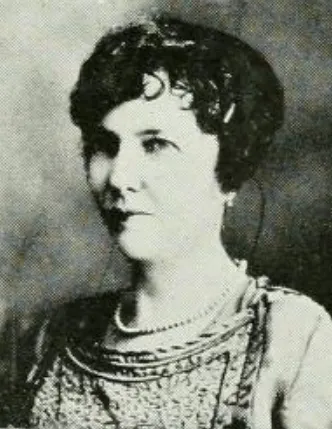
Isabel González: biography
Early life and family
Isabel González was born on May 2, 1882, in San Juan, Puerto Rico, to Severo González and Antonia Dávila. At that time the island remained a Spanish colony. She lived there on April 11, 1899, the date of the proclamation of the Treaty of Paris of 1898 which ceded the island to the United States. González became a citizen of Puerto Rico but not of the United States, even though the island was governed by that nation. She had been married previously, was widowed, and had one child from that marriage. 1 2
In 1902 her fiancé left for New York City to secure factory work in Linoleumville, Staten Island, near where her brother Luis González was employed. González, then pregnant, planned to join him and marry once he found housing. Her uncle Domingo Collazo and aunt Hermina Collazo later played key roles in her legal efforts. 1 2
Immigration detention at Ellis Island
Philadelphia in August 1902, arriving in New York on August 4. During the voyage the U.S. Treasury Department reclassified Puerto Ricans as aliens subject to immigration laws. At Ellis Island, Commissioner William Williams applied strict rules against persons likely to become a public charge. Officials discovered her pregnancy, detained her despite the eleven dollars she carried, and scheduled a hearing. Her brother Luis and uncle Domingo Collazo attended the next day; her fiancé could not leave work. 1 2
The Board of Special Inquiry focused on family support and moral fitness. Collazo and his wife assured the board they could provide for González and the child. Williams expressed concern about immigrants who might not properly raise offspring. The board excluded her, citing the fiancé's absence. Collazo filed a habeas corpus petition. Lawyers Orrel A. Parker and Charles E. Le Barbier took the case. A federal circuit court ruled she was an alien seven weeks later. 1 2
Supreme Court case Gonzales v. Williams
Resident Commissioner Federico Degetau protested the new immigration rules and joined the legal team with Frederic René Coudert Jr. and Paul Fuller. The lawyers reframed the appeal to argue that all Puerto Ricans were not aliens and therefore could not be denied entry. The Supreme Court heard arguments on December 4 and 7, 1903. On January 4, 1904, the Court ruled González was not an alien under immigration statutes and could not be excluded. It stopped short of declaring her or other Puerto Ricans U.S. citizens, leaving their status as noncitizen nationals. 1 2
While out on bond González secretly married her fiancé, gaining the right to remain through marriage. She chose to continue pressing the broader citizenship claim for all islanders. The case marked the first time the Supreme Court addressed the citizenship status of inhabitants of territories acquired by the United States after 1898. It highlighted issues of race, gender, and unequal treatment of people from the new territories. 1
Later activism and life
González wrote letters published in The New York Times arguing that the United States had an obligation to grant Puerto Ricans honorable U.S. citizenship after ending their Spanish citizenship under the Treaty of Paris. She maintained that the government had treated Puerto Ricans as inferior. In 1917 Congress passed the Jones-Shafroth Act, conferring statutory U.S. citizenship on Puerto Ricans. González had five children in total. She married Juan Francisco Torres on November 17, 1915. 1
The couple lived in New York until the 1930s, then moved to Cranford Township, New Jersey. González died on June 11, 1971, in New Jersey and is buried with her husband at Holy Cross Cemetery in North Arlington. Her descendants live in New Jersey, Florida, California and Colorado. Her great-granddaughter Belinda Torres-Mary preserves family documents related to the immigration case. 1
Historical context and legacy
Before 1898 the United States typically incorporated new territories and extended citizenship. After the Spanish-American War, Congress classified Puerto Rico as an unincorporated territory. Bidwell (1901) established that the Constitution did not fully apply there. This framework allowed Congress broad discretion over the island's political status and economy, including currency changes from the Puerto Rican peso to the U.S. dollar and restrictions on trade treaties. 1 2
Opposition to citizenship cited views of Puerto Ricans as racially and socially inferior. A 1899 New York Times letter described them as simple-minded and in need of guidance. Williams decision did not resolve the ambiguity, but it set a precedent for future recognition. The Jones-Shafroth Act two months before U.S. entry into World War I granted citizenship while maintaining statutory rather than constitutional status. 1 2
Questions about Isabel González
When was Isabel González born?
Isabel González was born on May 2, 1882 in San Juan, Puerto Rico.
What was the outcome of Gonzales v. Williams for Isabel González personally?
The Supreme Court ruled on January 4, 1904, that she was not an alien under immigration laws and could not be denied entry. The decision did not declare her a U.S. citizen.
How did Isabel González continue advocating after the Supreme Court case?
She wrote letters published in The New York Times arguing that the United States owed Puerto Ricans honorable citizenship status. She supported the broader movement that led to the Jones-Shafroth Act of 1917.
What role did Federico Degetau play in the Gonzales v. Williams case?
As Puerto Rico's first Resident Commissioner, Degetau protested the immigration rules treating Puerto Ricans as aliens and collaborated with the legal team to reframe the case around collective citizenship status.
When did Isabel González die?
Isabel González died on June 11, 1971 in New Jersey, U.S., aged 89.
Sources
- Wikipedia: Isabel González
- Wikipedia (español): Isabel González Dávila
- Wikidata: Q6077633
- Biographical Directory of the U.S. Congress (cited by Wikipedia)
- Library of Congress (cited by Wikipedia)
- The New York Times (cited by Wikipedia)
We did not find a freely licensed photo we could use, so we show initials instead.
Reviewed November 18, 2026. Original biography by PuertoRico.com. Editorial policy