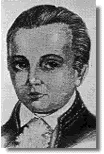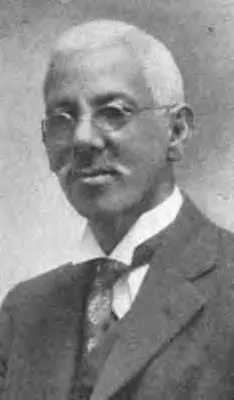
José Celso Barbosa: biography
Early life and education
José Celso Barbosa was born on July 27, 1857, in Bayamón, Puerto Rico, to a humble family; his father worked as a mason and his mother as a homemaker. He completed primary and secondary education in Bayamón and became the first person of mixed European and African ancestry to attend the Jesuit seminary Colegio San Ignacio de Loyola in San Juan. After graduation he gave private lessons to save for university studies. 1 2
In 1875 Barbosa moved to New York City for preparatory school and learned English within a year. He initially planned to study law but changed to medicine after suffering pneumonia. Rejected by Columbia University's medical school because of his African heritage, he entered the University of Michigan medical school in 1876. He graduated as valedictorian of the class of 1880, becoming the first person from Puerto Rico to earn a medical degree in the United States. 1 2
Medical practice and cooperative work
Upon returning to Puerto Rico in 1880, Barbosa established his medical practice in Bayamón. The Spanish colonial government initially refused to recognize his U.S. degree because it was not from a European university. The American consul intervened to secure recognition, allowing him to practice throughout the island. He introduced the concept of employers paying a fee to cover future medical needs of employees, an early form of health insurance. 1 2
Political career
Barbosa initially belonged to the Partido Autonomista Puro led by Román Baldorioty de Castro but left due to ideological differences. During the 1898 Spanish-American War he joined the Red Cross and, with other Bayamón physicians, crossed San Juan Bay under cannon fire to aid wounded Spanish and Puerto Rican soldiers in San Juan. Spanish authorities recommended him and his group for the Cruz de la Orden del Mérito Naval. 1
After the United States acquired Puerto Rico, Barbosa founded the pro-statehood Partido Republicano de Puerto Rico on July 4, 1899, and became known as the father of the statehood movement. In 1900 President William McKinley appointed him to the first civilian Executive Cabinet under Governor Charles H. Allen alongside Rosendo Matienzo Cintrón, José de Diego, Manuel Camuñas and Andrés Crosas. He remained in the Cabinet until 1917, working with successive U.S.-appointed governors. 1 2
In 1907 Barbosa founded the bilingual newspaper El Tiempo. When the Jones Act authorized elected representation in 1917, he won an at-large seat and served in the first Puerto Rican Senate until his death in 1921. 1 2
Later years, death and family
Barbosa died on September 21, 1921, in San Juan and was buried in Santa María Magdalena de Pazzis Cemetery in Old San Juan. He had twelve children. Among them, Roberto C. Barbosa became a dentist, Guillermo H. Barbosa a surgeon, and Pilar Barbosa de Rosario became Puerto Rico's first official historian, a political activist who continued her father's work and married José Ezequiel Rosario. 1 2
Legacy and ties to Puerto Rico
Puerto Rico observes July 27, Barbosa's birthday, as an official holiday known as José Celso Barbosa Day. His house in Bayamón operates as a historic house museum displaying awards, certificates, books and artifacts. In 2006 the United States Postal Service facility at 100 Avenida RL Rodríguez in Bayamón was designated the Dr. Jose Celso Barbosa Post Office Building by Public Law 109-253 signed by President George W. Bush. 206M in East Harlem, New York, carry his name. 1 2 3
Questions about José Celso Barbosa
When was José Celso Barbosa born?
José Celso Barbosa was born on July 27, 1857 in Bayamón, Puerto Rico.
Why was José Celso Barbosa denied admission to Columbia University?
He was denied admission to the College of Physicians and Surgeons at Columbia University in 1877 because of his African heritage.
What role did Barbosa play during the Spanish-American War in Puerto Rico?
As a Red Cross member he crossed San Juan Bay under cannon fire with other physicians to aid wounded soldiers and was recommended for the Cruz de la Orden del Mérito Naval.
Which newspaper did José Celso Barbosa found and in what year?
He founded the first bilingual newspaper in Puerto Rico, El Tiempo, in 1907.
When did José Celso Barbosa die?
José Celso Barbosa died on September 21, 1921 in San Juan, Puerto Rico, aged 64.
Sources
- Wikipedia: José Celso Barbosa
- Wikipedia (español): José Celso Barbosa
- Enciclopedia de Puerto Rico: José Celso Barbosa
- Wikidata: Q1709098
- Library of Congress (cited by Wikipedia)
Photo: Jose Celso Barbosa.jpg, http://en.wikipedia.org/wiki/User:Marine_69-71 (Public domain). Resized and converted to WebP.
Reviewed November 18, 2026. Original biography by PuertoRico.com. Editorial policy