José Gualberto Padilla: biography
Early life and family
José Gualberto Padilla was born on July 12, 1829, in San Juan to José María Padilla Córdova and Trinidad Alfonso Ramírez. The family later moved to Añasco, where his father practiced law. Padilla received his primary education there before continuing his secondary studies in Santiago de Compostela, Spain. 1
While in Spain, he and other Puerto Ricans founded the newspaper La Esperanza, which criticized Spanish colonial abuses in Puerto Rico. In 1845 he moved to Barcelona, earned a medical degree, wrote for local newspapers, and published the satiric political poem Zoopoligrafía. 1
Return to Puerto Rico and public service
Padilla returned to Puerto Rico in 1857 and settled in Vega Baja. He purchased Hacienda La Monserrate, a sugar plantation that provided income to open a clinic where he practiced medicine. He treated poor patients without charge and served two terms as mayor of Vega Baja. He also abolished slavery on his hacienda. 1
Participation in El Grito de Lares
Padilla helped organize the 1868 uprising known as El Grito de Lares, the first major revolt against Spanish rule in Puerto Rico. The revolt, planned by Ramón Emeterio Betances and Segundo Ruiz Belvis, began on September 23 in the town of Lares. 1
After the revolt failed, Padilla was among 475 rebels imprisoned in Arecibo, where they faced torture and humiliation. A military court sentenced the prisoners to death for treason and sedition on November 17. Eugenio María de Hostos and others interceded in Madrid with President Francisco Serrano, leading to a general amnesty declared in early 1869 by incoming governor José Laureano Sanz. Padilla was released and returned home, though some leaders were exiled. 1
Literary career and major works
To avoid further arrest after his release, Padilla wrote under the pseudonyms El Caribe, Macuquino, Cibuco and Trabuco. He criticized the director of the newspaper El Duende for disdain toward Puerto Rican customs and feuded with Spanish poet Manuel del Palacio, whose verses offended Puerto Ricans. In 1874 he published Para un Palacio un Caribe in response. 1
In 1880 he received an award for the poem Contra el Periodismo Personal from the newspaper El Buscapie. From 1886 to 1888 he wrote for El Palenque de la Juventud. His published works include Nuevo Cancionero de Borinquen (1872), El Indio Antillano, El Maestro Rafael (dedicated to the Puerto Rican educator Rafael Cordero), En la muerte de Corchado (dedicated to Manuel Corchado y Juarbe), and Para un Palacio un Caribe (1874). 1
Later years, legacy and ties to Puerto Rico
Padilla retired in 1888 and lived at his estate in Vega Baja. He died there on May 26, 1896, while working on his final poem Canto a Puerto Rico. His remains were buried in Cementerio Municipal de Vega Baja. 1
Schools in Cayey, Arecibo and Vega Baja are named after him. His daughter, Trinidad Padilla de Sanz, who used the pseudonym La Hija del Caribe, collected most of his poems and published them in 1912 in two volumes titled En el Combate and Rosas de Pasión through a Paris publisher. 1
Questions about José Gualberto Padilla
When was José Gualberto Padilla born?
José Gualberto Padilla was born on July 12, 1829 in San Juan, Puerto Rico.
What pseudonyms did José Gualberto Padilla use after El Grito de Lares?
He wrote under the names El Caribe, Macuquino, Cibuco and Trabuco to avoid re-arrest.
Which of Padilla's poems is considered his most important work?
Canto a Puerto Rico, which he was writing at the time of his death in 1896.
What role did Padilla's daughter play in preserving his poetry?
Trinidad Padilla de Sanz collected his poems and published them in 1912 in the books En el Combate and Rosas de Pasión.
When did José Gualberto Padilla die?
José Gualberto Padilla died on May 26, 1896 in Vega Baja, Puerto Rico, aged 66.
Sources
- Wikipedia: José Gualberto Padilla
- Wikidata: Q6292404
- Library of Congress: José Gualberto Padilla
- Enciclopedia de Puerto Rico (cited by Wikipedia)
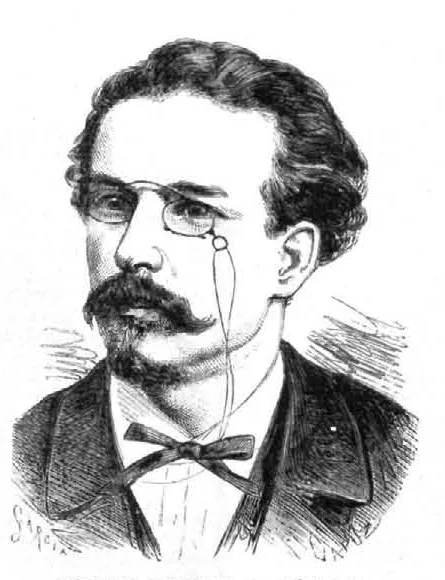
Photo: Jose G. Padilla.jpg, Unknown author (Public domain). Resized and converted to WebP.
Reviewed November 18, 2026. Original biography by PuertoRico.com. Editorial policy