Luis Fortuño: biography
Early life and education
Luis Guillermo Fortuño Burset was born on 31 October 1960 in San Juan. He is the eldest of four brothers born to dentist Luis Fortuño Moscoso and Shirley Burset. His paternal ancestry includes Catalan and Galician roots from Spain and Corsican lineage on his mother's side. 1 2
Fortuño graduated from Colegio Marista in Guaynabo in 1978. He earned a Bachelor of Science in diplomacy from Georgetown University's Edmund A. Walsh School of Foreign Service in 1982 and a Juris Doctor from the University of Virginia School of Law in 1985. While at Georgetown he co-founded the Puerto Rico Statehood Students Association and served as its president from 1980 to 1981. He interned at the Puerto Rico Federal Affairs Administration in Washington, D.C. 1 2
Early public service and resident commissioner
In 1993 Fortuño joined the administration of Governor Pedro Rosselló as executive director of the Puerto Rico Tourism Company and president of the Puerto Rico Hotel Development Corporation. The following year he became the first secretary of the Department of Economic Development and Commerce, where he led reforms to the island's tax, labor, corporate and commercial codes. He received several recognitions including 1994 Public Servant of the Year from the Puerto Rico Chamber of Commerce, 1995 Public Servant of the Year from the Marketing Industry and Distribution of Food and Beverage Products Association, and 1996 Man of the Year by Caribbean Business. 1 2
Fortuño won the 2004 New Progressive Party primary for resident commissioner with 61.28 percent of the vote. In the general election he defeated Popular Democratic Party candidate Roberto Prats by a narrow margin, becoming the first resident commissioner to caucus with Republicans since Puerto Rico became a commonwealth. During his 2005-2009 term he chaired the Congressional Hispanic Conference, co-chaired the Friends of Spain Caucus, and served as ranking member of the House Natural Resources Subcommittee on Insular Affairs. He co-sponsored the Puerto Rico Democracy Act of 2007 and legislation to support the Arecibo Observatory. 1
2008 gubernatorial campaign and election
In February 2007 Fortuño announced his candidacy for governor. He defeated former governor Pedro Rosselló in the March 2008 New Progressive Party primary by nearly 60 percent to 40 percent. His running mate for resident commissioner was Pedro Pierluisi. On 4 November 2008 Fortuño won the general election against incumbent Aníbal Acevedo Vilá by 224,892 votes, the largest margin in 44 years and the second time a candidate received over one million votes. The victory gave the New Progressive Party control of both legislative houses, most mayoralties, and for the first time a majority of appointees on the Supreme Court of Puerto Rico. 1 2
He was sworn in on 2 January 2009 in a ceremony attended by five former governors. Kenneth McClintock became secretary of state. Fortuño later served as president of the New Progressive Party, the Council of State Governments, the Southern Governors Association, and on the board of the National Governors Association Center for Best Practices. President Barack Obama appointed him to the bipartisan Council of Governors. 1
Governor of Puerto Rico: fiscal and economic policies
Facing a $3.2 billion structural deficit, Fortuño announced a recovery plan on 3 March 2009 that aimed to cut annual government spending by more than $2 billion. The plan included salary reductions for agency heads and trust employees, limits on contracts, and eventual layoffs. Nearly 30,000 public employees were laid off under Law 7, primarily those with fewer than ten years of service. The administration offered private-sector job placement assistance and educational vouchers to those affected. Unemployment rose above 16 percent. In 2011 he signed a new Internal Revenue Code that cut individual taxes by up to 50 percent and business taxes by 30 percent retroactive to 2010, along with Law 154 imposing a temporary excise tax on overseas corporate sales. 1 2
The measures reduced the structural deficit from $2 billion in fiscal year 2009-10 to $332.7 million in 2012-13. Fortuño also promoted public-private partnerships, infrastructure projects across all 78 municipalities, and an economic stimulus plan focused on pension relief, housing assistance and job creation. He joined other Republican governors in opposing the Affordable Care Act and signed a letter calling for its repeal. 1 2
Later career and recognitions
Fortuño sought re-election in 2012 but lost to Alejandro García Padilla by 0.6 percent. He resigned as New Progressive Party president in January 2013. After leaving office he moved to Washington, D.C., and joined the law firm Steptoe & Johnson as a partner in its corporate, securities, finance, government affairs and Latin America practices. In February 2024 he became a partner at Reed Smith LLP in the Global Regulatory Enforcement Practice Group. He has spoken frequently on business and conservative issues and, after the 6 January 2021 Capitol attack, joined other former Republican members of Congress in calling for impeachment articles against President Trump. 1
In 2009 King Juan Carlos I of Spain awarded him the Order of Isabel the Catholic as Commander by Number. Fortuño has served on boards including the Ana G. Méndez University System, the Puerto Rico Museum of Art, the American Law Institute and the Urban Land Institute. 1 2
Questions about Luis Fortuño
When was Luis Fortuño born?
Luis Fortuño was born on October 31, 1960 in San Juan, Puerto Rico. Luis Fortuño is 66 years old.
How did Luis Fortuño win the 2008 gubernatorial primary against Pedro Rosselló?
Fortuño defeated Rosselló in the 9 March 2008 New Progressive Party primary by nearly 60 percent to 40 percent after announcing his candidacy in February 2007.
What major fiscal measure did Fortuño implement in his first year as governor?
In March 2009 he announced a recovery plan that ultimately led to the layoff of nearly 30,000 public employees under Law 7 to address a $3.2 billion structural deficit.
What tax legislation did Fortuño sign in 2011?
He signed the new Internal Revenue Code providing a 50 percent cut for individuals and 30 percent for businesses retroactive to January 2010, accompanied by Law 154 imposing a temporary excise tax on overseas corporate sales.
Sources
- Wikipedia: Luis Fortuño
- Wikipedia (español): Luis Fortuño
- Wikidata: Q381099
- El Nuevo Día (cited by Wikipedia)
- Primera Hora (cited by Wikipedia)
- Biographical Directory of the U.S. Congress (cited by Wikipedia)
- The Washington Post (cited by Wikipedia)
- The Guardian (cited by Wikipedia)
- Newsweek (cited by Wikipedia)
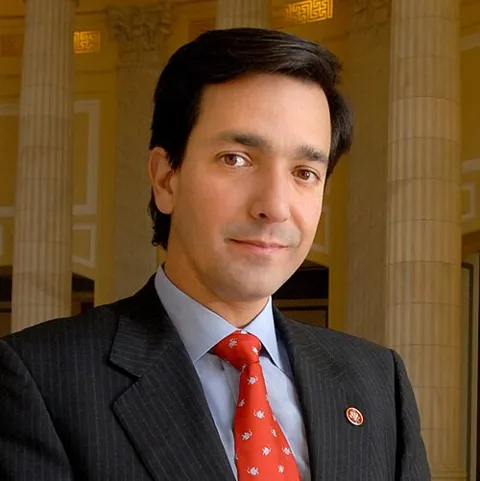
Photo: Luis Fortuño congressional portrait.jpg, United States House of Representatives official office of Delegate Luis Fortuno (Public domain). Resized and converted to WebP.
Reviewed November 18, 2026. Original biography by PuertoRico.com. Editorial policy