Luisa Capetillo: biography
Early life and family
Her father was a Spaniard named Luis Capetillo Echevarría who worked as an administrator at an amusement park and later as a seasonal laborer in agriculture, construction, and dock work. Her mother was a Frenchwoman named Luisa Margarita Perón who worked as a governess and then as a laundry worker. The couple was not legally married at the time of her birth. She was baptized at the Cathedral of St. Philip the Apostle in 1890 at age seven. 1
Her father taught her to read and write. She attended the Doña María Sierra Soler private school and earned diplomas in geography, grammar, history, religious history, and reading. She read works by George Sand, John Stuart Mill, Madeleine Vernet, and Peter Kropotkin. She often accompanied her mother to wealthy estates, including one owned by the marquess of Arecibo. There she met Manuel Ledesma, with whom she began a relationship in 1897. The couple had two children. They separated around 1900. Manuel initially recognized the children and provided support but later withdrew it and took custody. 1
Around 1911 she began a relationship with a married pharmacist in Arecibo and gave birth to a third child, Luis. The father did not recognize the child, who lived with Capetillo's mother. Her experiences in these relationships later shaped her writings on marriage, free love, and women's independence. 1
Journalism and labor organizing in Puerto Rico
Capetillo began writing for a local Arecibo newspaper in 1904. Her articles supported trade unions and anarchist ideas. In January 1905 she helped organize an agricultural workers' strike in Arecibo, leading marches and reading to strikers from benches in the plaza. The strike, part of a larger action by the Free Federation of Workers, ended in February. 1
In 1906 she became a reader at a cigar factory in Arecibo, standing on an elevated platform to read newspapers and literature to the workers. She also worked as a seamstress from her home. Through this role she connected with members of the Federation of Tobacco Rollers, affiliated with the Free Federation of Workers, and rose as a leader in the union. She traveled across Puerto Rico to build support among workers. 1 2
She published her first book, Ensayos libertarios, in 1907. The work called for an egalitarian society, described conflict between workers and capitalists, and criticized the clergy. In 1908 she participated in the Fifth Workers' Congress of the Free Federation of Workers, where she argued for universal women's suffrage. The union endorsed this position. In 1909 she helped promote the magazine Unión Obrera and launched her own magazine, La Mujer. She also contributed to the union's Cruzada del Ideal, conducting workshops across the island. 1
Her second book, La humanidad en el futuro, appeared in 1910 as a utopian story centered on a general strike. In 1911 she published a book which addressed marriage, sex education, sex work, women's history, and rights. 1 2
Transnational activism and arrests
Capetillo moved to New York City in 1912, where she wrote for anarchist newspapers including Cultura Obrera, Brazo y cerebro, and Fuerza consciente. In 1913 she relocated to Ybor City, Florida, living with a German machinist and likely continuing work as a reader while building ties with labor organizers. In 1914 she traveled to Cuba, settling in Havana and Cárdenas, and collaborated with the Anarchist Federation of Cuba. 1
In 1915 she helped organize a sugarcane workers' strike in Cuba, promoted worker cooperatives, and backed an anarchist manifesto against government repression. Cuban authorities deported her. Separately, on July 24, 1915, she was arrested in Havana for wearing trousers in public, an act considered immoral by the arresting officer. At trial she argued no law prohibited the clothing and that trousers were more comfortable and hygienic for working women. She was released but deported to Puerto Rico. 1
After returning she published Influencia de las ideas modernas, a collection of letters, notes, narratives, plays, and stories largely written in Ybor City. In 1917 she helped lead an agricultural strike in Patillas and was clubbed by police during a protest. In 1918 she organized during a strike in Ceiba involving 30,000 Free Federation of Workers members, leading coastal rallies. She was arrested on March 29, 1918, for inciting a riot; workers paid her $400 bail. In 1919 she supported another strike in Vieques. 1
Later in 1919 she visited Santo Domingo during a cobblers' strike hosted by the local Free Federation of Workers. Authorities barred her from speaking after she refused to submit her speech for censorship, but she helped raise funds for the strikers. She also returned to New York that year, ran a boarding house for political gatherings, published in the labor press, and sought support from American Federation of Labor leader Samuel Gompers for an agricultural school for poor Puerto Rican children. Gompers provided funds, but Puerto Rican officials blocked the project. 1
Later years, views, and death
By 1920 or 1921 Capetillo had returned to Puerto Rico. She lived in a small house under construction in Buen Consejo when she suffered a tuberculosis attack contracted during her travels. On April 10, 1922, accompanied by her son Luis, she entered the municipal hospital in Río Piedras, San Juan, where she died. Free Federation of Workers organizers escorted her body home, and she was buried in the municipal cemetery the following day. 1 2
Capetillo identified as a socialist anarchist who favored collective ownership of scientific advances without state control. She supported organized labor, general strikes, and opposed the Puerto Rican independence movement and the Unionist Party as elitist. On women's rights she called for emancipation through education and economic independence, viewed motherhood as central to womanhood, and promoted free love as a union based on mutual respect without legal constraints. She denounced organized religion for hypocrisy and wealth accumulation while maintaining Christian beliefs influenced by Tolstoy and Kardecist spiritism, including reincarnation and plurality of worlds. She advocated vegetarianism, daily exercise, baths, and moderation in habits. 1 2
Legacy and recognition
Interest in Capetillo grew after the 1990 publication of Norma Valle Ferrer's biography Luisa Capetillo, historia de una mujer proscrita. In 1992 the book Amor y anarquía: los escritos de Luisa Capetillo presented excerpts of her writings. An English translation of Valle Ferrer's biography appeared in 2006. A 1994 docudrama series, Luisa Capetillo, Pasión de justicia, directed by Sonia Fritz, was based on the biography. In 2013 a play adaptation of Influencia de las ideas modernas was staged in San Juan. On May 29, 2014, the Legislative Assembly of Puerto Rico placed a plaque honoring Capetillo in the Plaza in Honor of Puerto Rican Women in San Juan. 1
Scholars describe her as part of an anarchist network that used writing for political struggle. Her style, influenced by her work as a reader, featured oral patterns suited to working-class audiences. Utopian themes appear in several of her works. She is recognized as one of Puerto Rico's earliest feminists who linked women's liberation with labor organizing. 1
Questions about Luisa Capetillo
When was Luisa Capetillo born?
Luisa Capetillo was born on October 28, 1879 in Arecibo, Puerto Rico.
Why was Luisa Capetillo arrested in Cuba?
She was arrested on July 24, 1915, for wearing trousers in public, which the officer called immoral. She was also deported for her labor organizing activities that year.
What books did Luisa Capetillo publish?
She published Ensayos libertarios in 1907, La humanidad en el futuro in 1910, Mi opinión sobre las libertades, derechos y deberes de la mujer in 1911, and Influencia de las ideas modernas in 1916.
How did Luisa Capetillo support women's rights?
She advocated universal suffrage, education without gender distinctions, economic independence, free love, and linked women's liberation to organized labor. She criticized marriage as limiting women's freedom.
When did Luisa Capetillo die?
Luisa Capetillo died on April 10, 1922 in Río Piedras, San Juan, Puerto Rico, aged 42.
Sources
- Wikipedia: Luisa Capetillo
- Wikipedia (español): Luisa Capetillo
- Wikidata: Q515625
- Library of Congress (cited by Wikipedia)
- Primera Hora (cited by Wikipedia)
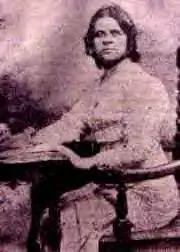
Photo: Luisa Capetillo2.jpg, Unknown author (Public domain). Resized and converted to WebP.
Reviewed November 18, 2026. Original biography by PuertoRico.com. Editorial policy