María de las Mercedes Barbudo: biography
Early life and family
María de las Mercedes Barbudo y Coronado was born in 1773 in San Juan to a Spanish father, Domingo Barbudo, who served as an officer in the Spanish Army, and a Puerto Rican mother, Belén Coronado. Her father's military position allowed the family to afford an education and books at a time when few women on the island could read. 1
Business and political circles
Barbudo opened a sewing goods store in San Juan that sold buttons, threads and clothes. She later became a successful personal loan provider. Her commercial dealings included business with Joaquín Power y Morgan, representative of the Compañía de Asiento de Negros that regulated the slave trade. She moved in prominent circles that included Captain Ramón Power y Giralt, Bishop Juan Alejo de Arizmendi and artist José Campeche. At her home she hosted meetings with intellectuals to discuss the political, social and economic conditions of Puerto Rico and the Spanish Empire. 1
She developed a liberal outlook and supported the vision of Simón Bolívar and Brigadier General Antonio Valero de Bernabé for a unified Latin America that would include Puerto Rico and Cuba. Inspired by Bolívar's ideas of an American-style federation and individual rights, she corresponded regularly with Venezuelan revolutionist José María Rojas. She also received Venezuelan magazines and newspapers that promoted Bolívar's ideals. 1
Arrest and trial
Spanish authorities under Governor Miguel de la Torre suspected her correspondence with Venezuelan rebels. Secret agents intercepted her mail and delivered it to the governor, who ordered an investigation and confiscated her letters. The government viewed the materials as propaganda that could encourage Puerto Ricans to seek independence. She was arrested on charges of planning to overthrow the Spanish government in Puerto Rico and held without bail at Castillo de San Cristóbal, as the island had no prison for women. 1
Evidence presented against her included a letter dated October 1, 1824, from Rojas stating that Venezuelan rebels had lost their principal contact with the Puerto Rican independence movement in Saint Thomas. On October 22, 1824, she appeared before a magistrate. The prosecution showed five letters from Rojas, two issues of El Observador Caraqueño, two copies of El Cometa, one copy each of El Constitucional Caraqueño and El Colombiano, and anti-monarchy pamphlets intended for distribution on the island. She acknowledged the correspondence but refused to answer further questions. She was found guilty. 1
Exile and later years in Venezuela
Governor de la Torre consulted prosecutor Francisco Marcos Santaella, who recommended exile to Cuba. On October 23, 1824, she was ordered held under house arrest at Castillo de San Cristóbal under Captain Pedro de Loyzaga. She wrote to the governor requesting time to settle her financial and personal affairs before exile, but the request was denied. On October 28 she was placed aboard the ship El Marinero and sent to Cuba, where she was held in an institution for women accused of crimes. 1
With help from revolutionary factions she escaped from Cuba to Saint Thomas Island and then reached La Guaira in Venezuela. There her friend José María Rojas met her and they traveled to Caracas, where she met Bolívar. She established a close relationship with members of his cabinet, including José María Vargas, who later became the fourth president of Venezuela. She worked with the cabinet and never returned to Puerto Rico. She never married and had no children. 1
Death and legacy
Barbudo died on February 17, 1849, in Caracas, Venezuela. She was buried in the Cathedral of Caracas next to Simón Bolívar, an honor usually reserved for church hierarchy and the very wealthy. In 1996 a documentary titled Camino sin retorno, el destierro de María de las Mercedes Barbudo was produced and directed by Sonia Fritz. 1
Questions about María de las Mercedes Barbudo
Where is María de las Mercedes Barbudo from?
María de las Mercedes Barbudo was born in San Juan, Puerto Rico.
Why was María de las Mercedes Barbudo imprisoned in 1824?
Spanish authorities under Governor Miguel de la Torre suspected her correspondence with Venezuelan rebels led by Simón Bolívar. Intercepted letters, newspapers and pamphlets sympathetic to independence were used as evidence at her hearing.
How did Barbudo escape exile in Cuba?
After being sent to an institution for women accused of crimes in Cuba, she escaped with help from revolutionary factions. She then traveled via Saint Thomas Island to Venezuela.
Where is María de las Mercedes Barbudo buried?
She was buried in the Cathedral of Caracas next to Simón Bolívar. This interment was an honor usually reserved for church hierarchy and the very wealthy.
When did María de las Mercedes Barbudo die?
María de las Mercedes Barbudo died on February 17, 1849 in Caracas, Venezuela.
Sources
- Wikipedia: María de las Mercedes Barbudo
- Wikidata: Q14401960
- El Nuevo Día (cited by Wikipedia)
- Library of Congress (cited by Wikipedia)
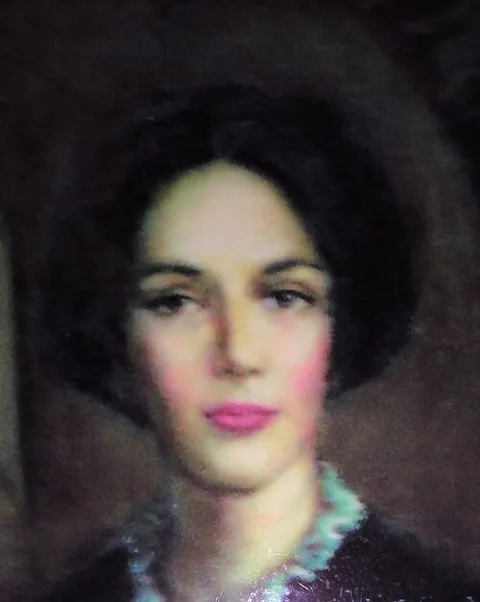
Photo: Maria de las Mercedes Barbudo, independence leader from Ponce, Puerto Rico, circa 1815 (DSC03896Z).jpg, Roca Ruiz (Public domain). Resized and converted to WebP.
Reviewed November 18, 2026. Original biography by PuertoRico.com. Editorial policy