Antonio Duvergé: biography
Early life and family
Antonio Duvergé Duval was born in 1807 in Puerto Rico. His parents, José Duvergé and María Duval, were mulatto Creoles from Saint-Domingue who had moved to Tortuguero, a town near Mayagüez after fleeing unrest. The family returned to Santo Domingo after the threat of war eased and settled first in El Seibo then around 1818 in San Cristóbal. He changed the family surname from Duverger to Duvergé. Duvergé married María Rosa Montás in 1831; she was also mulatto and from Mirebalais. The couple had seven children: Isabel, Maria Loreto, Policarpio, Alcides, José Daniel, Nicanor and Tomás. 1 2
Work as a woodcutter
From a young age and independent of his father, Duvergé worked cutting mahogany and other precious woods. This was a common occupation for the middle class between large port merchants and peasants. The work required traveling across the southern region and gave him detailed knowledge of the geography, people, rivers, mountains and ravines up to the border. These experiences later helped shape his skills as a military leader. 1 2
Dominican War of Independence
Duvergé joined the Haitian army as a recruit but did not initially stand out. He became involved in the conspiracy that led to Dominican independence in 1844. He incited residents in Azua to take up arms and established a defensive line there. In the Battle of Azua on 19 March 1844, he fought alongside Pedro Santana. Duvergé commanded troops in the vanguard at El Burro and led a machete charge that helped defeat a larger Haitian force. He earned national recognition and nicknames such as "The sentinel of the border" and "Sun Tzu of the machete." After the battle, Santana ordered a withdrawal to Baní. Duvergé later commanded at El Memiso, where he used terrain to roll stones onto advancing Haitians and secured another victory. Santana appointed him head of the Southern Expeditionary Front with the rank of brigade general in mid-1844, with headquarters at Las Matas de Farfán. Duvergé led the capture of the Haitian fort at Cachimán in December 1844 and retook it in 1845. He conducted maneuvers along the border through 1845. After the Battle of La Estrelleta, he was promoted to division general and named political chief of Azua province, moving his headquarters to San Juan de la Maguana. He remained on alert, ordering limited incursions to deter raiders. 1 2
Later conflicts and death
After the 1849 campaign Duvergé faced a military trial along with other officers but was acquitted. Tensions with Santana grew. He was confined to El Seibo, away from his southern base. In 1853, after Santana returned to the presidency, Duvergé joined a conspiracy linked to Buenaventura Báez supporters. The plot was discovered. A military commission in El Seibo sentenced him and his son Alcides to death. They were executed on 11 April 1855 in El Seibo Province. 1 2
Legacy and ties to Puerto Rico
Duvergé is remembered as a key military leader in the Dominican War of Independence. He is credited with helping secure victories that contributed to the founding of the Dominican Republic. A proclamation he issued on 18 December 1848 to Haitians emphasized national solidarity in the Dominican Republic regardless of color, stating that virtue was the only requirement to rise in public positions. Although he lived most of his life in what became the Dominican Republic, Duvergé was born in Puerto Rico. His family origins trace to French nobility that migrated to the Caribbean after the French Revolution. 1 2
Questions about Antonio Duvergé
Where is Antonio Duvergé from?
Antonio Duvergé was born in Hormigueros, Puerto Rico.
Why was Antonio Duvergé executed?
After Pedro Santana returned to the presidency in 1853, Duvergé joined a conspiracy associated with supporters of Buenaventura Báez. The plot was discovered and a military commission in El Seibo sentenced him and his son Alcides to death. They were executed on 11 April 1855.
What was Antonio Duvergé's role in the Battle of Azua?
In the Battle of Azua on 19 March 1844, Duvergé commanded troops in the vanguard at El Burro. He led a machete charge that contributed decisively to the Dominican victory over a larger Haitian force.
How did Duvergé's early work influence his military career?
As a woodcutter Duvergé traveled extensively across the southern region. This gave him intimate knowledge of the local geography, people, rivers, mountains and ravines that he later used to his advantage in battles such as El Memiso.
When did Antonio Duvergé die?
Antonio Duvergé died on April 11, 1855 in El Seibo Province, Dominican Republic.
Sources
- Wikipedia: Antonio Duvergé
- Wikipedia (español): Antonio Duvergé
- Wikidata: Q5698176
- Library of Congress: Antonio Duvergé
- JSTOR (cited by Wikipedia)
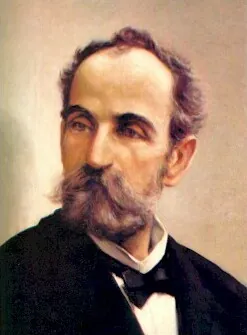
Photo: Antonio duverge.jpg, Unknown/Desconocido (Public domain). Resized and converted to WebP.
Reviewed November 18, 2026. Original biography by PuertoRico.com. Editorial policy