Ramón Emeterio Betances: biography
Early life and family
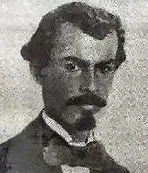
Ramón Emeterio Betances was born on April 8, 1827, in Cabo Rojo to Felipe Betanzos Ponce, a merchant from Hispaniola, and María del Carmen Alacán de Montalvo, a native of Cabo Rojo with French ancestry. The family was recorded as mixed race. His mother died in 1837 when he was nine; his father remarried and purchased Hacienda Carmen in what became Hormigueros, where he owned land, a small sugar mill, and slaves. Betances was the only surviving son among six children. His father, a Freemason with a large private library, hired private tutors for his early education and sent him at age ten to study in France. 1 2 5
In France he lived with a Franco-Puerto Rican family from Cabo Rojo while attending the Collège Royal in Toulouse. He showed early interest in the natural and exact sciences and became a skilled fencer. While he studied abroad his father successfully changed the family's legal racial classification from mixed to white to allow a daughter's marriage, a process that embarrassed the family and annoyed Betances, who openly mocked the hypocrisy in letters. 1 2
Medical studies and return to Puerto Rico
Betances earned his baccalauréat in 1846. He studied medicine at the Faculty of Medicine of Paris from 1848 to 1855, with a brief period at Montpellier in 1852, and graduated as Doctor in Medicine and Surgeon in 1856. He was the second Puerto Rican to graduate from that university. His teachers included Charles-Adolphe Wurtz, Jean Cruveilhier, Jean-Baptiste Bouillaud, Armand Trousseau, Alfred-Armand-Louis-Marie Velpeau and Auguste Nélaton. The 1848 French Revolution and its aftermath shaped his political views toward independence rather than autonomy. 1 2 5
He returned to Puerto Rico in April 1856 during a cholera epidemic that struck Mayagüez especially hard. One of five doctors serving 24,000 residents, he and José Francisco Basora pressed local officials for preventive measures. They burned unsanitary slave barracks, set up a temporary camp and supplementary cemetery, and Betances managed a temporary hospital that later became the permanent Hospital San Antonio. His stepmother and a brother-in-law died in the outbreak. He gave lowest priority to treating Spanish military officers, leading to his first clash with authorities. The city government commended his work, yet he was passed over for the permanent chief surgeon post in favor of a Spaniard. 1 2 5
Abolitionist work and personal losses
Betances founded one of the Secret Abolitionist Societies in 1856. With Basora, Segundo Ruiz Belvis and others, he waited at the baptismal font of Mayagüez's Nuestra Señora de la Candelaria church. They gave parents money to buy a slave child's freedom before baptism, allowing the child to receive what they called the waters of liberty. Similar actions took place in Ponce. Governor Fernando Cotoner threatened him with exile in 1858 for these activities. 1 2
He left for France, where his niece María del Carmen Henrí, known as Lita, whom he had received ecclesiastical permission to marry, died of typhus in April 1859 shortly before their planned wedding. Devastated, he wrote the short story La vierge de Boriquén in French, influenced by Edgar Allan Poe. He returned to Mayagüez, established a successful surgery and ophthalmology practice, introduced new aseptic procedures, and performed the first surgical procedure under chloroform in Puerto Rico in November 1862 with Venezuelan anesthesiologist Pedro Arroyo. He treated the poor without charge and became known as the Doctor of the Poor. 1 2 5
Exile, organization of Grito de Lares, and later years
Betances and Ruiz Belvis fled to the Dominican Republic in 1861 during the War of Restoration and formed close ties with Gregorio Luperón and Fernando Arturo de Meriño. He returned to Mayagüez in 1862, helped open Hospital San Antonio in 1865, and joined Masonic lodges. He met Simplicia Jiménez Carlo in 1864; she became his common-law wife for thirty-five years. They lived briefly in the Casa de los Cinco Arcos. 1 2
At a 1865 meeting in Carolina after the Junta Informativa de Reformas de Ultramar rejected most Puerto Rican demands, Betances declared that Spain could not grant what it did not itself possess and urged immediate revolt. Exiled again in 1867, he helped found the Revolutionary Committee of Puerto Rico in New York, wrote the Ten Commandments of Free Men in Saint Thomas, and organized an armed expedition. The Grito de Lares occurred on September 23, 1868; he designed the Lares flag. After its failure he continued supporting independence efforts for Cuba and the Dominican Republic from exile in France, where he served as diplomatic contact. He warned against United States intervention in Puerto Rico during the 1898 war. 1 5
Literary and scientific contributions
Beyond medicine and politics, Betances wrote poetry, short stories, essays, journalism and translations. His literary work combined neoclassical satire, romanticism and realist-naturalist elements. He participated in the 1851 Society for the Collection of Historical Documents of the Island of San Juan Bautista. In Paris he promoted a Latin American hospital and a secondary school for emigrants in 1889. He is considered one of the founders of academic medicine in Puerto Rico and an early social hygienist. 1 2 5
Questions about Ramón Emeterio Betances
When was Ramón Emeterio Betances born?
Ramón Emeterio Betances was born on April 8, 1827 in Cabo Rojo, Puerto Rico.
What was Betances' role in the abolition of slavery in Puerto Rico?
He founded a Secret Abolitionist Society in 1856 that freed slave children at the baptismal font in Mayagüez by providing money for parents to purchase their freedom before the sacrament. Similar actions occurred in Ponce.
Why is Betances called the Father of the Puerto Rican Nation?
He was the primary instigator and organizer of the Grito de Lares revolt of 1868, designed the Lares flag, and consistently advocated full independence from Spain rather than autonomy.
How did the 1848 French Revolution influence Betances?
Witnessing its aftermath in Paris led him to reject Puerto Rican autonomy proposals and embrace full independence, viewing himself as an old soldier of the French Republic.
When did Ramón Emeterio Betances die?
Ramón Emeterio Betances died on September 16, 1898 in Neuilly-sur-Seine, France, aged 71.
Sources
- Wikipedia: Ramón Emeterio Betances
- Wikipedia (español): Ramón Emeterio Betances
- Wikidata: Q1234469
- Encyclopedia of Puerto Rico: Ramón Emeterio Betances
- Enciclopedia de Puerto Rico: Ramón Emeterio Betances
- Library of Congress: Ramón Emeterio Betances (World of 1898)
- Primera Hora (cited by Wikipedia)
- El Nuevo Día (cited by Wikipedia)
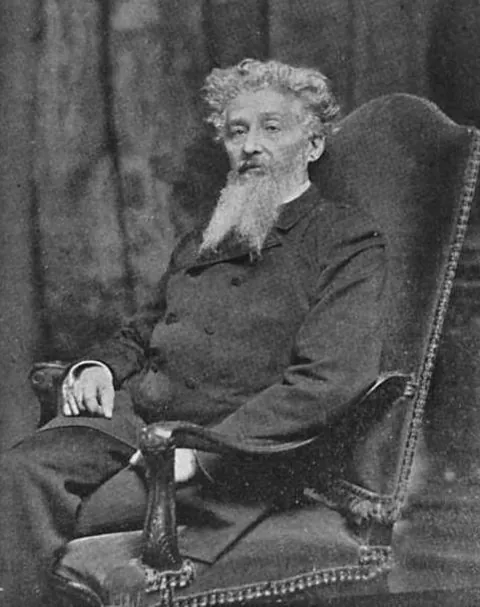
Photo: Ramon Emeterio Betances sitting.jpg, Unknown author (Public domain). Resized and converted to WebP.
Reviewed November 18, 2026. Original biography by PuertoRico.com. Editorial policy