Roberto Roena: biography
Early life and family
Roberto Roena Vázquez was born on January 16, 1940, in the Dulces Labios neighborhood of Mayagüez. His parents were Francisco Roena, an engineer from Carolina, and Raquel María Vázquez, a seamstress from Mayagüez. His mother was the sister of Aníbal Vázquez, a noted mambo dancer in New York who founded Los Mambo Ases in the early 1950s. 1 2 3
Roena began performing as a dancer with his brother Francisco, known as Cuqui. In 1954 the brothers won an amateur contest on the program Coca-Cola Busca Estrellas, which had moved from radio to the new WKAQ-TV channel. The prize gave them a one-year engagement on the show La Taberna India. 1 2 3
Work with Cortijo y Su Combo and El Gran Combo
Cortijo taught him to play bongos and cowbell. Roena remained with Cortijo y Su Combo and singer Ismael Rivera for seven years. The band, composed mostly of Afro-Puerto Rican musicians, toured the United States, Europe and South America and became the first such ensemble to perform on stages previously reserved for white artists in and outside Puerto Rico. 1 2 3
After Ismael Rivera’s arrest on drug charges ended the group’s run, former members met to plan a new orchestra. Rafael Ithier led the project that became El Gran Combo de Puerto Rico. Roena initially stayed loyal to Cortijo and did not join immediately. While still a member he formed Los Megatones in 1967 to play Latin jazz on Wednesday nights at the Tropicana club in Carolina. 1 2 3
Roberto Roena y Su Apollo Sound
Roena left El Gran Combo in 1969 after personal differences with vocalist Andy Montañez. That same year he created Roberto Roena y Su Apollo Sound, named because the band’s first rehearsal coincided with the Apollo 11 lunar launch on July 16, 1969. The orchestra featured two trumpets, trombone and saxophone, drawing from the horn section of the rock group Blood, Sweat and Tears. Despite lacking formal musical training, Roena surrounded himself with skilled musicians and arrangers including Mario Ortiz, Bobby Valentín, Elías Lopés, Luis “Perico” Ortiz and Papo Lucca. Former members of Tito Puente’s orchestra, Cortijo y Su Combo, El Gran Combo and Los Sunsets also played in the group. 1 2 3
The band recorded a series of albums for International Records, a Fania subsidiary, between 1970 and 1980. Early hits included “Tú loco loco y yo tranquilo,” “El escapulario,” “El sordo” and a popular version of Bobby Capó’s “Soñando con Puerto Rico.” Later successes were “Traición,” “Chotorro,” “Mi desengaño,” “Fea,” “Marejada feliz,” “Cui cui,” and “El progreso.” First singers were Piro Mantilla, Dino “Guy” Casiano and Frankie Calderón, followed by Sammy González and Tito Cruz. Roena emphasized variety, performing go-go, romantic numbers and songs in both English and Spanish. 1 2 3
Fania All-Stars, collaborations and stage shows
Roena became a longtime member of the Fania All-Stars in the 1970s. He recorded the signature song “Coro Miyare” with the supergroup; live versions featured him playing bongos and dancing that regularly drew standing ovations. He also collaborated with African saxophonist Manu Dibango on salsa-jazz fusion projects. In 1990 he opened for British rock singer Sting at Coliseo Roberto Clemente in San Juan, performing a salsa arrangement of “Every Breath You Take” while Sting watched from the wings. 1 2 3
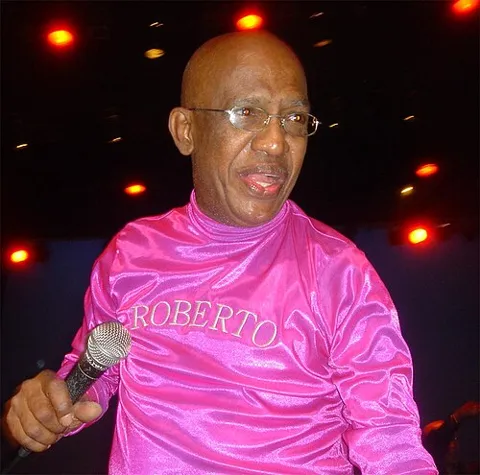
Known for showmanship, Roena dyed his hair bright colors, played percussion in underwear and used a harness to “fly” across the stage at Madison Square Garden. A journalist described Apollo Sound as the first Puerto Rican group to use psychedelic lights and go-go dancers. The band’s popularity peaked in the 1970s but declined in the 1980s along with the broader salsa movement. Roena continued recording independently with local orchestras. In 1994 he marked 25 years with Apollo Sound at a concert at Centro de Bellas Artes in San Juan that was recorded and released. He was inducted into the International Latin Music Hall of Fame in 2003. 1 2
Later years and ties to Puerto Rico
Roena released solo albums including Se Pone Bueno (1966), Que Suerte He Tenido de Nacer (1980), Looking Out For Numero Uno (1980), Super Apollo 47-50 with Adalberto Santiago (1982), New Decade (1990) and Señor Bongo (2006). Maravilla (1977), Gold (1980), Afuera y Contento (1985), Regreso (1987), El Pueblo Pide Que Toque (1994) and others. He created the concept for Puerto Rico All Stars but later gave the name to Frankie Gregory. 1 2 3
Roena had two daughters, Brenda and Gladys, and two sons, Ivan and Francisco. He died of a heart attack on September 23, 2021, in Carolina, Puerto Rico, at age 81 and was buried at Monte Calvario Cemetery in Caguas. 1 2 3
Questions about Roberto Roena
When was Roberto Roena born?
Roberto Roena was born on January 16, 1940 in Mayagüez, Puerto Rico.
Why did Roberto Roena name his band Apollo Sound?
The band’s first rehearsal occurred on July 16, 1969, the same day NASA launched Apollo 11 to the Moon.
Which hit did Roberto Roena popularize from Bobby Capó?
Roena and Apollo Sound popularized the classic “Soñando con Puerto Rico.”
What stage tricks was Roberto Roena known for?
He dyed his hair bright colors, played percussion in underwear and used a harness to fly across the Madison Square Garden stage.
When did Roberto Roena die?
Roberto Roena died on September 23, 2021 in Carolina, Puerto Rico, aged 81.
Sources
- Wikipedia: Roberto Roena
- Wikipedia (español): Roberto Roena
- Enciclopedia de Puerto Rico: Roberto Roena
- Wikidata: Q187713
- Primera Hora (cited by Wikipedia)
- Fundación Nacional para la Cultura Popular (cited by Wikipedia)
- Library of Congress (cited by Wikipedia)
- IMDb: Roberto Roena (credits)
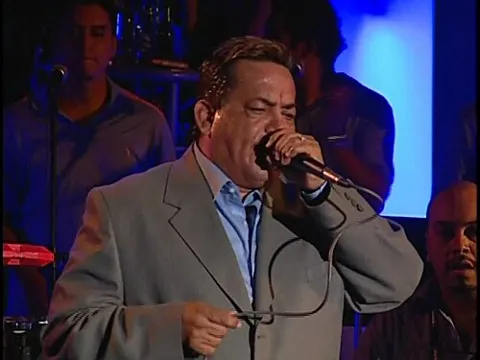
Photo: Roberto Roena en el Teatro Municipal de Cali, Colombia.jpg, Enrique Eder (CC0). Resized and converted to WebP.
Reviewed November 18, 2026. Original biography by PuertoRico.com. Editorial policy