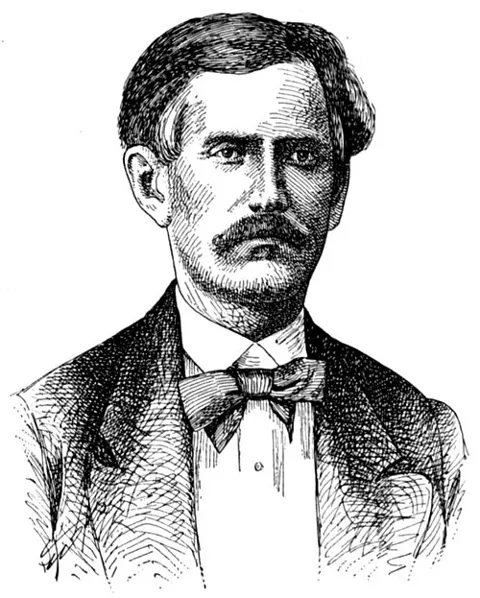
Román Baldorioty de Castro: biography
Early life and education
Román Baldorioty de Castro was born into a poor family in Guaynabo. His family moved to San Juan where he received primary education under the noted teacher Rafael Cordero. He then attended the Seminario Conciliar de San Ildefonso, finishing with one of the highest grades in his class. A scholarship allowed him to travel to Spain with three other Puerto Ricans. The group visited sites in Córdoba, Seville, Andújar and Bailén before reaching Madrid. There he studied at the Central University of Madrid, now known as the Complutense University. Two of his companions died from smallpox; he cared for them but continued his studies and graduated with a degree in physics and mathematical sciences. He declined an offer to return home. In 1847 the Sociedad de Amigos del País named him its correspondent in Spain. In 1851 he received permission to move to Paris, where he attended the Central School of Arts and Manufactures. 1 2 3
Return to Puerto Rico and early career
Baldorioty de Castro returned to Puerto Rico in 1853 after seven years abroad. He married Isabel Matilde Díaz y Ruiz, granddaughter of the hero of the 1797 Battle of San Juan. He observed political tensions between the governor and local political and educational groups. He began advocating for changes in social, political and educational institutions. Governor Fernando Norzagaray offered him the position of mayor of a municipality, which he declined on principle. In 1853 he joined the Liberal Reform Party of Puerto Rico. He taught botany and maritime sciences at the School of Commerce, Agriculture and Maritime Studies in San Juan. In 1854 the Seminario Conciliar named him professor of botany, and later that year he taught maritime studies at a nautical school selected by the Junta de Comercio y Fomento. In 1856 he supervised experiments on the fertile lands discovered on the islands of Mona and Monito. In 1857 he served on a commission with José Julián Acosta and Juan Hernández Arbizu to address the decline in the cattle industry. He successfully proposed adding geometry to the elementary school curriculum. In 1858 the Economic Society named him secretary of the Studies Commission, and in 1860 spokesman for a commission on conservation of natural resources. He also represented Puerto Rico as a delegate in the Spanish Parliament from 1860 to 1865 and was certified as a professor of applied mechanics in 1864. 1 2 3
Work in the Spanish Parliament
While serving in the Spanish Parliament, Baldorioty de Castro used his position to advocate for the abolition of slavery in Puerto Rico and Cuba and for a constitution granting more political rights to Puerto Ricans. In 1866 he was named Puerto Rico's representative to the 1867 Universal Exposition in Paris. He wrote a report titled Exposición Universal de París en 1867. He did not support armed revolution during the Grito de Lares but preferred diplomatic debate. After the revolt, he worked toward conciliation between opposing groups and traveled to Madrid to present the island's situation. He wrote documents criticizing the colonial government and a report on its impact on social and economic conditions. In 1867 he was appointed to the Test Commission monitoring physics and natural sciences examinations. In 1870 he was elected deputy to the Cortes Generales after the governor revoked his credentials as an educator. There he continued promoting abolition. On 19 November 1872, with Luis Padial, Julio Vizcarrondo and Minister Segismundo Moret, he presented a proposal for the abolition of slavery. The Spanish government approved it on 22 March 1873 as the Moret Law. He became known as the Father of Puerto Rican Autonomy. 1 2 3
Later years, writings and founding of the Autonomist Party
Baldorioty de Castro returned to Puerto Rico in 1873 and settled in Ponce. He founded the newspaper El Derecho and the weekly La Crónica, using them to express ideas on autonomy. He authored several works including Exposición Universal de París en 1867 (1868), La junta informativa de reformas para Puerto Rico (1869), La interpelación del diputado D. Luis Padial y sus consecuencias (1869), Las facultades omnímodas en 1811 y los diputados de Puerto Rico en 1869 (1871), Bases para la fundación de un Banco de Emisión y Descuento (1871) and Una campaña parlamentaria (1873). He translated Vittorio Alfieri's tragedy Felipe II and John Stuart Mill's La libertad. In 1887, together with José de Diego, he co-founded the Autonomist Party of Puerto Rico, also called Partido Autonomista Puro, Partido Histórico or Partido Ortodoxo, at Teatro La Perla in Ponce. He appointed the young politician Antonio R. Barceló as party secretary. The party's principles called for Puerto Rico to choose its own government and have a representative in the Spanish Parliament. Baldorioty de Castro was accused of distributing seditious propaganda and imprisoned in Fort San Felipe del Morro. Released after a short time, the imprisonment damaged his health. He retired from public life and died in Ponce on 30 September 1889. He is buried in the cemetery later renamed Panteón Nacional Román Baldorioty de Castro. 1 2 3
Legacy and ties to Puerto Rico
Cities including Bayamón, Juana Díaz, San Germán and San Juan named plazas in his honor. Puerto Rico Highway 26 is called the Román Baldorioty de Castro Expressway and leads to Luis Muñoz Marín International Airport. An obelisk honoring him stands where the expressway meets Condado Lagoon in the Miramar neighborhood of Santurce, with a bronze statue at its base. Schools across Puerto Rico carry his name. In the Dominican Republic, the Liceo de Estudios Secundarios Román Baldorioty de Castro in Azua de Compostela is named after him. He remains recognized for promoting regional autonomy within the Liberal Reform Party and for the establishment of the Autonomist Party. 1 2 3
Questions about Román Baldorioty de Castro
When was Román Baldorioty de Castro born?
Román Baldorioty de Castro was born on February 23, 1822 in Guaynabo, Puerto Rico.
What role did Román Baldorioty de Castro play in the abolition of slavery?
In 1872 he presented a proposal with Luis Padial, Julio Vizcarrondo and Segismundo Moret that led to the approval of the Moret Law on 22 March 1873.
Which political party did Baldorioty de Castro found in 1887?
He co-founded the Autonomist Party of Puerto Rico with José de Diego at Teatro La Perla in Ponce and named Antonio R. Barceló as secretary.
What educational positions did Baldorioty de Castro hold after returning from Europe?
He taught botany at the Seminario Conciliar, maritime studies at a nautical school, supervised experiments on Mona and Monito, and proposed adding geometry to elementary curricula.
When did Román Baldorioty de Castro die?
Román Baldorioty de Castro died on September 30, 1889 in Ponce, Puerto Rico, aged 67.
Sources
- Wikipedia: Román Baldorioty de Castro
- Wikipedia (español): Román Baldorioty de Castro
- Enciclopedia de Puerto Rico: Román Baldorioty de Castro
- Wikidata: Q720220
- Encyclopaedia Britannica: Román Baldorioty de Castro
- Library of Congress (cited by Wikipedia)
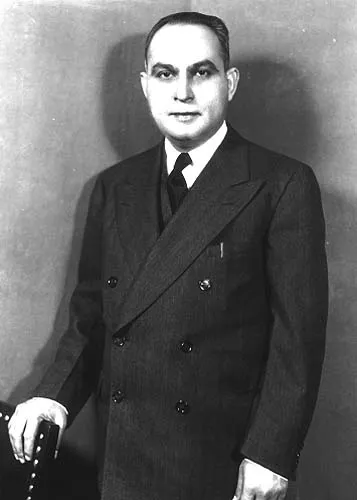
Photo: Baldorioty.jpg, Unknown author (Public domain). Resized and converted to WebP.
Reviewed November 18, 2026. Original biography by PuertoRico.com. Editorial policy