Agustín Stahl: biography
Early life and family
Sources differ on whether Agustín Stahl was born in Aguadilla, Puerto Rico or in Curaçao. He moved to Aguadilla at age one with his German Protestant parents, Johann Heinrich Christian Stahl and Maria Helene Stamm. Baptized Catholic at about age three, he completed primary and secondary schooling in Aguadilla. 1 4
He attended the University of Würzburg and Charles University in Prague, earning his medical degree in 1864. He returned to Puerto Rico that same year. 1 2 4
Medical practice and scientific research
Stahl established a medical practice in Bayamón and also served in San Juan, Yabucoa, Manatí and other towns. In 1873 he became professor of natural history at the Instituto de Segunda Enseñanza in San Juan. He conducted research on sugar cane diseases that earned recognition across the Spanish Antilles. 2 4
His collections were the basis for numerous studies by specialists, some of them resulting in new taxa to science. 1 4
Ethnology, history and additional publications
He also published historical works on the founding of Aguadilla and Bayamón that emphasized local archives, positioning him as a precursor of microhistory. 1 4
Medical titles include La primera ovariotomía practicada en Puerto Rico (1890), La fecundidad de la mujer en Puerto Rico (1892) and Estudio demográfico (1895). 1 2 4
Recognition, politics and later years
Awards came from the Spanish Anthropological Society, the Academy of Sciences and Arts of Barcelona, and the Medical Sciences Academy of Catalonia. The genus Stahlia is represented by a single species, S. monosperma (Tul.) Urb., known to occur only in Puerto Rico and the eastern Dominican Republic. Known in Puerto Rico as cóbana negra, this species is currently listed as threatened in the USFW Federal Register, April 5, 1990. The abbreviation A. Stahl is used in botanical nomenclature. 1 2 4
A supporter of Puerto Rican autonomy, Stahl belonged to the Puerto Rican Autonomist Party. His political opinions led to removal from his teaching post and deportation in 1898; he returned after the change of sovereignty. In 1913 the government granted him a pension of 100 dollars. He sold his collections for financial reasons in old age. 1 2 4
Legacy and ties to Puerto Rico
He died in Bayamón on July 12, 1917 and was buried in the Braulio Dueño Colón Municipal Cemetery. His former house in Bayamón became a museum. 1 2
Puerto Rican sculptor Tomás Batista created a bust of Stahl displayed at the University of Puerto Rico in Cayey. His collections and publications remain foundational for studies of Puerto Rican natural history and indigenous archaeology. 1 4
Questions about Agustín Stahl
When was Agustín Stahl born?
Agustín Stahl was born on January 21, 1842.
Where was Agustín Stahl born?
Sources differ: Aguadilla or Curaçao (sources differ).
Which plants bear Agustín Stahl's name?
The genus Stahlia and the species Argythamnia stahlii, Senna pendula var. stahlii, Eugenia stahlii, Lyonia stahlii and Ternstroemia stahlii are named after him.
What role did Stahl play in Puerto Rican Christmas traditions?
In 1866 he decorated a tree in his Bayamón backyard, an act credited with introducing the Christmas tree custom to Puerto Rico.
How did Stahl contribute to the study of Taíno heritage?
His 1889 book Los indios borinqueños made him a pioneer in the archaeological study and conservation of indigenous Puerto Rican heritage.
When did Agustín Stahl die?
Agustín Stahl died on July 12, 1917 in Bayamón, Puerto Rico, aged 75.
Sources
- Wikipedia: Agustín Stahl
- Wikipedia (español): Agustín Stahl
- Wikidata: Q399442
- Enciclopedia de Puerto Rico: Agustín Stahl
- Smithsonian Institution (cited by Wikipedia)
- Library of Congress (cited by Wikipedia)
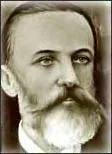
Photo: Agustin stahl.jpg (Public domain). Resized and converted to WebP.
Reviewed November 18, 2026. Original biography by PuertoRico.com. Editorial policy