Evaristo Ribera Chevremont: biography
Literary evolution
His first book, Desfile Romántico, appeared in 1914. Early works such as El Templo de los Alabastros from 1919 and La Copa del Hebe from 1922 show traces of late romanticism and modernism. Between 1919 and 1924 he traveled to Spain, where he encountered ultraism and began experimenting with vanguard techniques, including free verse. He later moved toward a more personal, transcendental style focused on the sea, nature, individualism, and the divine. Books from this phase include Color in 1938, Tonos y Formas in 1943, Verbo in 1947, La Llama Pensativa in 1954, Inefable Orilla in 1961, and Río Volcado in 1968. El Caos de los Sueños, published in 1974, consists of free-verse poems of profound lyrical and universal character. 1 2 3
Major works and themes
Ribera Chevremont wrote both in free verse and traditional forms. Posthumous titles include El Libro de las Apologías in 1976, Jinetes de la Inmortalidad in 1977, Elegías a San Juan in 1980, and Sonetos a Galicia in 1994, the last dedicated to his father's homeland and issued by his widow and daughter through the Xunta de Galicia. Several works address Puerto Rican nationality and regionalism, yet many verses achieve a universal lyrical quality. Books such as Barro from 1945 and El Hondero Lanzó la Piedra from 1975 reflect social concerns and a collective human message. He also produced journalistic and critical prose that remains scattered in periodicals. 1 2
Critical reception
Mid-twentieth-century critics Federico de Onís and Concha Meléndez regarded him as one of the most important poets of the Spanish language and one of the great poets of the Antilles. Concha Meléndez published La Inquietud Sosegada, a study of his poetics, in 1956. Carmen Irene Marxuach examined his vanguard voice in a 1987 book. José Emilio González analyzed his poetry in the 1980 anthology issued by the University of Puerto Rico. In 1980 the University of Puerto Rico Press released a two-volume anthology titled Evaristo Ribera Chevremont: Obra Poética. He maintained friendships with literary circles in Spain and saw several works published there. Jorge Guillén wrote a letter to him that was included in the 1965 edition of Principio de Canto. 1 2 3
Legacy and ties to Puerto Rico
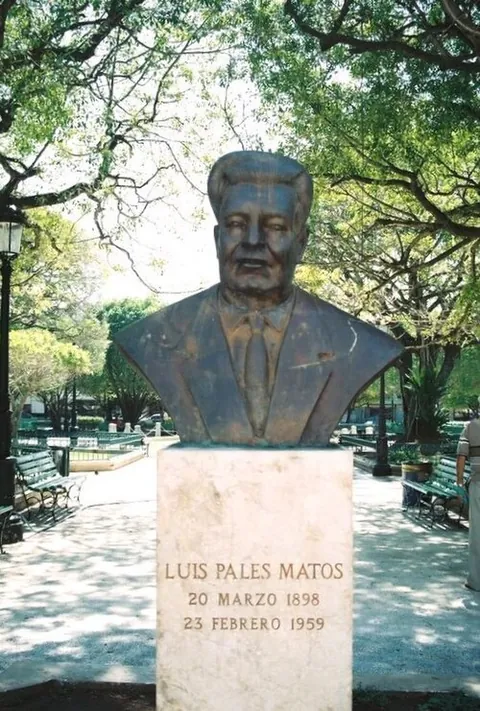
He viewed poetry as a sacred vocation centered on sincerity, truth, and the revelation of beauty. The sea, trees, and stars served as recurring sources of inspiration, along with introspection. He considered the poet's social role to uphold human values and moral intention. Scholars place him alongside Luis Lloréns Torres and Luis Palés Matos as a central figure in twentieth-century Puerto Rican poetry. His work continues to be studied for its stylistic evolution from modernism through ultraism to a sober, essential lyricism. 3
Questions about Evaristo Ribera Chevremont
When was Evaristo Ribera Chevremont born?
Evaristo Ribera Chevremont was born on February 16, 1896 in San Juan, Puerto Rico.
Which poetic movements did Evaristo Ribera Chevremont practice?
He began with late romanticism and modernism, then adopted ultraism and free verse, later developing a personal transcendental style.
What is the significance of Sonetos a Galicia in his bibliography?
It was his final published book, issued posthumously in 1994 by his widow and daughter, dedicated to his father's Galician homeland.
How did critics rank Ribera Chevremont among Puerto Rican poets?
Scholars place him with Luis Lloréns Torres and Luis Palés Matos as one of the three major poets of Puerto Rico.
When did Evaristo Ribera Chevremont die?
Evaristo Ribera Chevremont died on March 1, 1976 in San Juan, Puerto Rico, aged 80.
Sources
- Wikipedia: Evaristo Ribera Chevremont
- Wikipedia (español): Evaristo Ribera Chevremont
- Enciclopedia de Puerto Rico: Evaristo Ribera Chevremont
- Wikidata: Q5416075
- Library of Congress: Evaristo Ribera Chevremont
- Oficina de Servicios Legislativos de Puerto Rico (cited by Wikipedia)
- Yale University (cited by Wikipedia)
We did not find a freely licensed photo we could use, so we show initials instead.
Reviewed November 18, 2026. Original biography by PuertoRico.com. Editorial policy