Frederick Lois Riefkohl: biography
Early life and family
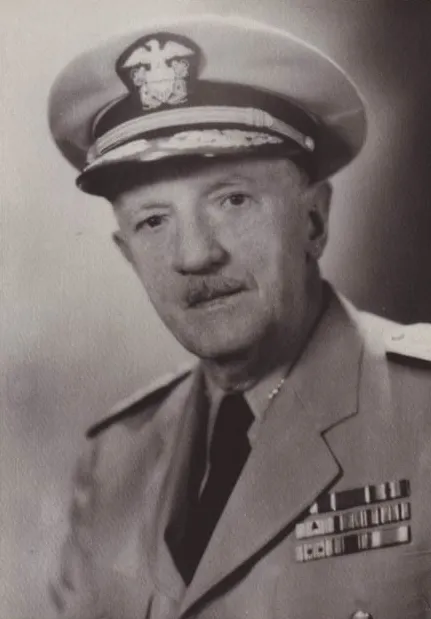
Frederick Louis Riefkohl was born on February 27, 1889, in Maunabo, Puerto Rico. His birth name was Luis Federico Riefkohl Jaimieson. His mother, Julia Ana Jamieson Mourier, was a native of Saint Thomas in the Danish West Indies. His paternal grandfather Otto Riefkohl came from Germany and his paternal grandmother Luisa Sandoz came from Switzerland; they had immigrated to Puerto Rico in the mid-1800s. His maternal grandfather David Jamieson was a merchant and director of the Bank of St. Thomas. His maternal grandmother Frederikke Mourier DeWindt was a native of St. John. Riefkohl was raised at the Hacienda Orleanaise, his grandparents' sugar plantation in Maunabo, and in the nearby town of Arroyo. He had an older brother, Rudolph W. Riefkohl, who later became a colonel in the United States Army Corps of Engineers and played a role in aiding Poland during the 1919 typhus epidemic. His sisters were Helen, Emily and Louise Riefkohl. After their mother's death, Frederick and Rudolph were sent to Massachusetts for secondary education, breaking the family tradition of educating males in Germany. He attended Phillips Andover Academy for three years and graduated with the class of 1907. The family, like many wealthy sugar planters, supported the annexation of Puerto Rico by the United States during the Spanish-American War. 1
United States Naval Academy and World War I service
On July 5, 1907, Riefkohl received an appointment from Beekman Winthrop, the U.S. appointed governor of Puerto Rico, to attend the United States Naval Academy in Annapolis, Maryland. He graduated in 1911 and became the first Puerto Rican to do so. His classmates included Morton Deyo, Harry W. Hill, Frank J. Lowry, George D. Murray and John W. Reeves. During World War I, Lieutenant Riefkohl served as commander of the Armed Guard aboard the SS Philadelphia, a civilian passenger liner converted into a troop transport. 1
Interwar assignments and commands
After World War I, Riefkohl was assigned to the Fifteenth Naval District in Balboa, Canal Zone, as district communication officer. Between 1920 and 1923 he held posts including squadron radio officer for Destroyer Squadron 3 of the Atlantic Fleet, aide and force radio officer on the staff of the commander of Destroyer Force, Atlantic Fleet, and executive officer of the USS Preble while en route to the Asiatic Station. From August 1922 to October 1923 he served as aide, flag secretary and fleet radio and communication officer to the commander in chief of the Asiatic Fleet. He commanded the destroyer USS Corry from July 1926 to August 1928. He later served as executive officer of the USS Kittery until June 1929. Riefkohl was chief of staff to the governor of the Virgin Islands until April 30, 1931, when he became commandant of the islands' naval station. He also served in charge of the Navy Motion Picture Exchange at the Brooklyn Navy Yard while attending the Naval War College. From January 1935 to December 1936 he acted as adviser to the Argentine Navy Department in Buenos Aires. From July 19, 1939, until April 4, 1941, he was war plans officer on the staff of the commandant of the Fifteenth Naval District in Balboa. 1
World War II and the Battle of Savo Island
Riefkohl assumed command of the heavy cruiser USS Vincennes on April 23, 1941. When the United States entered World War II the ship was in the Atlantic and later escorted the aircraft carrier USS Hornet to the Pacific. During the Guadalcanal campaign the Vincennes was assigned to the Fire Support Group under Rear Admiral Richmond K. Turner. On the night of August 8-9, 1942, the ship formed part of the Northern Force of Allied cruisers screening the landings. Without notifying Riefkohl, Rear Admiral Victor A. Crutchley left the area with his flagship to confer with Turner. Japanese Admiral Gunichi Mikawa launched a surprise night attack that became the Battle of Savo Island. Riefkohl initially believed the searchlights and gunfire indicated a minor skirmish with friendly ships from the Southern Force. When Japanese vessels opened fire, the Vincennes was struck by shells and torpedoes that destroyed both engine rooms. The ship returned fire, possibly hitting the Japanese cruiser Kinugasa, but sustained 85 direct hits. Riefkohl ordered the crew to abandon ship. The Vincennes sank with 342 men still aboard. He received wounds in the action and was awarded the Purple Heart. The battle resulted in the loss of the Vincennes, USS Quincy, USS Astoria and HMAS Canberra, plus heavy damage to USS Chicago. Despite the defeat, the cruisers had screened the amphibious transports successfully. Mikawa withdrew rather than attack the landing ships. The Navy censored news of the defeat, the worst in United States naval history up to that time. Riefkohl testified repeatedly about his actions and was never formally disciplined. The subsequent Hepburn investigation cited breakdowns in communications, overreliance on inadequate radar, lack of air reconnaissance and assumptions about Japanese intentions. The inquiry led to reforms including the use of less flammable materials aboard ships and separation of tactical command from individual ship command. 1
Later years, retirement and legacy
After the battle Riefkohl never commanded another United States naval vessel. In October 1942 he reported to the Office of the U.S. Attaché at the American Embassy in Mexico City and served as liaison officer with the Mexican Forces in the Gulf of Mexico at Veracruz. He later held administrative posts including district intelligence officer for the Eighth Naval District in New Orleans. He again served as chief of staff to the governor of the U.S. Virgin Islands, as adviser to the Argentine Navy, and as inspector of the 10th Naval District in San Juan, Puerto Rico. On the basis of his combat citations he was advanced to the rank of rear admiral upon retirement on January 1, 1947. Riefkohl was married to Louisa Gibson Riefkohl and had no children. He died in 1969 in Brevard County, Florida, and was buried with full military honors at the United States Naval Academy Cemetery. In 2019 he was posthumously inducted into the Puerto Rico Veterans Hall of Fame. 1
Questions about Frederick Lois Riefkohl
When was Frederick Lois Riefkohl born?
Frederick Lois Riefkohl was born on February 27, 1889 in Maunabo, Puerto Rico.
What happened to the USS Vincennes under Riefkohl's command?
On August 9, 1942, during the Battle of Savo Island the ship was hit by Japanese shells and torpedoes, sustained 85 direct hits, and sank with 342 men aboard after Riefkohl ordered abandonment.
Why was Riefkohl awarded the Navy Cross?
He received the Navy Cross for engaging an enemy submarine while commanding the Armed Guard aboard the troop transport SS Philadelphia on August 2, 1917.
What positions did Riefkohl hold after World War II?
He served as chief of staff to the governor of the U.S. Virgin Islands, adviser to the Argentine Navy, and inspector of the 10th Naval District in San Juan, Puerto Rico.
When did Frederick Lois Riefkohl die?
Frederick Lois Riefkohl died on 1969 in Brevard County, Florida.
Sources
- Wikipedia: Frederick Louis Riefkohl
- Wikidata: Q5498293
- U.S. Navy (cited by Wikipedia)
- Library of Congress (cited by Wikipedia)
Photo: Frederic Louis Riefkohl.JPG, U.S. Navy (Public domain). Resized and converted to WebP.
Reviewed November 18, 2026. Original biography by PuertoRico.com. Editorial policy