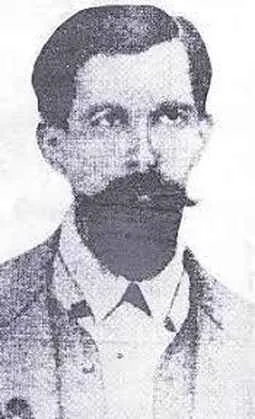
Manuel Rojas: biography
Early life and family
He received his primary and secondary education there. The family settled in a mountainous area near Lares whose main income came from coffee. Rojas and his brother Miguel bought and cultivated about 300 acres of land that they named the El Triunfo plantation. Miguel met Mariana Bracetti on a business trip to Añasco, married her, and the couple moved to El Triunfo. 1 2
Puerto Rico independence movement
Rojas admired physician and independence advocate Ramón Emeterio Betances. Together with his brother Miguel he joined Betances in the quest for separation from Spanish rule. The Revolutionary Committee of Puerto Rico was formed and directed by Betances and Segundo Ruiz Belvis from exile in the Dominican Republic. Several revolutionary cells were organized in western towns to support a planned armed invasion from the Dominican Republic. The two most important cells were Capa Prieto in Mayagüez led by Mathias Brugman and Centro Bravo in Lares headed by Manuel Rojas. Centro Bravo operated from the Rojas plantation, which became the main center of operations. Betances named Rojas commander of the Liberation Army and Mariana Bracetti leader of the Lares Revolutionary Council. At Betances's request Bracetti knitted the revolutionary Flag of Lares. The Revolutionary Committee named twelve members as generals. The list also included Andrés Pol, Juan de Mata Terraforte, Joaquín Parrilla, Nicolás Rocafort, Gabino Plumey, Dorvid Beauchamp, Mathias Brugman, Rafael Arroyo, Francisco Arroyo, Pablo Rivera as cavalry general, and Abdón Pagán as artillery general. Spanish authorities discovered the plot and confiscated the armed ship prepared by Betances before it could reach Puerto Rico. The mayor of Camuy, Manuel González, who led that town's revolutionary cell, was arrested and charged with treason. He escaped after learning that Spanish forces knew of the plan and warned Manuel Rojas. 1 2
Grito de Lares
The revolutionaries decided to launch the uprising immediately and set the date for September 23, 1868. Mathias Brugman and his men joined Rojas's group at El Triunfo. Approximately 800 men and women marched on Lares. The insurgents entered the town church, placed the flag knitted by Bracetti on the high altar, and declared the revolution begun. The group proclaimed the Republic of Puerto Rico and named Francisco Ramírez Medina as its president. Rojas and his followers, armed only with clubs and machetes, then marched toward San Sebastián. Spanish troops had been alerted and waited with superior firearms. The revolt failed; many were killed and at least 475, including Rojas and Mariana Bracetti, were imprisoned in Arecibo jail and sentenced to death by court-martial. Mathias Brugman was betrayed by a farmhand named Francisco Quiñones and executed on the spot. 1 2
Exile and later years
Eugenio María de Hostos and other Puerto Ricans met with Spanish President Francisco Serrano in Madrid to request pardons. Serrano initially said amnesty would apply only to natives of Puerto Rico and not to foreigners such as Rojas. The incoming governor José Sanz received orders from the new republican government to grant a general amnesty effective September 20, 1869. Rojas and some other participants were sent into exile. He died there on October 14, 1903. On December 25, 2002, the Puerto Rico government approved Public Law 291 directing the Institute of Puerto Rican Culture to study the possibility of repatriating Rojas's remains. 1 2
Legacy and ties to Puerto Rico
Rojas is regarded as one of the main leaders of the Grito de Lares and among Puerto Rico's greatest independence leaders. A school in the Bartolo sector of Lares is named after him. His role as commander of the Puerto Rican Liberation Army and his adoption of Puerto Rico as home established his place in the island's independence history despite his Venezuelan birth. 1 2
Questions about Manuel Rojas
Where is Manuel Rojas from?
Manuel Rojas was born in Caracas, Venezuela.
What was Manuel Rojas's role in the Grito de Lares?
Rojas was named commander in chief of the Puerto Rican Liberation Army by Ramón Emeterio Betances. He led the Centro Bravo cell based at his El Triunfo plantation and commanded the approximately 800 insurgents who took the town of Lares on September 23, 1868.
Why was Manuel Rojas initially excluded from the amnesty after the revolt?
Spanish President Francisco Serrano stated that the amnesty would apply only to natives of Puerto Rico and not to foreigners. Eugenio María de Hostos successfully argued that Rojas, who had lived on the island since around 1852 or 1853, should be considered an adoptive son entitled to the same treatment.
Where did Manuel Rojas spend his final years?
After exile he returned to Venezuela and lived in Boconó, Trujillo state. He later moved briefly to Mérida for public registry work before returning to Boconó, where he died on October 14, 1903. His remains are buried in the general cemetery there.
When did Manuel Rojas die?
Manuel Rojas died on October 14, 1903 in Boconó, Venezuela.
Sources
- Wikipedia: Manuel Rojas Luzardo
- Wikipedia (español): Manuel Rojas (revolucionario)
- Wikidata: Q1171056
- Enciclopedia de Puerto Rico (cited by Wikipedia)
- Library of Congress (cited by Wikipedia)
Photo: Manuel Rojas Luzardo 1.jpg, Unknown author (CC0). Resized and converted to WebP.
Reviewed November 18, 2026. Original biography by PuertoRico.com. Editorial policy