Luis Muñoz Marín: biography
Early life and family
His father was a poet, publisher and politician who founded newspapers including El Diario and La Democracia. There Muñoz Marín learned English while his father published the bilingual Puerto Rico Herald. The family traveled often between Puerto Rico and the mainland. Muñoz Marín attended William Penn Public School in Santurce where classes were taught in English. He later studied at a private school in San Juan, Georgetown Preparatory School and Georgetown University Law Center before leaving to pursue writing. He married Muna Lee in 1919 and they had two children before separating in 1938. 1 5
Formation of political ideas
He soon became disillusioned when the party allied with Republicans and returned to the mainland. He focused on the economic hardship of rural workers known as jíbaros. In 1932 he joined the Liberal Party, edited its newspaper and won a seat in the Senate. He arranged for Eleanor Roosevelt to visit poor areas damaged by the hurricane, which helped bring New Deal programs to Puerto Rico. He then formed Acción Social Independentista, which evolved into the Popular Democratic Party in 1938. The new party campaigned in rural areas against vote buying and promised land, hospitals, food and schools. 1 2 5
Senate leadership and Operation Bootstrap
Working with appointed Governor Rexford Tugwell, he advanced agricultural reform that limited large landholdings and launched Operation Bootstrap to attract manufacturing through tax incentives and access to United States markets. The program shifted the economy from sugar to industry, including textiles and later petrochemicals. He also started Operación Serenidad to promote education and the arts. 1 2 5
Governor and creation of the Commonwealth
As governor for four terms until 1965, Muñoz Marín oversaw the Constitutional Convention that produced the Constitution of Puerto Rico, approved by voters in 1952 and by Congress. The island became the Estado Libre Asociado, or Commonwealth. He promoted the Pablo Casals Festival, the Music Conservatory and the Institute of Culture to strengthen Puerto Rican identity. Migration to the mainland increased during the 1950s as people sought factory jobs. In 1964 he chose not to run again and supported Roberto Sánchez Vilella, who won. After leaving the governorship he served in the Senate until 1970, then traveled in Europe before returning to promote Rafael Hernández Colón. 1 2 5
Later years and legacy
His daughter Victoria Muñoz Mendoza ran for governor in 1992. He appeared on the cover of Time magazine twice. 1 2 5
Questions about Luis Muñoz Marín
When was Luis Muñoz Marín born?
Luis Muñoz Marín was born on February 18, 1898 in San Juan, Puerto Rico.
Why did Muñoz Marín oppose the 1936 Tydings independence bill?
He argued that the economic conditions proposed in the bill would harm Puerto Rico, comparing it to the Ley de Fuga.
What were the main goals of Operation Bootstrap?
The program sought to industrialize Puerto Rico by offering tax incentives to attract manufacturing plants while maintaining access to United States markets.
How did Muñoz Marín contribute to the creation of the Commonwealth status?
He participated in the Constitutional Convention that drafted the Constitution of Puerto Rico, approved in 1952, establishing the Estado Libre Asociado.
When did Luis Muñoz Marín die?
Luis Muñoz Marín died on April 30, 1980 in San Juan, Puerto Rico, aged 82.
Sources
- Wikipedia: Luis Muñoz Marín
- Wikipedia (español): Luis Muñoz Marín
- Wikidata: Q888180
- Encyclopaedia Britannica: Luis Muñoz Marín
- Enciclopedia de Puerto Rico: Luis Muñoz Marín
- Time (cited by Wikipedia)
- The New York Times (cited by Wikipedia)
- National Archives (cited by Wikipedia)
- NBC News (cited by Wikipedia)
- NPR (cited by Wikipedia)
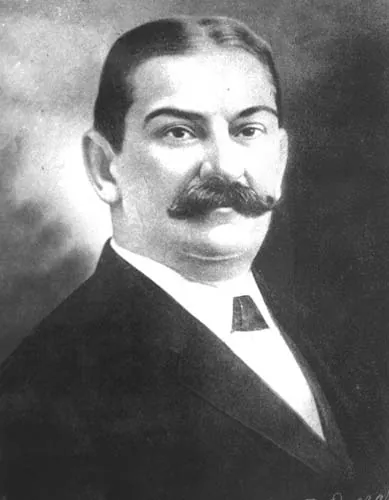
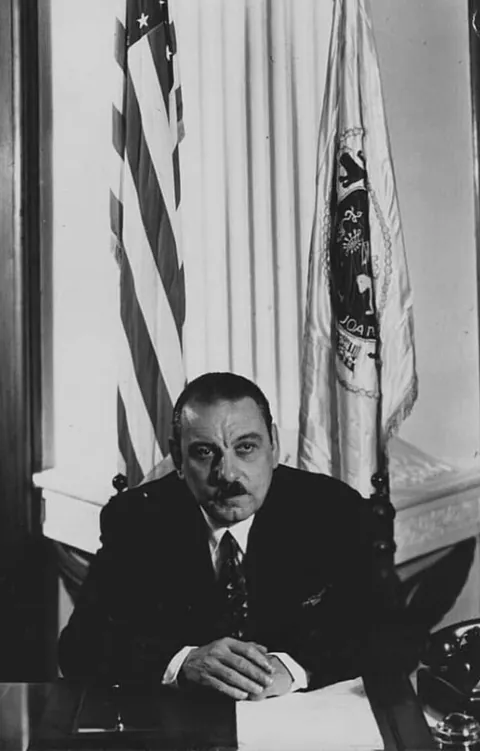
Photo: Official portrait of Puerto Rican Governor Luis Muñoz Marín in 1950 (cropped).jpg, Government of Puerto Rico (Public domain). Resized and converted to WebP.
Reviewed November 18, 2026. Original biography by PuertoRico.com. Editorial policy