
Quick answer
Puerto Rico is warm all year. In San Juan the average high stays between 83°F (28°C) in January and 89°F (32°C) from June through September, and the average low never drops below about 72°F (22°C). What changes through the year is rain and storm risk, not temperature.
- Driest months: February and March, with about 2.2–2.6 inches of rain and the fewest wet days at the San Juan airport.
- Hottest months: June through September; August and September post the highest normals.
- Wettest month: November, at 7.37 inches on about 12 rainy days, followed by September and August.
- Hurricane season: June 1 to November 30, with the Atlantic peak around September 10.
- Cooler spots: the central mountains run noticeably cooler than the coast, and El Yunque is far wetter than anywhere else.
Puerto Rico weather by month (San Juan averages)
These are the official NOAA 30-year normals for the Luis Muñoz Marín airport station in Carolina, on the north coast next to Isla Verde. They are a good guide for San Juan, Condado, Isla Verde and most of the north shore. "Days with 0.10 inch or more" counts days with a meaningful shower, not every passing drizzle.
| Month | Avg high | Avg low | Rain | Days with 0.10"+ |
|---|---|---|---|---|
| January | 83.2°F (28°C) | 71.9°F (22°C) | 4.07 in (103 mm) | 9.9 |
| February | 83.8°F (29°C) | 71.8°F (22°C) | 2.58 in (66 mm) | 6.6 |
| March | 84.7°F (29°C) | 72.4°F (22°C) | 2.18 in (55 mm) | 5.3 |
| April | 86.2°F (30°C) | 74.0°F (23°C) | 4.60 in (117 mm) | 7.5 |
| May | 87.4°F (31°C) | 75.7°F (24°C) | 5.54 in (141 mm) | 8.8 |
| June | 89.0°F (32°C) | 77.2°F (25°C) | 4.66 in (118 mm) | 8.0 |
| July | 88.7°F (32°C) | 77.6°F (25°C) | 6.02 in (153 mm) | 10.7 |
| August | 89.1°F (32°C) | 77.8°F (25°C) | 6.29 in (160 mm) | 11.0 |
| September | 89.2°F (32°C) | 77.5°F (25°C) | 6.50 in (165 mm) | 10.8 |
| October | 88.6°F (31°C) | 76.7°F (25°C) | 5.21 in (132 mm) | 10.6 |
| November | 86.1°F (30°C) | 74.9°F (24°C) | 7.37 in (187 mm) | 12.4 |
| December | 84.2°F (29°C) | 73.3°F (23°C) | 4.85 in (123 mm) | 10.6 |
| Year | 86.7°F (30°C) | 75.1°F (24°C) | 59.87 in (1521 mm) | 112.2 |
Two patterns stand out. The gap between the coolest and warmest month is only about 6°F, so you pack the same clothes in January and July. And even the wettest month averages fewer than 13 days with a tenth of an inch of rain or more, so most days in any month are dry at the airport.
The two seasons: drier winter, wetter summer and fall
NOAA's climate summary for Puerto Rico describes a distinct dry season from December to March, an early rainy season in April and May, a slightly drier stretch in June and July, and a late rainy season from August through November. The USGS adds the two weather systems behind it: tropical easterly waves roll through from about May to November, and cold fronts from the north reach the island from roughly November to April.
- December to April: the sunniest, breeziest and most comfortable stretch, and the busiest for visitors. January's normal in San Juan is 83°F by day and 72°F at night.
- May to November: hotter, more humid and wetter, with the hurricane season on top.
Month by month, in short
- January and February: the coolest months, though "cool" means low 70s at night. Good beach weather with frequent trade-wind breezes. February has the second-fewest rainy days.
- March: the driest month at the airport, with about 2.2 inches of rain and roughly five rainy days.
- April and May: warming up, with the first rainy season building in May.
- June and July: hot, near 89°F by day, and a little drier than late summer. Hurricane season has started, though NHC climatology shows far less activity this early than in late summer.
- August and September: the hottest and among the wettest months, and the heart of hurricane season. This is when Puerto Rico is most likely to see a tropical storm or hurricane.
- October: still hot and wet, with the hurricane risk easing as the month goes on.
- November: the wettest month on record averages for San Juan, but temperatures start to ease. Hurricane season officially ends on November 30.
- December: the dry season starts and the holiday season is in full swing; see our coquito recipe for the drink you will be offered everywhere.
Hurricane season in Puerto Rico
The National Hurricane Center sets the Atlantic hurricane season from June 1 to November 30. Its climatology shows activity peaking around September 10, with most storms forming between mid-August and mid-October. The risk is real: NOAA's state climate summary notes that Hurricane Maria hit Puerto Rico as a Category 4 storm in September 2017 and killed 2,975 people on the island.
If you travel between June and November, a flexible booking and travel insurance are worth a look. For what to do before and during a storm, read our guide to when hurricane season is in Puerto Rico.
The weather is not the same everywhere
Puerto Rico is small, but its mountains split it into very different climates. According to the USGS, the northern two-thirds of the island is humid and the southern third is semi-arid.
- Coast vs. mountains: USGS figures put the coastal annual mean maximum and minimum at about 27°C and 24°C, against about 25°C and 22°C in the interior. NOAA says the mountains are typically around 15°F cooler than the coast in summer. Towns like Cayey in the central range are a pleasant escape from the heat.
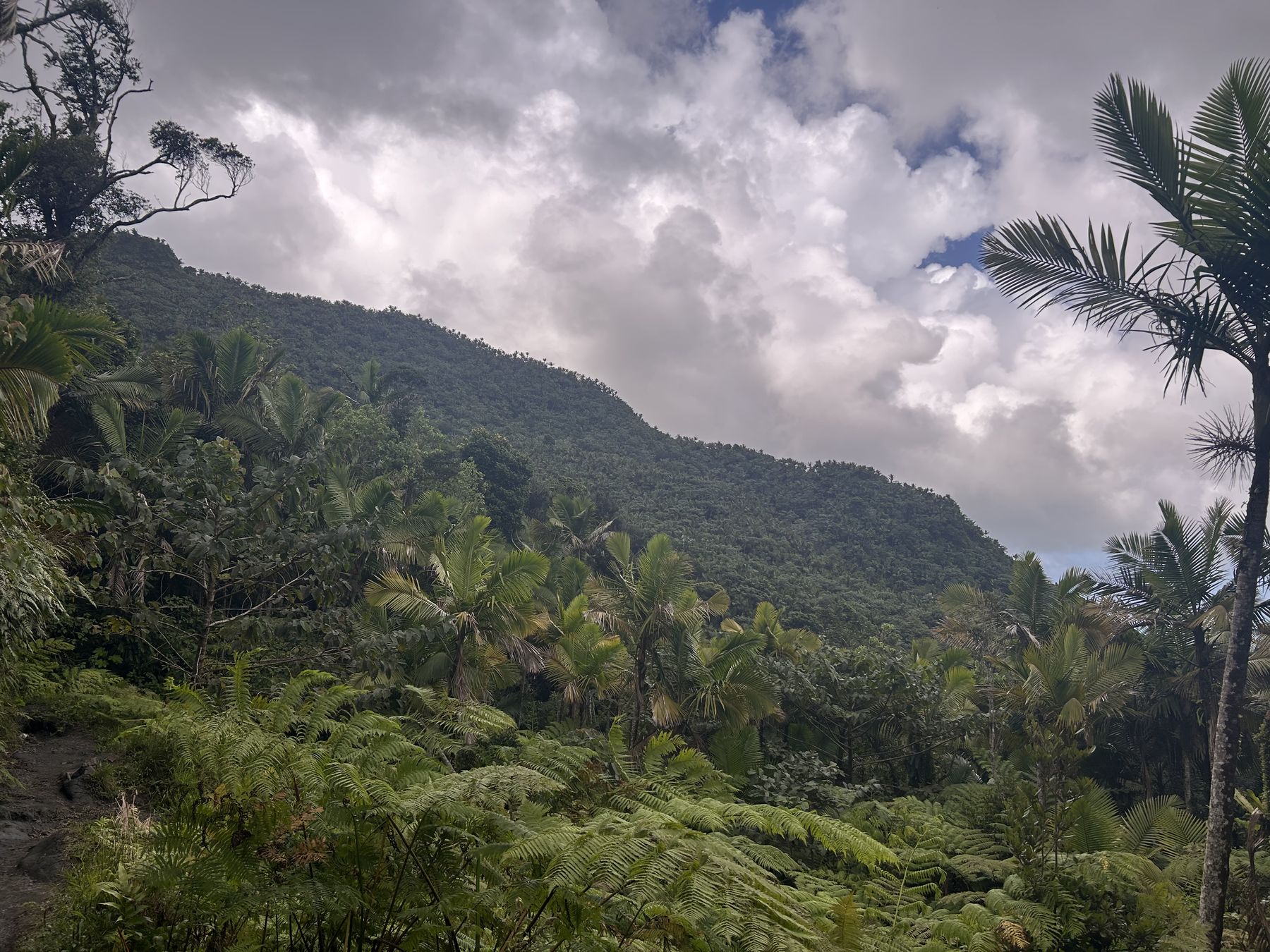
- El Yunque and the Luquillo mountains: the wettest area on the island, with about 169 inches of rain a year, nearly three times San Juan. Plan for rain on any El Yunque visit, and see our Río Grande guide for guided tours and places to stay near the forest.
- The dry southwest: the Guánica and Ensenada area gets only about 30 inches a year, about half of what San Juan gets.
- Culebra: about 36 inches a year, well below San Juan's 60.
Sea temperature and daylight
The ocean stays swimmable all year. The USGS gives average sea surface temperatures of about 24°C (75°F) in January and 28°C (82°F) in October. Days are long but never extreme so close to the tropics: from about 13 hours 13 minutes of daylight at the June solstice to about 11 hours 2 minutes in December.
What to pack
- Light, breathable clothes year-round, plus a light layer for air-conditioned restaurants and the mountains.
- A compact umbrella or rain jacket from May to November, and for El Yunque at any time.
- Reef-safe sunscreen, a hat and water; you are in the tropics all year.
Plan around the weather
For crowds and prices by season, see the best times to visit Puerto Rico. Then find a base in our San Juan places to stay or the San Juan tours directory. Flying in? Our SJU airport guide covers taxis, rideshare and rental cars, and our passport and ID guide covers what to bring.
Frequently asked questions
What is the weather like in Puerto Rico?
Warm all year. NOAA normals for San Juan show average highs of 83–89°F (28–32°C) and lows of 72–78°F (22–26°C). The main seasonal change is rain: drier from December to March, wetter from May to November.
What is the best month weather-wise to visit Puerto Rico?
February and March are the driest months in San Juan, with the fewest rainy days, and they fall outside hurricane season. December through April is the most reliable stretch overall.
What is the rainiest month in Puerto Rico?
November, at least at the San Juan airport: it averages 7.37 inches of rain on about 12 days with at least a tenth of an inch, ahead of September and August.
When is hurricane season in Puerto Rico?
In the Atlantic it lasts from June 1 through November 30. The National Hurricane Center places the peak near September 10, and the busiest stretch is mid-August to mid-October.
What is the weather in Puerto Rico in December?
San Juan averages a high of 84°F (29°C) and a low of 73°F (23°C) in December, with about 4.9 inches of rain. It is the start of the drier season and after the end of hurricane season.
What is the weather in Puerto Rico in January?
January is one of the coolest months: about 83°F (28°C) by day and 72°F (22°C) at night in San Juan, with roughly 4 inches of rain on about 10 days. The sea averages about 75°F.
Is it cold anywhere in Puerto Rico?
Not by mainland standards, but the central mountains are noticeably cooler than the coast. NOAA notes they run about 15°F cooler in summer, so bring a light layer for places like Cayey or a night in the mountains.
Sources we checked
Checked in October 2026. Where a fact could not be confirmed against a primary source, we removed it or said so.
- NOAA NCEI: U.S. Climate Normals 1991–2020, monthly normals for San Juan Luis Muñoz Marín International Airport (station RQW00011641)
- National Weather Service San Juan: climate data and normals for Puerto Rico and the U.S. Virgin Islands
- NOAA National Hurricane Center: Atlantic hurricane season dates and climatology (June 1–November 30, peak around September 10)
- U.S. Geological Survey: climate of Puerto Rico (seasons, coastal vs. interior temperatures, rainfall extremes, sea temperatures, daylight)
- NOAA NCICS State Climate Summaries 2025: Puerto Rico and the U.S. Virgin Islands (dry and rainy seasons, Hurricane Maria)
Originally published on PuertoRico.com (2026-10-27). Reviewed and updated October 2026: facts were checked against the sources above.