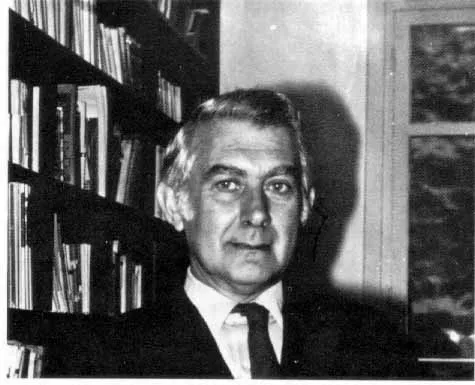
Jon Bilbao: biography
Early life and education
Juan Manuel Bilbao Azkarreta was born on 31 October 1914 in Cayey, Puerto Rico, to Juan Bilbao from Getxo and Matilde Azkarreta. The family returned to the Basque Country in 1917, where he spent his childhood and youth. He completed secondary studies at the Jesuit college in Bilbao and obtained a Bachelor of Science degree from the University of Valladolid in 1932. From 1932 to 1936 he studied Philosophy and Literature at the Universidad Central de Madrid, specializing in history and earning a degree in Medieval History of Spain with Latin and Arabic. He knew Julio Caro Baroja and was encouraged by Fernando de los Ríos to explore his Basque roots. Plans for a Basque university were interrupted by the Spanish Civil War. 1 2
Civil war service and first exile
In 1936 Bilbao enlisted as a lieutenant of engineers with the Eusko Gudarosteak Basque battalions and served until 1937. On 20 June 1937, the day after Bilbao fell, he escaped by motor launch from Zierbena to Bayonne. Two months later he sailed from Bordeaux to Guadeloupe and then to Puerto Rico. In Puerto Rico he contacted exiled professors such as María Zambrano at the University of Puerto Rico. In 1938 he enrolled at Harvard University, spending many hours at the Boston Public Library compiling file cards that became the basis of his later bibliographic work. He moved to Columbia University in New York, completing a degree in May 1939 with a dissertation on the 15th-century Basque historian Lope García Salazar under Federico de Onís. He also studied phonetics and phonology with Tomás Navarro Tomás. Between 1940 and 1942 he pursued doctoral studies at the University of California, Berkeley. He taught Spanish at the Institute of Linguistics in South Carolina in 1942 and at Columbia University from 1942 to 1944. In 1939 he had been named deputy director of the Basque Government in Exile and in 1940 traveled to Boise, Idaho, to study Basque shepherds and raise funds. He collaborated on publications supporting the Basque cause and worked with the Belgian Office for Latin America, editing journals including Journal Belge and Ambos Mundos. For this cooperation against fascism he was made a Knight of the Belgian Order of the Crown after World War II. He obtained U.S. citizenship in 1943, registering his name as Jon Bilbao. 1 2
Return to the Basque Country and second exile
Thanks to his American passport, Jon Bilbao was able to travel to Madrid, where he conducted research in 1949–1950. From 1950 to 1954 he lived in Cuba, where he wrote Vascos en Cuba: 1492-1511, published in Buenos Aires in 1958. He settled in Getxo in 1954 with his wife and children and participated in Basque nationalist activities. Arrested by Franco's police in 1958, he avoided imprisonment because of his U.S. passport but was declared persona non grata and expelled in 1960. He moved to Biarritz but was expelled by French authorities a year later and returned to the United States on 8 December 1960. He taught Spanish at Georgetown University in 1964-1965 and at the Naval Academy in Annapolis from 1966 to 1968. In 1968 he joined the newly created Center for Basque Studies at the University of Nevada, Reno, as instructor in Basque Studies. He taught Basque history and expanded the Basque Collection from 3,000 volumes in 1968 to approximately 25,000 by his retirement in 1980. 1 2
Major works and achievements
The first volume of his ten-volume Eusko Bibliographia appeared in 1970 and the set was completed in 1981, with supplements issued in 1985 and later. The work contains around 400,000 entries and is considered a fundamental reference for Basque studies. In 1970 he was appointed director of the Basque Studies Summer Courses and organized five of them between 1970 and 1980 in locations including Ustaritz, Arantzazu, Loiola, Vitoria-Gasteiz and Oñate. A 1977 homage volume, Anglo-American Contributions to Basque Studies, was published in his honor by the University of Nevada, Reno. After retiring in 1980 he returned to the Basque Country to establish the Institute of Basque Studies Library and the Institute for the Study of the Basque Diaspora at the Sancho el Sabio Institution in Vitoria-Gasteiz, alternating time with his library in Getxo. He founded the International Association of Basque Bibliography and the Harrilucea Association for the Study of History in 1987, though some projects remained unfinished. 1 2
Later life, family and recognition
Bilbao married Marta Saralegui in Havana on 10 February 1945, with the president of the Basque Government in Exile as best man. The couple had a daughter, Amal, born in 1948 in Biarritz, and a son, Jon, born in 1953 in Havana. The marriage ended in divorce and in 1985 he married Gayle Slavin in Reno. He suffered a stroke on 30 March 1994 while working in Vitoria-Gasteiz and died on 23 May 1994 at age 79 in Gorliz after a second stroke. He received multiple honors including professor emeritus from the University of Nevada, Reno in 1981, corresponding member of the Basque Academy in 1973 and honorary member in 1987, partner of the Society of Friends of the Country in 1981, induction into the Society of Basque Studies in the USA Hall of Fame in 1988, and an honorary doctorate from the University of the Basque Country awarded posthumously in 1995. 1 2
Questions about Jon Bilbao
When was Jon Bilbao born?
Jon Bilbao was born on October 31, 1914 in Cayey, Puerto Rico.
Why did Jon Bilbao compile file cards in the Boston Public Library?
He spent many hours there sifting through dictionaries, encyclopedias and biographies to create the file cards that formed the basis of his ten-volume Eusko Bibliographia.
What position did Jon Bilbao hold at the University of Nevada, Reno?
He served as instructor in Basque Studies from 1968 until his retirement in 1980, teaching Basque history and expanding the Basque Collection to about 25,000 volumes.
Which book did Jon Bilbao co-author with William A. Douglass?
In 1975 they published Amerikanuak: Basques in the New World, a history based on their 1971 research tour of Latin American universities, libraries and Basque centers.
When did Jon Bilbao die?
Jon Bilbao died on May 23, 1994 in Vitoria-Gasteiz, Spain, aged 79.
Sources
- Wikipedia: Jon Bilbao
- Wikipedia (español): Jon Bilbao Azkarreta
- Wikidata: Q12260507
- Library of Congress: Jon Bilbao
- Yale University (cited by Wikipedia)
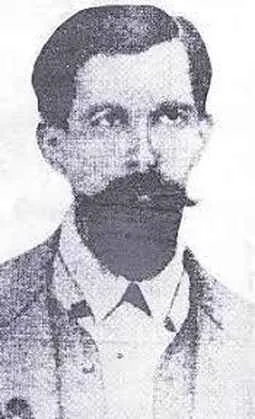
Photo: Jon Bilbao Azcarreta.jpg, Auñamendi - Eusko Ikaskuntza (CC BY-SA 4.0). Resized and converted to WebP.
Reviewed November 18, 2026. Original biography by PuertoRico.com. Editorial policy