Juan Ramón Jiménez: biography
Early life and family
Juan Ramón Jiménez was born on 23 December 1881 in Moguer, Spain. He studied at the Jesuit school San Luis Gonzaga in El Puerto de Santa María and later began law studies at the University of Seville before turning to literature. The death of his father in 1900 caused severe depression that led to stays in sanatoriums in France and Madrid. 1 2
Early publications appeared in 1900 when he was eighteen. He came under the influence of Rubén Darío and French symbolism. In Madrid he helped found the literary magazine Helios and published works such as Arias tristes and Jardines lejanos. 1 2
Marriage and literary evolution
Jiménez met Zenobia Camprubí in 1913 and married her in the United States in 1916. She became his constant companion and collaborator on translations, including works by Rabindranath Tagore. That same year he published the enlarged edition of Platero y yo, a prose poem about a writer and his donkey that celebrated his home region and later gained popularity in Latin America and the United States. 1 2
His poetry moved from a sensitive phase influenced by Bécquer, symbolism and modernism to an intellectual phase. Key titles from these years include Sonetos espirituales, Piedra y cielo, Diario de un poeta recién casado and Poesía en verso. He advocated the idea of pure poetry and used a simplified Spanish orthography in his writings. 1 2
Exile in the Americas
At the outbreak of the Spanish Civil War in 1936, Jiménez and Zenobia went into exile. They lived in Cuba, Miami, Washington and Maryland, where he taught at the University of Maryland. In Miami he wrote Romances de Coral Gables. The couple settled in Puerto Rico in 1946, where he taught Spanish language and literature at the University of Puerto Rico in Río Piedras. 1 2
Despite these difficulties he continued to write and lecture. His work influenced several Puerto Rican writers including Giannina Braschi, René Marqués, Aurora de Albornoz and Manuel Ramos Otero. 1 2
Nobel Prize and final years
In 1956 Jiménez received the Nobel Prize in Literature for his lyrical poetry. He never recovered from this loss and remained in Puerto Rico. The university named a building and a writing program in his honor. He also taught at the University of Miami. 1 2
Jiménez died on 29 May 1958 in the same San Juan clinic where his wife had died. Both were later buried in Moguer, Spain. Among his later works are Voces de mi copla and Animal de fondo. A 1962 English collection of three hundred poems translated by Eloise Roach helped extend his readership. 1 2
Legacy and ties to Puerto Rico
The University of Puerto Rico at Río Piedras honors him with a named building and program. His presence and work left a strong mark on local authors. A quotation from him appears as the epigraph to Ray Bradbury's Fahrenheit 451. 1 2
Questions about Juan Ramón Jiménez
When was Juan Ramón Jiménez born?
Juan Ramón Jiménez was born on December 23, 1881 in Moguer, Spain.
How did Juan Ramón Jiménez influence Puerto Rican literature?
His teaching at the University of Puerto Rico and his literary example strongly marked the works of Giannina Braschi, René Marqués, Aurora de Albornoz and Manuel Ramos Otero.
Which of Jiménez's books is most associated with his time in Puerto Rico?
Although Platero y yo was written earlier, he continued producing and teaching major late works such as Animal de fondo while living in Puerto Rico.
Where did Juan Ramón Jiménez and Zenobia Camprubí die?
Both died in the same clinic in San Juan, Puerto Rico. Zenobia died in 1956 and Jiménez in 1958.
When did Juan Ramón Jiménez die?
Juan Ramón Jiménez died on May 29, 1958 in San Juan Puerto Rico Temple, San Juan, Puerto Rico, aged 76.
Sources
- Wikipedia: Juan Ramón Jiménez
- Wikipedia (español): Juan Ramón Jiménez
- Wikidata: Q131318
- Encyclopaedia Britannica: Juan Ramón Jiménez
- Nobel Prize (cited by Wikipedia)
- The Guardian (cited by Wikipedia)
- Library of Congress (cited by Wikipedia)
- El Mundo (cited by Wikipedia)
- El País (cited by Wikipedia)
- Agencia EFE (cited by Wikipedia)
- IMDb: Juan Ramón Jiménez (credits)
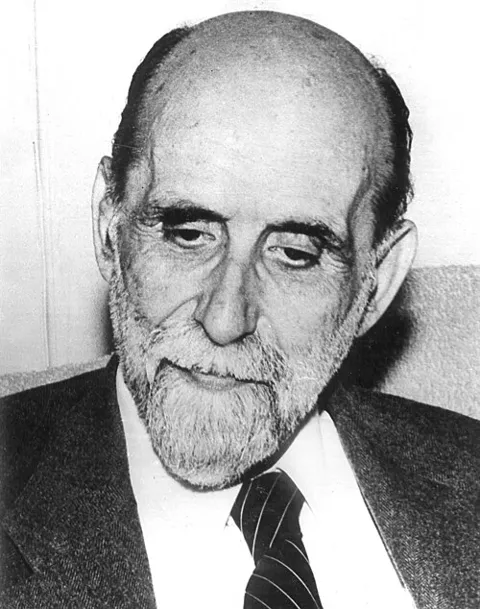
Photo: JRJimenez.JPG, Unknown author (Public domain). Resized and converted to WebP.
Reviewed November 18, 2026. Original biography by PuertoRico.com. Editorial policy