Julio Vizcarrondo: biography
Early life and family
Julio Vizcarrondo was born on December 9, 1829, in San Juan to Dr. Jose Bonifacio Vizcarrondo y Ortiz de Zarate and María Josefa Coronado y Martínez. His family owned a hacienda that relied on slave labor. He completed primary schooling in San Juan before continuing secondary studies in Madrid and Paris. Vizcarrondo later broke with that tradition by freeing the slaves on his own property and advocating for the rights of enslaved people in Puerto Rico. 1
Journalism and early activism in Puerto Rico
After returning from Europe, Vizcarrondo wrote for local newspapers expressing liberal views and opposition to slavery. Governor Juan de la Pezuela y Cevallos ordered his exile to the United States in response. He arrived in New York City in 1850 and served as secretary of the Permanent Committee of the International Conference of Paris against Slavery. In New York he married Henriette Brewster y Cornell and converted to Protestantism. He returned to Puerto Rico in 1854, freed his slaves, and continued to denounce mistreatment of enslaved people in local courts. He also criticized the colonial Spanish administration. In 1857 he founded the newspaper El Mercurio. He established La Casa de la Caridad de San Ildefonso, a free school for poor children directed by his wife. Vizcarrondo published textbooks including El Silabario Puertorriqueño in 1866, which was adopted for use in Puerto Rican schools, and Elementos de Historia y Geografía de Puerto Rico. He also wrote books on mathematics, history, and geography used in his school. In 1863 he served as secretary of the commission that moved the remains of Juan Ponce de León to the Cathedral of San Juan Bautista. 1
Work in Madrid and Protestant leadership
Vizcarrondo moved to Madrid in 1863 and joined other Puerto Rican and Cuban abolitionists. During a cholera outbreak he co-founded the Sociedad de Amigos de los Pobres to aid victims and opened his home as a temporary hospital. Spanish authorities awarded him a medal for this work. As president of the Central Committee of the Spanish Evangelical Union he secured permission from the mayor of Madrid on January 24, 1869, to hold Protestant religious services in public. He is recognized as a founder of the Protestant movement in 19th-century Spain. In 1878 he co-founded the Sociedad Protectora de los Niños with Cristóbal Colón de la Cerda. The organization provided food, clothing, and education to children of imprisoned women and later operated El Refugio, a major children's shelter in Madrid managed by the Hermanas de la Caridad de San Vicente de Paúl. The institution continued its work into the 21st century. 1
Political career and abolition
Vizcarrondo joined the Spanish Republican Party and served as secretary of the revolutionary committee of Madrid in preparation for the Liberal Revolution. When discovered, he was exiled to France but returned after the revolution succeeded. He helped reorganize the Sociedad Abolicionista. In 1873, together with Ramón Baldorioty de Castro, Luis Padial, and Minister Segismundo Moret, he presented a proposal that led to the Moret Law. The Spanish government approved it on March 22, 1873, abolishing slavery in Puerto Rico. On May 1, 1880, he and Rafael María de Labra founded the Sociedad Nacional Democrática to seek greater autonomy for Puerto Rico and Cuba. In 1886 he was elected deputy for the Ponce district to the Cortes in Madrid and served until his death. There he advocated for autonomy modeled on Canada's system. In 1887 he joined a campaign that led to the removal of Governor Romualdo Palacio González. 1
Later years, death, and recognition
Vizcarrondo died on July 22, 1889, in Madrid. The government of Puerto Rico later named schools after him in the towns of Carolina and Cayey. In 2009 the Federación de Entidades Religiosas Evangélicas de España declared his birth date a national day of evangelical social work in recognition of his philanthropic efforts. 1 2
Questions about Julio Vizcarrondo
When was Julio Vizcarrondo born?
Julio Vizcarrondo was born on December 9, 1829 in San Juan, Puerto Rico.
What role did Julio Vizcarrondo play in the Moret Law?
In 1873 he collaborated with Ramón Baldorioty de Castro, Luis Padial, and Minister Segismundo Moret to present the proposal that became the Moret Law, approved on March 22, 1873, abolishing slavery in Puerto Rico.
How did Vizcarrondo contribute to Protestantism in Spain?
As president of the Central Committee of the Spanish Evangelical Union he obtained municipal permission on January 24, 1869, for public Protestant services in Madrid. He is considered a founder of the 19th-century Protestant movement in the Iberian Peninsula.
What schools and institutions did Vizcarrondo establish or support?
He founded La Casa de la Caridad de San Ildefonso in Puerto Rico, the Sociedad de Amigos de los Pobres and Hospital del Niño Jesús in Madrid, and co-founded the Sociedad Protectora de los Niños in 1878, which operated the children's shelter El Refugio.
When did Julio Vizcarrondo die?
Julio Vizcarrondo died on July 22, 1889 in Madrid, Spain, aged 59.
Sources
- Wikipedia: Julio Vizcarrondo
- Wikipedia (español): Julio Vizcarrondo
- Wikidata: Q3189829
- Library of Congress: Julio Vizcarrondo
- Yale University (cited by Wikipedia)
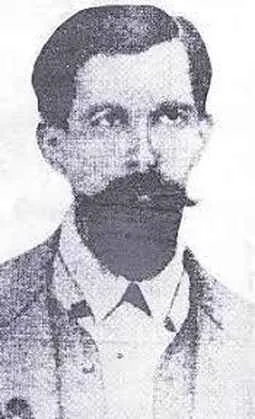
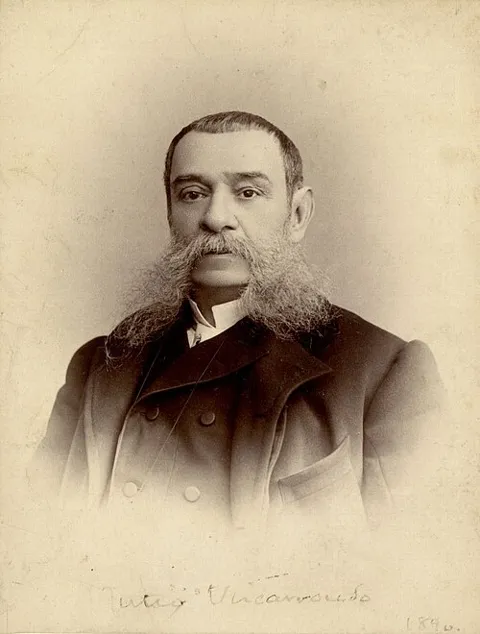
Photo: Julio Vizcarrondo.jpg, Unknown author (Public domain). Resized and converted to WebP.
Reviewed November 18, 2026. Original biography by PuertoRico.com. Editorial policy